Best Garage Shelving for Heavy Totes (2026)
Last updated:
Disclosure: This article contains affiliate links. If you buy through these links, we may earn a commission at no extra cost to you. We do not claim hands-on testing unless clearly stated.
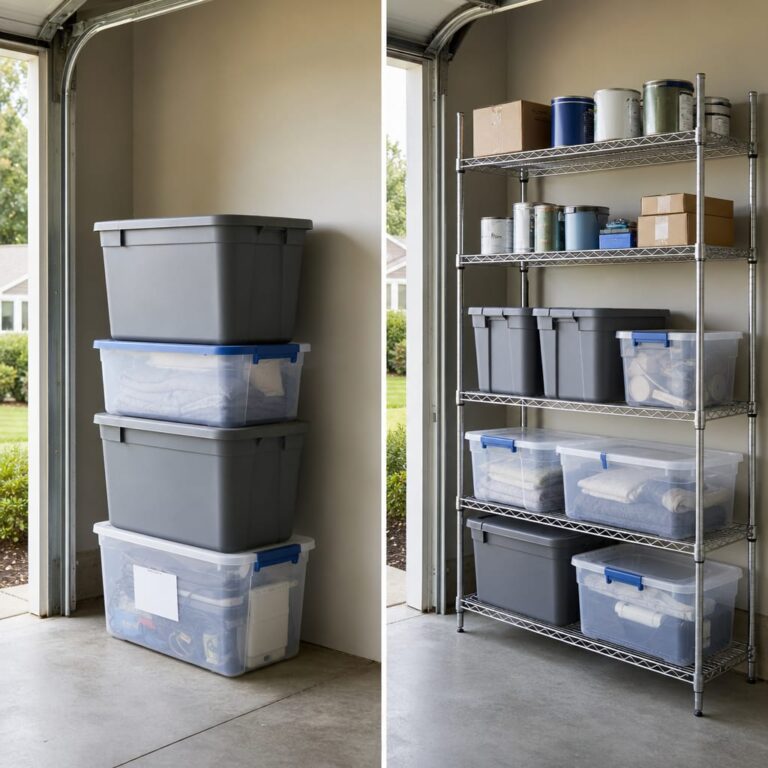
A loaded 27-gallon storage tote routinely weighs 40 to 80 pounds once you pack it with kids’ winter gear, holiday decorations, or workshop hardware. Most buyers underestimate this and pick a shelving unit by its tier count, not by what each tier can actually carry. The mistake usually shows up six months later, when the middle tier of a flat-pack chrome shelf bows in the centre under three loaded totes and the next tote-out becomes a careful exercise in not making it worse.
This guide covers six picks for storing heavy totes in a residential garage. The picks are split across two categories that buyers often confuse: heavy-duty utility shelves rated by per-shelf weight, and dedicated tote racks rated by tote count with much lower per-tier weight allowances. Pick the right category first, the specific product second. For a broader look at general-purpose options, see our broader storage-bin roundup.
This article does not cover overhead garage racks, slat-wall systems, or modular cabinet systems — those are different categories with different trade-offs.
Quick Picks
| Pick | Product | Best for | Type | Main advantage | Watch out for | |
|---|---|---|---|---|---|---|
| Best Heavy-Duty Metal Shelf | Husky Industrial Duty Steel Garage Shelving Unit | Dense items in totes (tools, hardware, fluids) | Welded steel boltless | Per-shelf capacity rated for serious load | Confirm exact size variant before ordering | View on Amazon |
| Best Industrial-Style with Anchoring | Gladiator 4-Shelf Welded Steel Unit | Anchored installations and Whirlpool-grade systems | Welded steel + anti-tip | Designed for wall anchoring out of the box | 18″ depth means 27-gal tote overhang | View on Amazon |
| Best Deep Wire Shelf for Large Totes | Seville Classics UltraDurable 5-Tier (60″ × 24″) | Tote-heavy garages with damp conditions | NSF-certified rolling wire | 24″ depth fits 27-gal totes flat | Capacity drops on casters vs leveling feet | View on Amazon |
| Best Dedicated Tote Rack with Totes Included | MonsterRAX Bin Storage Rack with 5-Pack 27-Gallon Totes | Buyers who don’t already own matching totes | Dedicated tote rack | Ships with five 27-gal totes | Per-tier limit is much lower than a heavy shelf | View on Amazon |
| Best for Larger Tote Collections | SafeRacks 2-Pack 5-Tier Steel Tote Rack | Households organizing 10+ totes | Dedicated tote rack (×2) | Two units in one purchase | Needs ~5 ft linear wall space | View on Amazon |
| Best Multi-Tote-Size Rack | Bin Warehouse Heavy Duty 12-Tote Rack | Mixed-size tote collections | Dual-rail tote rack | Accommodates totes of different sizes | Must be wall-anchored — not free-standing | View on Amazon |
How We Selected These Shelves
We do not claim hands-on testing unless clearly stated. For this guide, we reviewed manufacturer specifications, retailer product pages, product documentation where available, product listings, and recurring patterns in public customer feedback.
Because tote-loaded shelves fail in two distinct ways — by per-tier weight overload on a heavy-duty shelf, and by tote-fit mismatch on a dedicated rack — we prioritized products with clear per-shelf or per-tier capacity numbers, verifiable depth/width measurements, and a clear use-case statement on the product page. Vague capacity language (“supports heavy loads”) was an automatic disqualifier.
Selection criteria:
- A stated per-tier or per-shelf capacity that is verifiable on a manufacturer page (not just an Amazon listing claim)
- Depth of at least 18 inches, with 24 inches preferred for buyers running 27-gallon totes
- Free-standing or wall-anchorable, with anchor hardware noted in the listing where relevant
- A live, non-discontinued Amazon listing with a stable product page
- Track record of recurring buyer feedback that addresses the structural concerns specific to heavy totes — frame deflection, leveling, and lid clearance
What to Look for Before Buying
Most “garage shelves” buyers regret are bought on tier-count and aesthetic, not on the four specs that actually predict whether the shelf will hold a year of heavy totes without trouble. The H3 sections below cover what to read before you click buy.
Per-tier capacity vs total capacity — these are not the same number
Every product page has two numbers, and most buyers read the wrong one. Total capacity is a marketing figure: a 5-tier shelf with a manufacturer-listed total capacity of 3,000 pounds usually translates to 600 pounds per tier when the unit is on leveling feet, with that distribution evenly spread across the shelf surface. If you put one 80-pound tote at the very front edge of the bottom tier and three more on the top tier, the math changes. Read the per-tier figure, not the total.
Depth — the 18″ vs 24″ difference for 27-gal totes
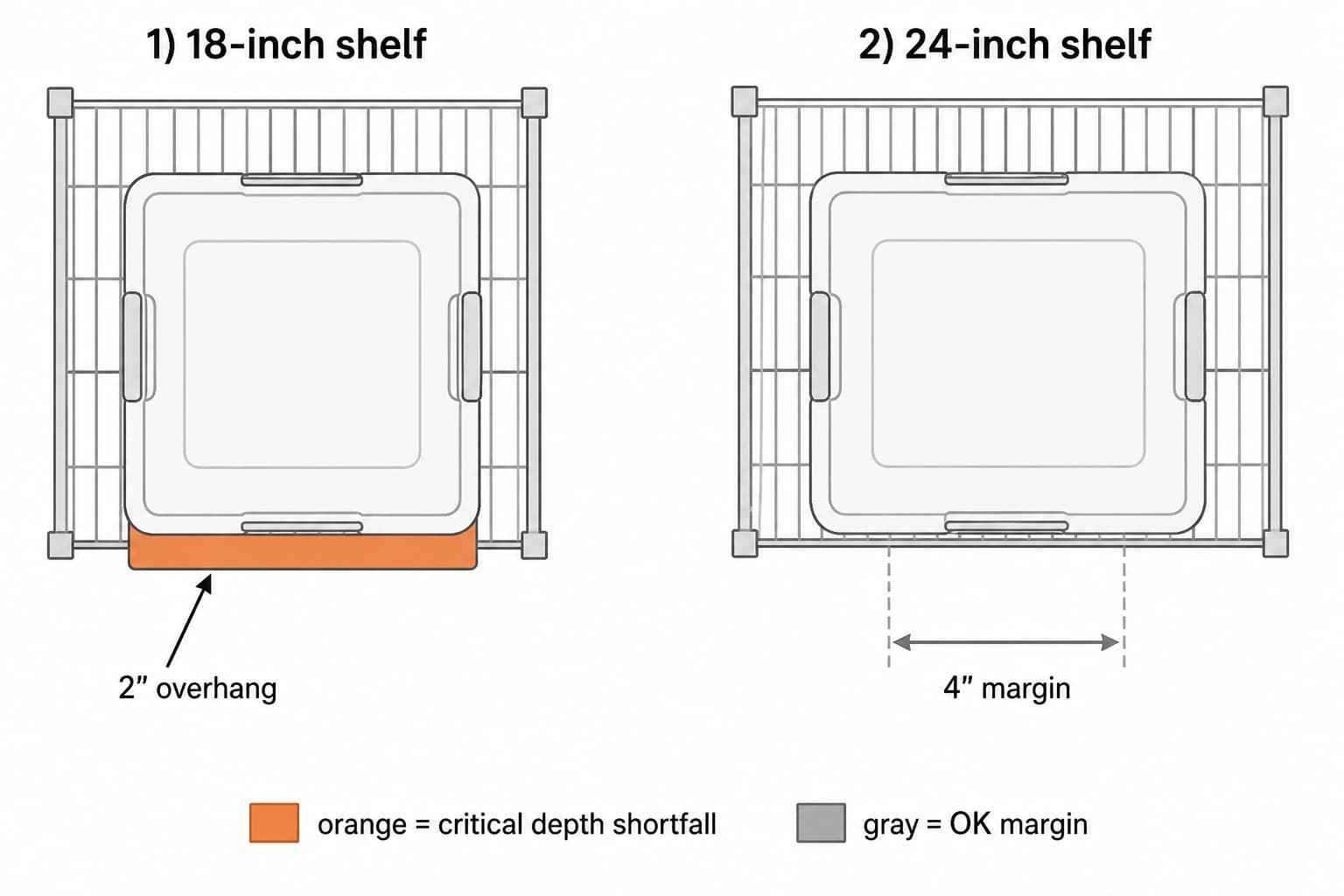
A standard 27-gallon plastic tote is roughly 20 inches on its short side. An 18-inch shelf leaves about 2 inches of overhang at the front when the tote is placed short-side-deep. That sounds small until the lids start cracking against the tier above it as you slide the tote out, or until a corner of the tote catches as you take it down. A 24-inch shelf gives you a 4-inch margin and the tote sits flat. The depth call is the most consequential decision in this category.
Distinguishing a heavy-duty shelf from a dedicated tote rack
A heavy-duty shelf can hold totes, lumber, paint cans, or a workshop air compressor — it’s rated by weight per tier. A dedicated tote rack is rated by the number of totes it organizes, with a per-tier weight limit that is intentionally lower because the rack is meant for the totes themselves, not for arbitrary contents. Mixing the two up is the single most common mistake we see in this category.
Anchoring options (anti-tip strap, wall mount)
Free-standing units in a household with kids should be anchored. Some racks ship with anti-tip straps; others have integrated wall-mount holes; a few are explicitly designed for wall anchoring as the primary installation. The Gladiator unit on this list is the only heavy-duty shelf designed-for-anchoring out of the box. Among the dedicated tote racks, the Bin Warehouse 12-tote rack actually requires wall installation per the manufacturer — anchoring is not optional. The other picks can be anchored, but you’ll be reading the manual rather than following a labeled hardware kit.
What a good product page should specify clearly
If the listing doesn’t tell you all of the following, treat it as incomplete and look at a different brand: per-tier capacity (with the configuration specified — leveling feet vs casters), shelf depth and width, post diameter, height adjustability increments, total assembled height, anchor-hardware-included status, and whether the unit is welded or boltless. The good listings spell these out in a table; the weak ones bury them in a marketing paragraph.
Best Heavy-Duty Metal Shelf: Husky Industrial Duty Steel Garage Shelving Unit
Best for: buyers who actually load each shelf with dense items — auto fluids, paint, hardware bins, tool boxes — not just bulky-but-light totes

Short verdict: Welded steel frame at the upper end of the per-shelf-capacity range you can find at the Home Depot end of the aisle.
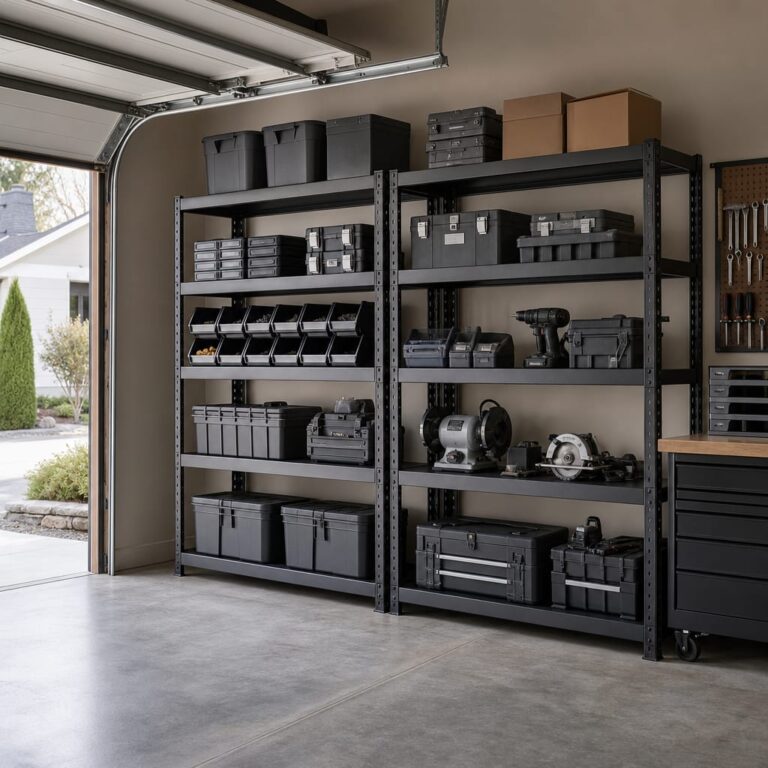
The Husky industrial line on Amazon shows a per-shelf capacity figure that is well above the typical flat-pack chrome shelf in the same height bracket. The Amazon listing for this Husky industrial unit lists 2,500 pounds per shelf with a welded frame and adjustable tiers — the welded steel construction is the structural reason the per-shelf number is achievable, since boltless flat-pack frames with bolt-together posts simply don’t carry that kind of load without progressive deflection.
Why it stands out
Welded frame, listed dimensions in the standard 24-inch depth bracket where 27-gallon totes fit cleanly, and a per-shelf capacity that comfortably handles the densest typical garage load — five 80-pound tool totes side-by-side, an air compressor with a few oil cans on the same shelf, or a workshop’s worth of paint and finish cans without needing to spread the weight to the corners.
Key specs to check
- Manufacturer-listed per-shelf capacity (verify configuration: leveling feet vs casters)
- Exact dimensions of the variant — the Husky industrial line spans several sizes
- Welded frame vs the boltless versions sold under similar names
- Adjustability increments and total assembled height
- Whether wall-anchor hardware is included or sold separately
Recurring feedback patterns
Recurring positive feedback patterns tend to center on the rigidity of the welded frame relative to boltless racks buyers had used before — the absence of the wobble that bolt-together posts develop under load is the point people seem to return to. Common complaints typically involve the weight and assembly footprint: a welded steel unit ships heavy and arrives in large cartons, and buyers often mention needing a second person to position it. A second recurring thread is variant confusion at the point of purchase — buyers describe ordering and then being unsure whether the size they received matched the capacity figure they were comparing.
Potential drawbacks
- Welded construction means the frame is not flat-packable for storage or easy to relocate once assembled
- The deep, tall industrial format is overkill for buyers who only store a handful of light totes
- Adjustability is limited by the fixed welded sections compared with a fully boltless system
- The industrial finish is utilitarian rather than the coordinated-system look of a Gladiator unit
Buyer warning
Husky’s industrial line has multiple sub-models and Amazon listings sometimes carry capacity numbers that originate from a related variant. Confirm the exact size variant of this Husky industrial shelving unit before ordering — depth, width, and per-shelf capacity should match what you read in the title. If the listing is ambiguous, the homedepot.com product page for the same model is usually clearer.
Best Industrial-Style with Anchoring: Gladiator 4-Shelf Welded Steel Garage Shelving Unit
Best for: buyers who want a wall-anchored, Whirlpool-grade unit that pairs visually with the rest of a Gladiator garage system

Short verdict: Anti-tip and wall-anchor support sit at the centre of this unit’s design — the only pick on this list where the manual leads with anchoring, not with leveling feet.
Gladiator’s 60-inch-wide, 18-inch-deep, 72-inch-tall welded shelving unit sits at the higher end of the residential garage market in both finish and price. The hammered granite finish, the welded (rather than boltless) joints, and the integrated anti-tip provisions are what you’re paying for relative to a generic boltless rack with the same listed capacity. The unit’s design language — square-edged tubular posts, the recessed shelf lip, the matte rather than glossy finish — reads as part of a coordinated Gladiator system, which is exactly the point if you also have Gladiator slat wall or cabinets nearby.
Why it stands out
The anti-tip design and wall-anchor support are not afterthoughts — they’re called out in the product line as core features, with hardware included in the box. For a household with young children climbing on shelves, or a renter who’s negotiated permission to wall-anchor, this is the only unit on this list that anchors without you needing to source extra brackets.
Key specs to check
- Per-shelf manufacturer-listed capacity (verify on gladiatorgarageworks.com)
- Wall-anchor hardware included in the box
- Frame finish (hammered granite is standard on this line)
- Compatibility with other Gladiator wall-mounted accessories
- Welded joints vs any optional boltless version sold under similar names
- Whether the buyer is anchoring into studs (use lag screws + washer, snug not torqued) or into drywall alone (this unit really wants studs)
Recurring feedback patterns
Recurring positive feedback patterns tend to focus on fit-and-finish and the way the unit visually matches other pieces in the Gladiator line — buyers who already own Gladiator cabinets or slat wall often mention the coordinated look as a deciding factor. Common complaints typically involve the depth being shallower than buyers expected for large totes, and the price premium relative to a generic boltless rack with a similar listed capacity. Several buyers mention that the anchoring hardware, while included, assumes a stud wall and that anchoring into drywall alone left them less confident.
Potential drawbacks
- The 18-inch depth limits how cleanly 27-gallon totes sit, forcing overhang or reorientation
- It sits at the higher end of the category on price for its listed capacity
- The system-matching finish is wasted value for buyers who don’t own other Gladiator pieces
- Welded construction reduces flexibility to reconfigure shelf spacing later
Buyer warning
The 18-inch depth is the constraint. A 27-gallon tote (~20 inches on the short side) will overhang the front edge by roughly 2 inches. Either accept the overhang, rotate the totes long-side-out (which means fewer totes per tier), or pick the 24-inch-deep wire shelf instead. If you can’t anchor at all — most renters can’t — review our renter-friendly shelving without anchoring picks.
Best Deep Wire Shelf for Large Totes: Seville Classics UltraDurable 5-Tier Wire Shelving (60″ × 24″)
Best for: tote-heavy garages where most of what’s stored is 27-gallon-class totes and where the building runs damp in some seasons
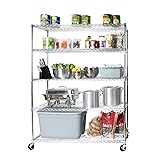
Short verdict: NSF-certified UltraZinc wire shelving with the 24-inch depth that swallows 27-gallon totes whole — the right pick when totes are most of what you store.
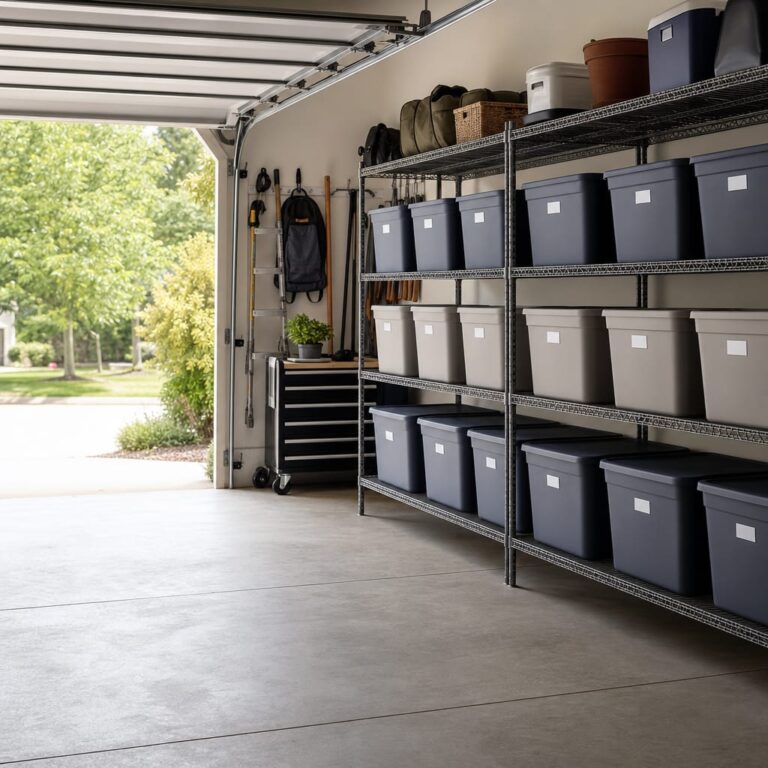
Seville Classics’ UltraDurable line is built around 1-inch-diameter posts and an UltraZinc finish that handles damp environments better than the chrome boltless alternatives. The 60-inch-wide × 24-inch-deep variant on Amazon is the model that sits in the right depth bracket for residential 27-gallon totes — variants with 14-inch or 18-inch depths exist but won’t accommodate the same tote class without overhang.
Why it stands out
The 24-inch depth is the structural reason this unit fits 27-gallon totes flat with a 4-inch margin to spare. NSF certification is the build-quality proxy that Seville Classics, MonsterRAX, and SafeRacks share — useful in restaurants and clinics, but in a residential garage it’s a stand-in for “this unit was engineered to hold what the listing says.” UltraZinc handles condensation cycles that would oxidize a chrome shelf in a few seasons.
Key specs to check
- Manufacturer-listed per-shelf capacity, with configuration noted (leveling feet vs casters — these are very different numbers)
- NSF certification on the specific variant
- 1-inch post diameter (this is the structural detail)
- Height adjustability increments
- Whether the included wheels are lockable
Recurring feedback patterns
Recurring positive feedback patterns tend to center on the depth being genuinely usable for large totes and on the UltraZinc finish holding up in damp spaces where buyers had seen chrome shelving rust. The mobility of the casters on flat concrete is another frequently mentioned upside. Common complaints typically involve the gap between the leveling-feet capacity buyers expected and the lower realized capacity once the unit is on its wheels, and assembly steps where the shelf clips or split-sleeves are fiddly to seat. Buyers often mention that the wire surface lets smaller loose items tip or fall through if not contained.
Potential drawbacks
- Wire shelf surface lets small or loose items slip through unless a liner or bin is used
- Realized capacity drops substantially when rolling on casters versus fixed on leveling feet
- Split-sleeve assembly can be tedious and is awkward to adjust once weighted
- Caster mobility introduces frame flex that a fixed-foot setup would not have
Buyer warning
Seville’s UltraDurable line publishes a materially higher per-shelf capacity on leveling feet than on the included wheels — casters concentrate load on a smaller contact patch and reduce what the frame can carry. The manufacturer does not publish a single per-shelf figure for this specific 60-inch, 24-inch-deep model, so decide up front whether you’re rolling the unit or setting it on its leveling feet, and don’t assume a specific load either way.
Best Dedicated Tote Rack (Tote-Included): MonsterRAX Bin Storage Rack with 5-Pack 27-Gallon Totes
Best for: buyers who don’t already own matching totes and want one purchase to cover both the rack and the bins

Short verdict: A different category — solves “where do I put five 27-gallon totes vertically without stacking them?” without forcing the buyer to source totes separately.
The MonsterRAX bin rack is one of the few dedicated tote racks that ship with totes included. Five 27-gallon totes nest into the rack frame on dedicated rails, organized vertically rather than stacked. The frame is NSF-certified zinc-plated steel built specifically for that bin geometry — not a general-purpose shelf with a tote-friendly footprint.
Why it stands out
This rack is engineered for the totes it ships with: the rail spacing matches the lid lip width, the height between tiers is sized to lift a tote in and out without contortion, and the included totes are the right gallon-class for typical residential storage (decor, clothing, toys, holiday gear). Buying the rack and the totes together also avoids the very common mistake of ordering a rack first and then discovering that the totes you already own don’t fit the rail spacing.
Key specs to check
- Number of totes included (five for this product)
- Per-tier weight limit (typically ~50 lb for this rack class, same as SafeRacks)
- Frame footprint dimensions (31″ × 23″)
- Rail-spacing window (the gap between rails that determines tote-lid-fit)
- Whether the totes have lockable lids in the included set
Recurring feedback patterns
Recurring positive feedback patterns tend to center on the convenience of getting a matched rack-and-tote set in one purchase, with buyers mentioning that the totes slide in and out on the rails without the contortion that stacked bins require. Common complaints typically involve the per-tier weight ceiling catching out buyers who treated it like a general shelf, and the included totes being lighter-duty than premium standalone bins. Several buyers mention that the rack footprint takes more floor space than they pictured for the number of totes it holds.
Potential drawbacks
- The low per-tier limit rules out using it for dense or heavy contents
- The included totes are sized to the rack, so swapping in your own bins may not fit the rails
- The vertical-rail format is single-purpose and cannot double as a general utility shelf
- Frame footprint is larger relative to tote count than buyers tend to expect
Buyer warning
Per-tier capacity on this class of rack is much lower than a heavy-duty utility shelf — typically 50 pounds per tier. Storing tools, hardware, or lumber on a dedicated tote rack defeats its purpose and risks frame failure. If you have items that exceed the tote’s intended use case, buy the heavy-duty shelf instead. The frame is for organizing totes, not for arbitrary garage loads.
Best for Larger Tote Collections: SafeRacks 2-Pack 5-Tier Steel Tote Rack
Best for: households organizing ten or more totes — seasonal decor, kids’ outgrown clothing, sports equipment, kitchen overflow

Short verdict: Two-unit bundle = ten total tote slots in a single purchase, premium all-steel build with NSF certification.
SafeRacks’ 2-pack 5-tier tote rack is the right pick when one MonsterRAX-style rack isn’t enough. Two identical 31″ × 23″ × 68″ frames means ten organized tote slots without forcing the buyer to comparison-shop two different brands and end up with mismatched frames. Most households grow into a 10-tote setup gradually rather than starting with one — seasonal decor adds about two totes a year, kids’ outgrown clothing adds one to two more, and sports equipment fills another tier — so buying the 2-pack up front avoids the awkward second-purchase mismatch.
Why it stands out
The all-steel premium build and NSF certification put this above the white-label tote racks that flood the category. The two-unit configuration is the differentiator — for households organizing seasonal decor across the calendar year, you typically need more than five tote slots, and ten is the size most buyers settle on when they actually count what they own. Per-tier capacity sits at 50 pounds, total at 250 pounds per frame — same class as the MonsterRAX, just doubled.
Key specs to check
- Per-tier weight capacity (manufacturer-listed at 50 pounds per tier, similar to MonsterRAX)
- Frame dimensions per unit (31″ × 23″ × 68″)
- NSF certification on this specific variant
- Rail-spacing window (the lid-lip dimension the rack accepts — listed as 24.25″ × 30.25″)
- Whether the units can be configured side-by-side vs stacked
Recurring feedback patterns
Recurring positive feedback patterns tend to center on the value of getting two matched frames in one purchase and on the all-steel build feeling sturdier than the white-label tote racks buyers had compared against. Common complaints typically involve the linear wall space the pair demands and surprise at the assembled footprint once both units are up. Buyers often mention checking their own tote brand against the rail-spacing window before committing, after reading that the accepted lid-lip dimension is specific.
Potential drawbacks
- Two full frames need substantially more wall space than buyers initially plan for
- Like all dedicated tote racks, the per-tier limit excludes heavy or dense contents
- Buying as a fixed 2-pack is wasteful if a single frame would have sufficed
- Tote fit is tied to the rail-spacing window, so non-matching bins may not seat properly
Buyer warning
Two units at 31″ × 23″ each need roughly 5 feet of linear wall space side-by-side. Buyers who skip the measurement step end up with one unit against a wall and the second one orphaned in the middle of the floor. SafeRacks has historically had dimensional divergence between the Amazon listing and saferacks.com on the rail-spacing window — that specific delta has narrowed in recent batches, but it remains a buyer-side check worth doing before you assume your specific tote brand fits.
Best Multi-Tote-Size Rack: Bin Warehouse Heavy Duty 12-Tote Rack
Best for: buyers with mixed-size tote collections — some 17-gallon, some 27-gallon, some retired 22-gallon varieties that don’t all match

Short verdict: Dual-rail support bars are the differentiator — they accommodate totes of different sizes side-by-side, unusual flexibility for the category, and the rack is part of the Proslat line for buyers who recognize the brand.
The Bin Warehouse rack is built around twelve tote slots arranged in a footprint that holds two columns of bins. Manufacturer-listed installed dimensions are 69.5″ × 68″ × 27.5″. The unusual feature is the dual support rail at each tier: the tote rests on two parallel bars rather than nesting into a single rail width, which means a smaller tote and a larger tote can sit on the same tier without one falling through. The rack is part of Proslat’s heavy-duty garage-storage line — a recognizable brand on the Bin Warehouse listing matters when you’re cross-checking specs across retailers.
Why it stands out
Most dedicated tote racks demand uniform tote sizes — drop a smaller bin into a rack sized for a larger one and the smaller bin falls through. Bin Warehouse’s dual-rail design solves that. For buyers who’ve accumulated totes over years with different brands and gallon classes, this rack accommodates the messy real-world collection rather than forcing a buy-new-totes refresh. It’s also a consolidation pick — one twelve-tote rack often replaces two or three smaller racks the household has accumulated, which clears more floor space than the rack itself takes up.
Key specs to check
- Total tote count supported (twelve for this product)
- Dual-rail dimensions and the rail-spacing range (manufacturer-listed: fits 15- to 32-gallon totes; max tote 20″ × 17″ × 20″–32″ deep)
- Total weight capacity (manufacturer-listed at 1,200 pounds total)
- Frame footprint and assembled height (69.5″ × 68″ × 27.5″)
- Wall-anchor hardware (must be installed to the wall — this is required, not optional)
Recurring feedback patterns
Recurring positive feedback patterns tend to center on the dual-rail flexibility actually working as advertised — buyers with mismatched tote collections mention being able to mix gallon classes on the same frame, which single-rail racks don’t allow. The high tote count consolidating several smaller racks into one is another frequently cited upside. Common complaints typically involve the mandatory wall installation catching out buyers who wanted a free-standing unit, and the wide footprint demanding a long stretch of clear wall. Several buyers mention spending real time aligning the rails to studs during assembly.
Potential drawbacks
- Wall installation is mandatory, so it cannot be used as a free-standing unit
- The wide twelve-tote footprint needs a long, uninterrupted run of wall
- The dual-rail flexibility is wasted on buyers whose totes are all identical
- Assembly and stud alignment are more involved than a simple free-standing rack
Buyer warning
This rack must be wall-anchored. Proslat’s product page lists wall installation as a requirement for stability, not an optional add-on, so plan for stud-mounted hardware before you click buy. If you intended to place this rack mid-floor or against a wall you can’t drill into, pick a free-standing dedicated tote rack instead. Buyers with strict tote-size uniformity also get less benefit from the multi-size design — if every tote in the collection is identical, the simpler MonsterRAX or SafeRacks racks are easier to set up and look tidier.
Side-by-Side Comparison
| Product | Best for | Type | Depth | Per-shelf or per-tier capacity (manufacturer-listed) | Holds 27-gal totes? | Main advantage | Main drawback |
|---|---|---|---|---|---|---|---|
| Husky Industrial Duty | Dense items in totes | Welded steel | ~24″ | 2,500 lb per shelf | Yes | Per-shelf capacity at the upper end | Multiple sub-variants need confirmation |
| Gladiator 4-Shelf Welded | Anchored installations | Welded steel + anti-tip | 18″ | 1,800–2,000 lb per shelf (differs by production year) | With ~2″ overhang | Anti-tip + anchoring out of the box | Depth limited for 27-gal totes |
| Seville Classics UltraDurable 60×24 | Tote-heavy damp garages | NSF wire, rolling | 24″ | Not published for this model — drops sharply from leveling feet to casters | Yes — clean fit | 24″ depth + UltraZinc finish | Capacity drops sharply on casters |
| MonsterRAX Bin Rack + 5 Totes | Buyers without matching totes | Dedicated tote rack | 23″ | Per-tier ~50 lb | Yes — totes included | Ships with the totes | Low per-tier capacity |
| SafeRacks 2-Pack | Larger tote collections | Dedicated tote rack ×2 | 23″ | 50 lb per tier / 250 lb total per frame | Yes | Ten slots in one purchase | Needs ~5 ft of linear wall space |
| Bin Warehouse 12-Tote | Mixed-size tote collections | Dual-rail tote rack (wall-anchored) | varies by tier | 1,200 lb total (manufacturer-listed) | Yes (most sizes 15–32 gal) | Multi-size flexibility | Wall-anchor required, not optional |
Heavy-Duty Shelf vs Dedicated Tote Rack — How to Pick
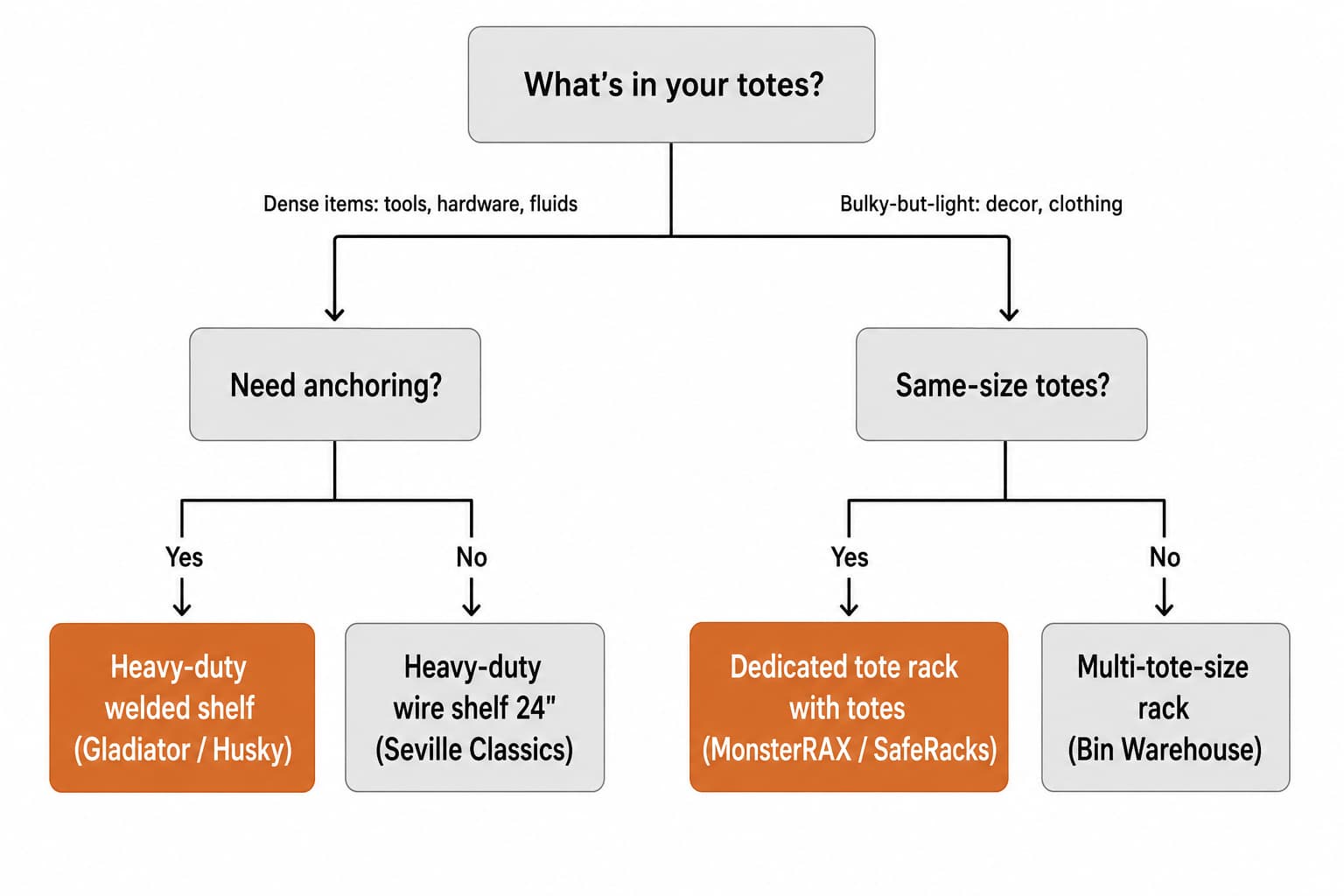
The single most important decision in this category is which of the two product types you’re actually buying. Heavy-duty shelves carry weight; dedicated tote racks organize totes by count. The two are not interchangeable, and treating them as if they are produces predictable failures — a tote rack overloaded with tools, or a heavy shelf bought to hold five seasonal decor totes when a 50-pound-per-tier tote rack would have done the job for less money and less floor space.
| Need | Heavy-duty shelf | Dedicated tote rack |
|---|---|---|
| Storing dense items in totes (tools, hardware, fluids) | ✓ | ✗ |
| Storing 5+ matching totes vertically | OK | ✓ |
| Storing mixed-size tote collection | depends on depth | ✓ (Bin Warehouse) |
| Need anchoring | ✓ (Gladiator) | ✓ (Bin Warehouse — required) |
| Mixed contents (some totes, some loose tools) | ✓ | ✗ |
| Tight footprint, low ceiling | depends on variant | usually yes |
If your totes hold dense items, the answer is a heavy-duty shelf and the depth call is the next question. If your totes are bulky-but-light and you have five-plus of them in matching sizes, the answer is a dedicated tote rack. Mix-and-match collections are the one case where the Bin Warehouse dual-rail design genuinely matters. For more on layouts where floor space is the bigger constraint than tote count, see our notes on compact garage layouts.
How many totes actually fit on a garage shelf
Tote makers publish dimensions and shelving makers publish dimensions, but nobody puts the two together — so people buy shelving, then discover their totes overhang it. This table takes the published external size of totes from the brands people actually buy for garage storage — Sterilite, Rubbermaid Roughneck, and IRIS USA — and works out how many fit per shelf on the two garage shelving depths you can actually buy, 18 in and 24 in.
| Tote | Published dimensions (source order) | Footprint | Height | Fits an 18 in deep shelf? | Per 48 × 18 in shelf | Per 48 × 24 in shelf | Specification source | Source checked |
|---|---|---|---|---|---|---|---|---|
| Sterilite 108 Qt. Stacker Box | 25 3/4" x 18 3/8" x 19 3/8" | 25¾ in × 18⅜ in | 19⅜ in | No — it overhangs | 0 | 1 | Sterilite 108 Qt. Stacker Box | 2026-09-20 |
| Rubbermaid Roughneck 25 Gal. Storage Box | 23-5/16 in. H x 18-1/2 in. W x 28.875 in. D | 28⅞ in × 18½ in | 23 5/16 in | No — it overhangs | 0 | 1 | Rubbermaid Roughneck 25 gal Storage Box, Mfr# RMRT250002 | 2026-09-20 |
| Rubbermaid Roughneck 31 Gal. Storage Box | 16.7 in. H x 20.4 in. W x 32.3 in. D | 32.3 in × 20.4 in | 16.7 in | No — it overhangs | 0 | 1 | Rubbermaid Roughneck 31 gal Storage Box, Mfr# RMRT310000 | 2026-09-20 |
How these numbers were produced: External dimensions are quoted on the date shown per row. Sterilite rows are quoted from Sterilite’s own product pages (L x W x H order). Rubbermaid Roughneck rows are quoted from Ace Hardware’s retailer listing, which prints the manufacturer’s SKU-linked dimensions in H x W x D order on each product page. IRIS USA rows are quoted from IRIS USA’s own product pages (L x W x H order). All figures are the external/overall assembled dimensions with the lid on. The counts are computed, not estimated: totes are placed in a single layer, all in the same orientation, with no overhang and no gap; both orientations (the tote’s long side along the shelf’s 48 in run, or along its depth) are tried and the better one is kept. Shelf width is 48 in in both cases — the two depths are real Husky shelving footprints: 48 in. W x 18 in. D (Husky 86 in. H x 48 in. W x 18 in. D 6-Shelf Steel Shelving Unit, model MR481886W6B, https://www.homedepot.com/p/Husky-86-in-H-x-48-in-W-x-18-in-D-Black-Steel-6-Shelves-Shelving-Unit-MR481886W6B/306062319) and 48 in. W x 24 in. D (Husky 5-Tier Steel Shelving Unit, 48 in. W x 78 in. H x 24 in. D, model 426007, https://www.homedepot.com/p/Husky-5-Tier-Riveted-Steel-Garage-Storage-Shelving-Unit-in-Silver-48-in-W-x-78-in-H-x-24-in-D-426007/303241694); neither product page states a clear opening between posts. 48×18 and 48×24 are unobstructed reference surfaces, not guaranteed usable dimensions of every nominal 48×18 or 48×24 rack — posts and lips can reduce the clear opening (one retailer answer for a Husky 48×24 gives about 45.5 × 21.5 in between posts). Round the result down again if your shelving has corner posts that intrude, and leave room to get a hand in.
- A tote that fits the shelf footprint still needs vertical room: check the tote height against your shelf spacing, and leave clearance to lift it in and out rather than sliding it flush.
- Counts assume a flat, full-depth shelf. Wire shelving with a lip, or posts at the corners, will cost you the last tote in a row.
- Lids overhang the base on most totes; the figures here are the manufacturer’s overall assembled dimensions, which already include the lid.
- Capacity in quarts or gallons tells you nothing about whether it fits — and "27" doesn’t mean the same thing twice. The Sterilite 27 Qt. ClearView Latch Box (17 in x 11-1/8 in) fits an 18 in shelf; the Sterilite 108 Qt. Stacker Box (25-3/4 in x 18-3/8 in) — 27-gallon-equivalent by volume (108 qt = 27 gal), though Sterilite sells it as "108 Qt.," not "27 Gal." — does not.
- Manufacturers and retailers don’t all publish dimensions in the same order. Ace Hardware lists Rubbermaid Roughneck as Height x Width x Depth, where Sterilite and IRIS USA publish Length x Width x Height. This table normalises every row to footprint (the two horizontal dimensions) and height so they compare directly regardless of the order they were published in.
- Rubbermaid Roughneck’s 10 gal and 18 gal totes share the same footprint (23⅞ in x 15⅞ in) — only the height changes, so stepping up in capacity in that range costs no extra shelf space, only vertical clearance.
- A blank cell means the manufacturer does not publish that figure — we do not fill gaps with numbers we could not source.
These are the entries that matter for this guide. The full table, with every row and its source, is in our How many totes actually fit on a garage shelf.
How to Measure Your Totes Before Buying
Buyers who skip this step are the ones who report later that “the rack is too narrow for my totes” or “the shelf depth is fine but the lid keeps catching the tier above”. Five minutes of measurement up front avoids both.
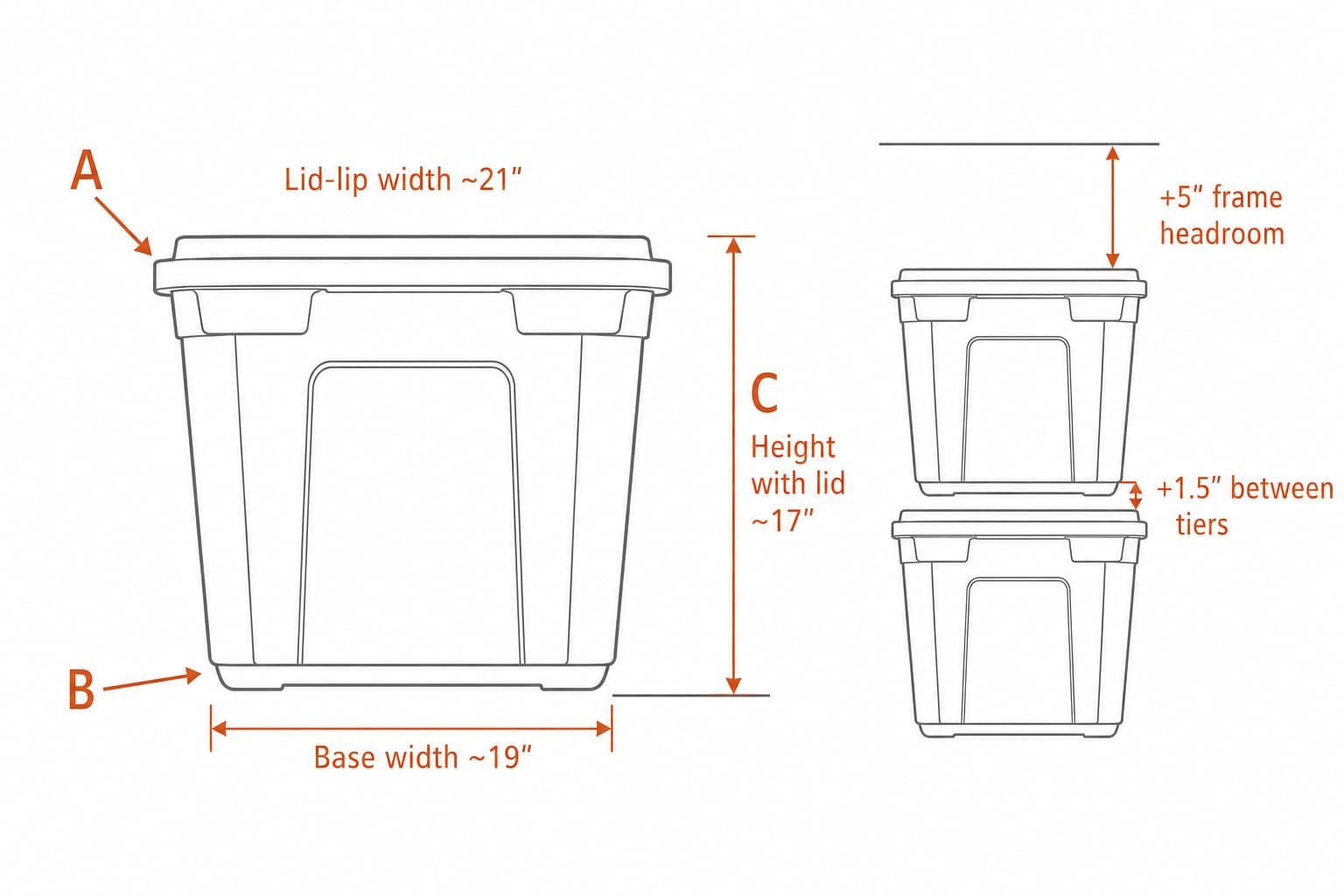
- Measure the tote at its widest point, which is almost always the lid lip rather than the base.
- Compare that wider dimension to the shelf depth — overhang of zero or less means the tote fits cleanly.
- Stack two totes — measure the height with lids closed, including the lid lip.
- Add 1 to 2 inches between tiers for easy in-and-out, especially if the totes are heavy.
- Multiply by tier count to get the total inside-rack height needed.
- Add the rack frame headroom (typically 4 to 6 inches above the top tier).
- Compare against your ceiling clearance, especially under garage door tracks where headroom is reduced.
Common Complaints and Buyer Warnings
Recurring feedback patterns across this category cluster around three issues. First, the capacity number on the listing assumes a specific configuration — leveling feet, evenly distributed, on level concrete. Real garages have sloped slabs, casters that introduce flex, and uneven loads, and the realized capacity sits well below the listed figure. Second, “listed depth” usually means the frame depth from the front of the front post to the back of the back post; the usable shelf depth (where a tote actually sits) is usually 1 to 2 inches less. Third, dedicated-tote-rack rail spacing is set to specific brand/gallon combinations, and rail spacing changes between batches without notice — the totes that fit the rack you bought last year may not fit the same model today.
The single most important warning in this category: weigh a tote when it’s full. A 27-gallon tote routinely hits 60 to 80 pounds when packed densely. Multiply by tote count to get the actual load on each shelf — and compare that to the per-tier (not total) figure on the spec line. If you’ve genuinely run out of floor space, overhead storage as a footprint-saver is worth considering before adding another floor unit.
Who Should Avoid Heavy-Duty Tote Shelving?
This product category is wrong for several common situations. Renters who can’t anchor anything to walls are the first — pick from a renter-specific list rather than fighting a free-standing 72-inch shelf in a small garage, and avoid the Bin Warehouse rack entirely since it requires wall installation. Garages with sloped concrete floors are second — leveling feet are non-negotiable on slope, and flat-pack racks rarely have the leveling range to fully compensate. Households with toddlers or pets that climb on shelves are third — wall-mounted or anchored is the only safe path; free-standing units in those settings are a tipping risk regardless of how heavy the load is.
Climate-sensitive items (paint, electronics, certain medications) shouldn’t live on open garage shelving in the first place. Open wire and welded steel racks don’t solve the climate problem — that’s a sealed-cabinet question, not a shelving question.
FAQ
How heavy is a fully-loaded 27-gallon tote?
A typical 27-gallon plastic tote weighs around 5 to 7 pounds empty. Loaded, the contents drive the total: holiday decor and outgrown clothing usually land at 30 to 45 pounds, kids’ sports equipment at 50 to 70 pounds, hardware/tools at 70 to 100 pounds. When you size capacity, multiply by tote count and assume the upper end of the range — overestimating is cheaper than under-sizing.
Can I put a heavy-duty shelf on a dedicated tote rack frame?
No. The two are designed for different load patterns, and the dedicated rack’s per-tier capacity (around 50 pounds) is much lower than what a heavy-duty utility shelf carries. Pick one or the other for a given column. If you need both kinds of storage, buy both kinds of unit and locate them in separate areas.
Do I need to anchor a free-standing heavy-duty shelf?
It depends on height, load, and whether children or pets are in the space. The Gladiator unit on this list is the only heavy-duty pick designed for anchoring out of the box; the others can be anchored, but the hardware isn’t included by default. The Bin Warehouse 12-tote rack must be wall-anchored — it’s not optional. As a working rule, any unit over 72 inches tall in a household with kids should be anchored regardless of brand.
18 inches vs 24 inches — which depth do I actually need?
24 inches if any of your totes are 27-gallon class or larger. 18 inches works for utility totes 22 gallons and below, kitchen-style storage, and tools/hardware in smaller bins. The 6-inch difference doesn’t sound like much until you load five 27-gallon totes onto a shelf and watch each one overhang.
Are these racks NSF-certified, and does that matter?
Seville Classics, MonsterRAX, and SafeRacks all carry NSF certification on the variants noted. NSF certification matters in restaurants and clinics where the spec is required by code. In a residential garage it’s more useful as a build-quality proxy — units engineered to NSF standards tend to ship with thicker posts, better-welded joints, and more honest spec sheets.
How does manufacturer-listed capacity vary between leveling feet and casters?
The delta is typically large — often 4x to 8x. Seville Classics’ UltraDurable line publishes 800 pounds per shelf on leveling feet for one related variant, while listing only 500 pounds total for the whole unit on wheels. The casters concentrate load on small contact patches and introduce frame flex that the leveling-feet number doesn’t account for. Always read the spec line that names the configuration, and assume capacity is for the configuration listed, not whatever you happened to assemble.
Can I mix totes from different brands on the same rack?
Dedicated tote racks (especially Bin Warehouse with its dual-rail design) accommodate mixed-brand totes better than single-rail racks. For heavy-duty utility shelves, brand match doesn’t matter at all — the shelf doesn’t care what the tote brand is, only what’s inside it.
How tight should the wall anchoring be?
Snug, not torqued. Follow the manufacturer’s instructions, especially the difference between drywall anchoring (use the included plastic anchors, set into studs where possible) and stud anchoring (lag screws into the stud, with the wall washer in place). Over-tightening lag screws into a stud can crack the stud face — the wall washer plus a snug seat is correct.
Sources Reviewed
For this guide, we reviewed manufacturer product information, retailer specifications, Amazon product listings, public customer feedback patterns, and garage-organization-specific discussions. We focused on product details that matter for heavy storage totes, including dimensions, shelf depth, manufacturer-listed per-tier and per-shelf capacity, frame construction (welded vs boltless), material finish, adjustability, and tote compatibility.
Related Guides
- Best Garage Shelves for Storage Bins
- Best Shelving for Small Garages
- Best Garage Storage for Renters
- Best Overhead Garage Storage Racks
- Best Garage Shelving for Low Ceilings
- Clear Bins vs Opaque Bins
- How to Choose Storage Bins for Garage Shelves
- How to Plan Garage Organization Zones
- metal vs plastic garage shelving
- Stackable Bins vs Shelving Units
- Wire Shelving vs Solid Shelving for Garage Storage
- Heavy-Duty Garage Shelves
- how to stack garage storage bins safely