How to Choose a Garage Storage System (Buying Guide)
Last updated:
Disclosure: This article contains affiliate links. If you buy through these links, we may earn a commission at no extra cost to you. We do not claim hands-on testing unless clearly stated.
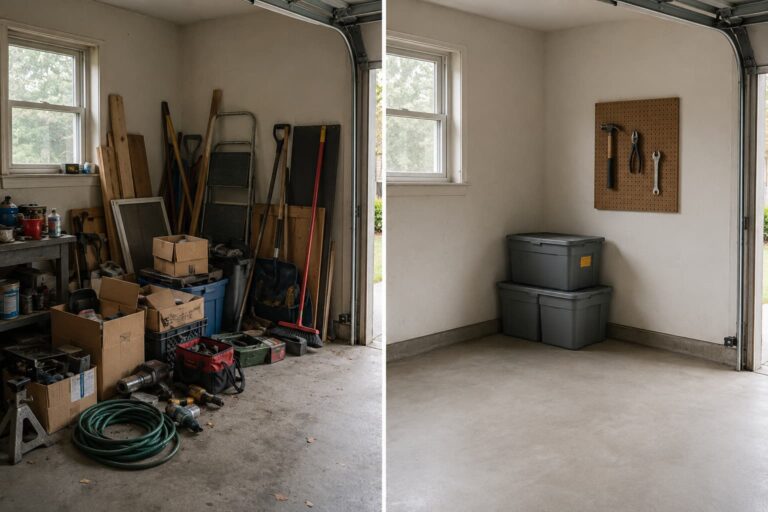
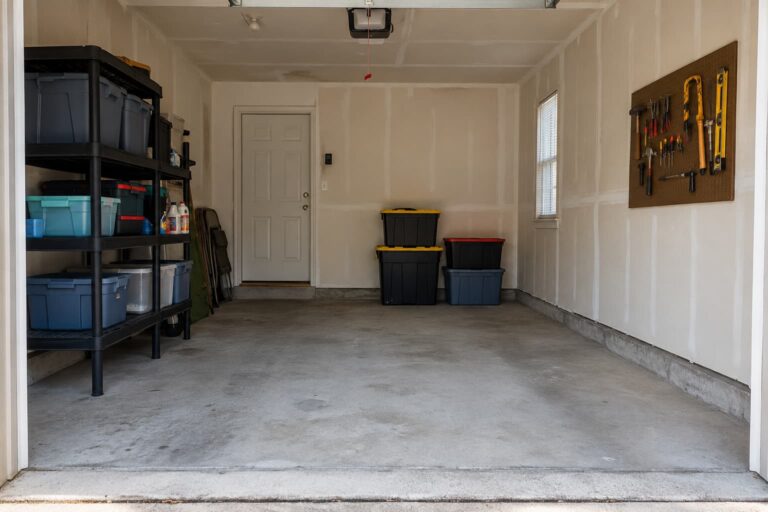
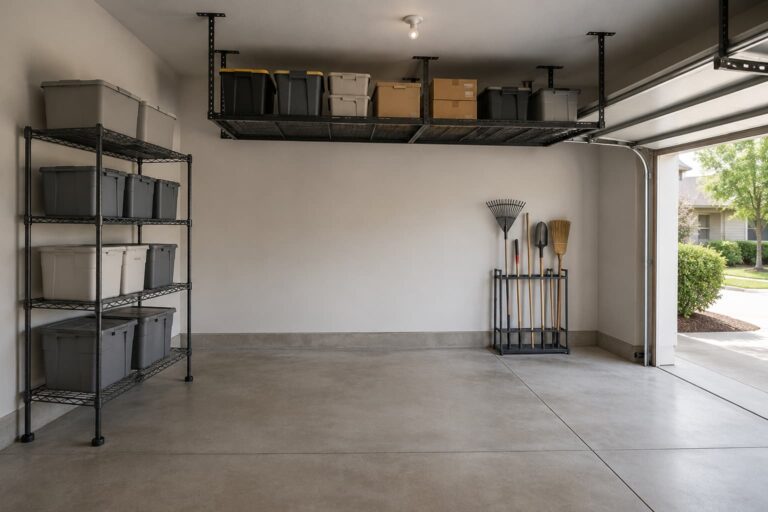
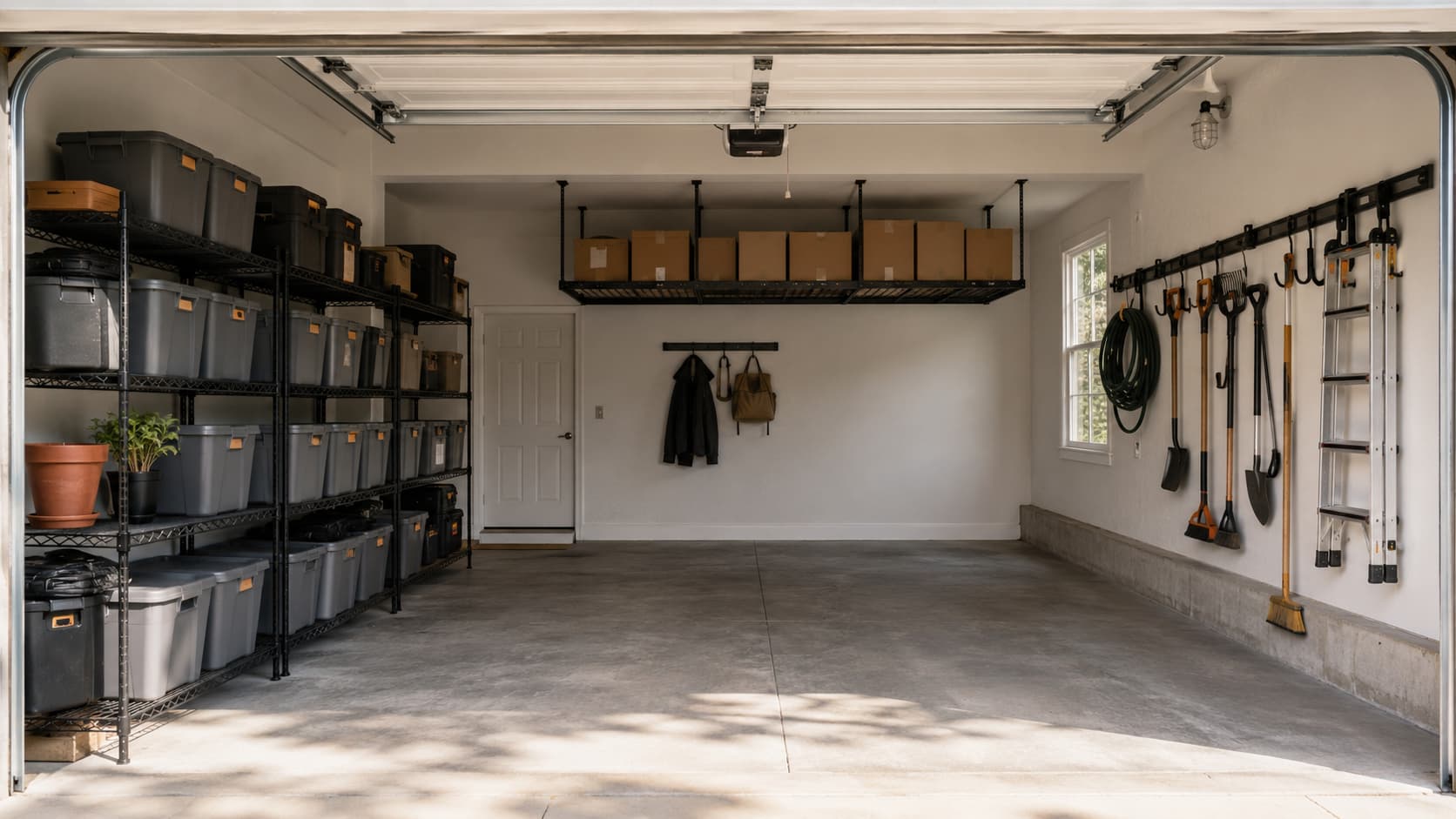
A two-car garage holds the equivalent of a small storage room: totes, tools, sports gear, paint, the bike you ride twice a year, and the seasonal decorations you swore you’d thin out last year. The ceiling, walls, and floor are all storage real estate, but most homeowners use only the floor — which is why the car ends up parked in the driveway.
This guide gives you a framework for choosing the right garage storage system in the right order. We’ll cover the four main product types (free-standing shelving, wall-mounted track and slatwall, overhead racks, modular cabinets), give you a use-case-to-product-type matrix, and walk you through the measurements to take before buying anything. We won’t cover full-shop conversions, garage-gym layouts, or built-in cabinetry — this is residential household-storage territory.
Quick Recommendation by Use Case
Before getting into the details, here’s the short version. Match what you’re trying to put away to the right product type.
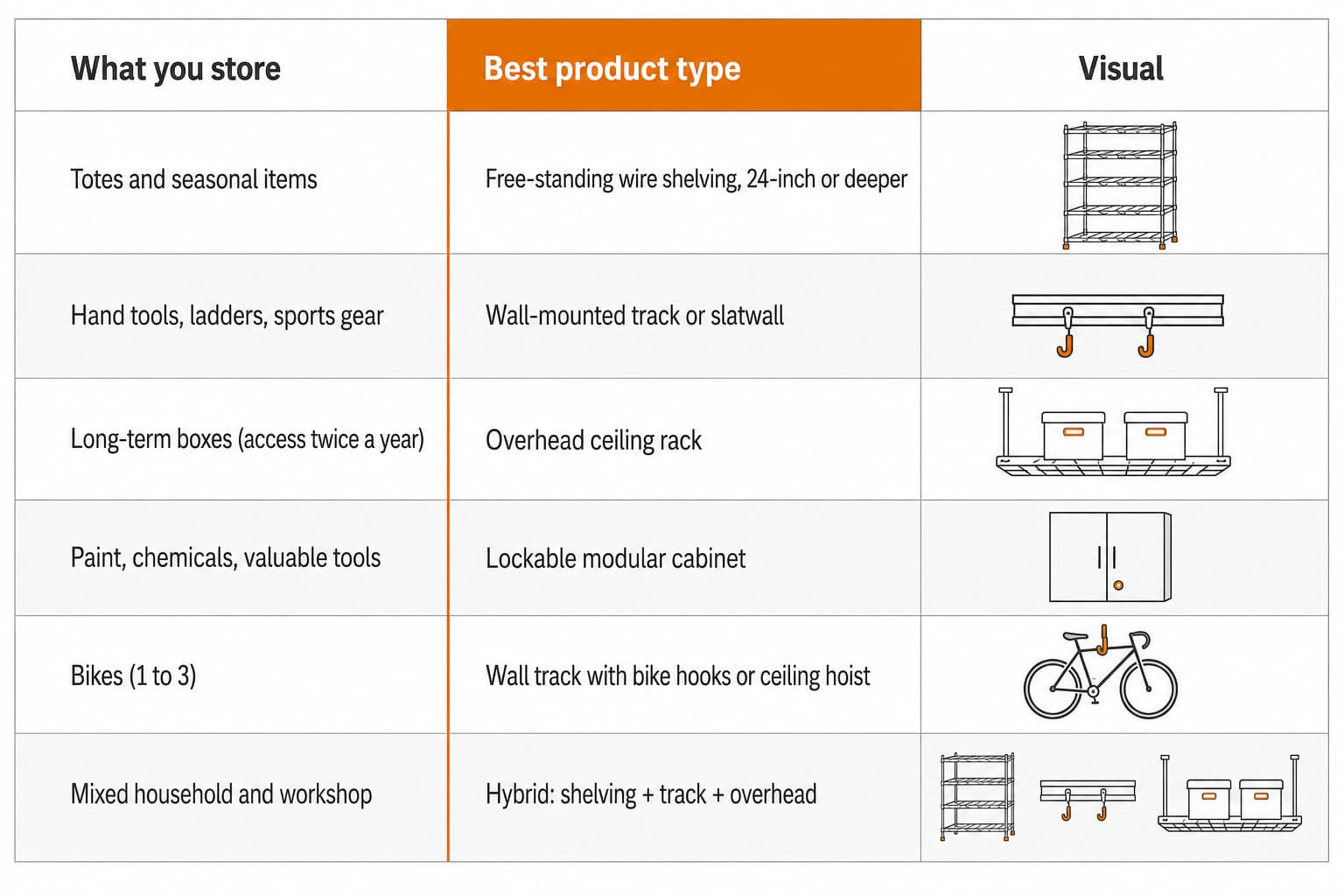
| What you store | Best product type | Why |
|---|---|---|
| Totes and seasonal items | Free-standing wire shelving (24″ or deeper) | 27-gallon totes overhang anything narrower |
| Hand tools, ladders, sports gear | Wall-mounted track or slatwall | Keeps the floor clear and visible at a glance |
| Boxes you rarely access | Overhead/ceiling rack | Uses dead space above the parking zone |
| Paint, chemicals, valuable tools | Lockable modular cabinet | Hides contents and reduces dust contact |
| One to three bikes | Wall track with bike hooks or ceiling hoist | Off the floor, off the wall traffic path |
| Mixed household and workshop content | Hybrid (combine 2–3 types in build order) | The realistic end state for most garages |
If your situation is the last row — “all of the above” — read the build sequence section next.
The Recommended Build Sequence
The most common mistake is buying a complete “system” — shelving, wall track, overhead rack, cabinets — all at once, on the assumption that the garage needs to be solved in one weekend. That approach over-buys and locks in choices before the homeowner has measured what they actually have. A better sequence:
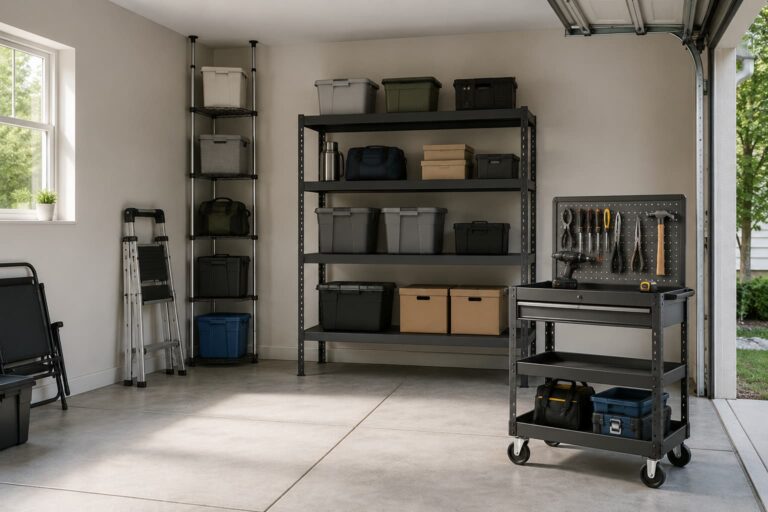
- Start with floor shelving. Free-standing wire or steel shelving is the easiest to install (it doesn’t touch the walls or ceiling), the most flexible (you can move it later), and it absorbs the largest single category of garage clutter — totes and bulk household goods.
- Add a wall track or slatwall when the floor fills up. Once you have shelving holding totes, the next problem is the tools, ladders, and gear sliding around at floor level. A wall-mounted track keeps them off the floor, visible, and out of the car’s way.
- Add overhead when both floor and walls are at capacity. Overhead is the most physically demanding to install and the most consequential to get wrong (a falling rack damages a car or a person). Don’t reach for it until floor and walls are genuinely full.
This order matches difficulty: shelving needs no tools, wall track needs a stud finder, overhead needs joist confirmation. Doing it in this order means you don’t pay for harder installations until you actually need them. For a wider organization plan beyond storage hardware, see our full garage organization plan.
Key Factors to Consider
Listed load capacity (and how it’s actually rated)
Manufacturer-listed capacity is the headline marketing claim, but always comes with footnotes. A free-standing wire shelf rated 4,000 lb on leveling feet may carry a fraction of that on caster wheels, because casters introduce flex at the corners. A wall rail rated 1,750 lb assumes screws into wood studs at 16-inch centers — drywall-only mounting is a different load class entirely. Read the listing’s footnotes, not just the headline.
Mounting surface and what it requires
Each product type assumes a specific mounting situation:
- Free-standing: level floor, no mounting hardware. Easiest path.
- Wall track and slatwall: studs at standard 16- or 24-inch centers (or rated anchors at lower capacity).
- Overhead racks: ceiling joists at standard centers (≤24 inches), in a finished or engineered ceiling.
If your garage has exposed trusses, the overhead path may need a structural review before installation. If the home is older and stud spacing is irregular, confirm with a stud finder before committing to a wall-track brand.
Footprint vs vertical reach
Floor shelving consumes floor area; vertical reach is usually free up to about 6 inches below the open garage door track. The trade-off most homeowners get wrong is depth: a 24-inch-deep shelf comfortably holds a 27-gallon tote, but an 18-inch shelf saves 6 inches of floor at the cost of 2 inches of overhang at the front edge — totes become unstable when stacked. We covered this in our roundup of the best garage shelves for storage bins.
Modularity and upgrade path
Track systems lock you into an ecosystem. Rubbermaid FastTrack hooks fit Rubbermaid rails, not Gladiator GearTrack channels — buying a starter kit is also buying into a brand. If you expect to add wall cabinets later, a track system that supports cabinets (Gladiator GearTrack fully, Rubbermaid FastTrack more narrowly) is worth the small premium. Free-standing shelving has no upgrade path beyond “buy another shelf”, which is its own kind of freedom.
Material — wire, steel, plastic, PVC
Wire shelving is the most common entry point: light, fast to assemble, and the open structure means dust doesn’t pool — though totes can rest unevenly on wire and leave faint marks. Solid-steel cabinets are lockable and dust-resistant but cost more per cubic foot. PVC slatwall is light and humidity-resistant but has lower per-hook capacity than metal. Pick the material that matches the load and the environment, not the look.
Tote and item compatibility
Common 27-gallon totes are roughly 20 inches on the short side and 30 inches long, with the lid on — always measure your own (sizes vary brand to brand). Long items like skis, ladders, and pole pruners need wall track with two hooks at least 24 inches apart so the item doesn’t pivot.
Product Types Explained
Free-standing shelving
Bolted-together steel or wire racks, typically 24–60 inches wide, 14–24 inches deep, and 60–84 inches tall. They’re the universal entry point for a reason: no wall mounting, no ceiling work, no commitment.
Best for: bulk storage of plastic totes, household goods, gardening supplies, anything that fits inside a tote.
Limitations: vertical reach is blocked by garage door clearance when the door is fully open; deep shelves need wall length; cheaper units can bow visibly under heavy load.
What to look for: NSF certification (a meaningful build-quality signal at this tier), per-shelf capacity stated explicitly (not just total system), leveling feet vs casters (always feet for capacity), depth that matches your tote dimensions. For the full list of options, see our roundup of the best garage shelves for storage bins.
Wall-mounted track and rail systems
Horizontal steel rails screwed into wall studs, with hooks, baskets, and shelves that clip into the rail. Rubbermaid FastTrack and Gladiator GearTrack are the two best-known residential systems.
Best for: tools, sports gear, ladders, hoses — anything that hangs.
Limitations: depends on stud locations; per-hook capacity (typically 25–50 lb) caps the practical load; drywall-only mounting changes the load class; brand ecosystems don’t cross-fit.
What to look for: rail length, hook count, hook types (locking vs non-locking), and explicit stud-mount instructions. Brand-by-brand differences are covered in our wall-mounted storage system roundup.
Slatwall panels
Continuous panel system (PVC or metal) that covers large wall areas with horizontal slots accepting hooks at any position. The advantage over track rails is density: hooks go anywhere on the panel rather than only at fixed mounting points.
Best for: dense tool walls in workshops, where a rail’s fixed-spacing hooks are limiting.
Limitations: lower per-hook capacity than steel rails (especially PVC); requires a clean, continuous wall area; multi-panel installation takes longer than a few rails.
What to look for: panel material (PVC vs metal — PVC for humidity-resistance, metal for capacity), per-square-foot capacity stated by the manufacturer, hook compatibility (most slatwall uses a standard slot size, but verify with your accessories).
Overhead/ceiling racks and lifts
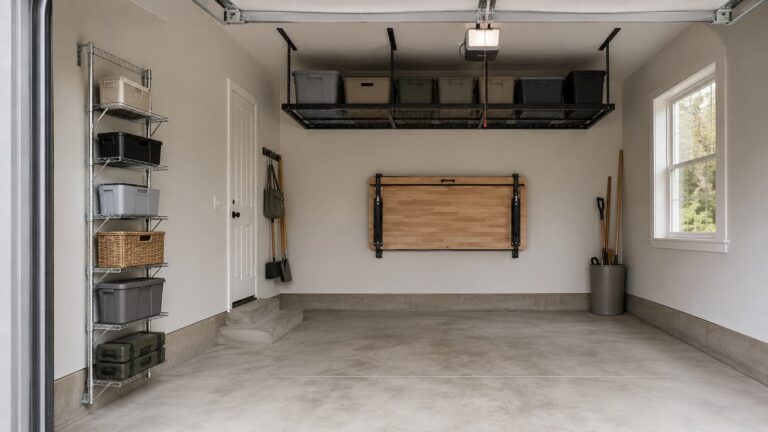
Three formats exist: deck-style 4×8 racks (most common), tote-rail systems that suspend totes by their lip, and motorized lifts for bikes or kayaks.
Best for: long-term storage above the parking zone — seasonal decorations, camping gear, anything you reach infrequently.
Limitations: requires ceiling joists at standard ≤24-inch centers; needs ceiling clearance for the rack plus what parks under it (most adjustable racks drop 22–40 inches — measure both your ceiling height and your tallest vehicle’s roof); installation is the most physically demanding of any garage storage product.
What to look for: deck size matching your joist run, adjustable drop height, manufacturer-listed capacity with stated load distribution, mounting hardware included. For brand differences, see our overhead garage rack guide.
Modular wall cabinets
Steel cabinets that mount to wall track or directly to studs; doors hide contents and reduce dust contact.
Best for: chemicals, paint, valuable tools, anything you want covered, locked, or kept dust-free.
Limitations: more expensive per cubic foot than open shelving; require precise mounting; not a starter purchase — most readers should add cabinets only after the basics are in place.
What to look for: gauge of steel (lower number = thicker = more durable), mounting compatibility with your existing track if any, interior shelf adjustability, and whether the doors lock. The dedicated cabinet picks are in our garage cabinet picks.
Measurement Checklist
Before buying any garage storage product, measure these nine things. The diagram below shows where each measurement goes.
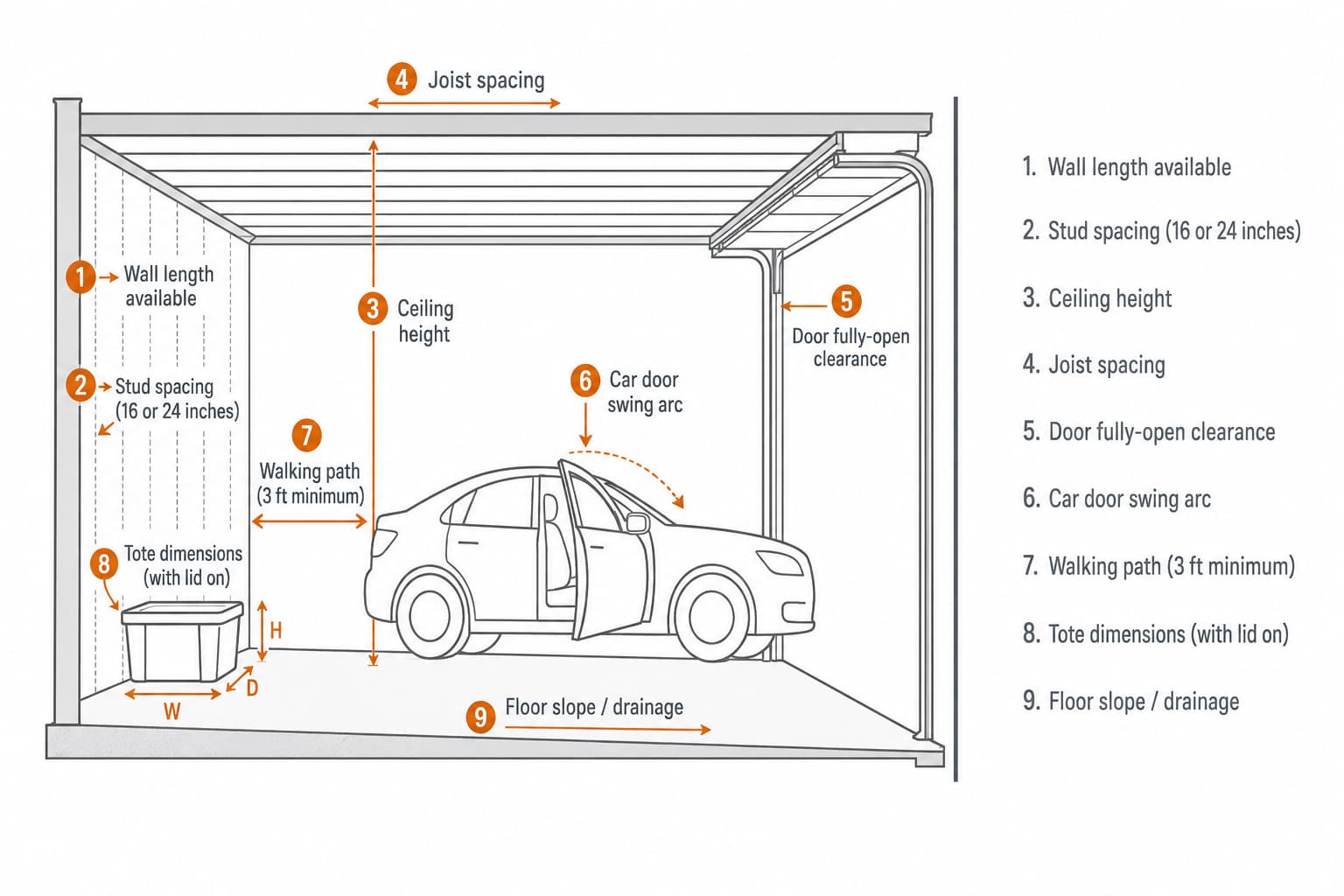
- Wall length available — continuous, with no door, window, or HVAC interruption.
- Wall stud locations and spacing — 16- or 24-inch centers in most US homes; confirm with a stud finder before the product page promises.
- Ceiling height — floor to underside of joist (not to the drywall finish, which can be a few inches lower).
- Ceiling joist direction and spacing — overhead racks should run perpendicular to the joists when possible, so each rack screw catches a separate joist.
- Garage door fully-open clearance — the door eats vertical space when open. Measure to the lowest point of the open door, not the ceiling.
- Car door swing arc — don’t put shelves where the driver-side or passenger-side door hits.
- Walking path width — a 3-foot minimum is the working figure for moving boxes and bins around.
- Tote dimensions with the lid on — most 27-gallon totes are about 20 inches on the short side and 30 inches long, but they vary brand to brand. Don’t trust the label.
- Floor slope or drainage gradient — if your floor slopes toward the door (most do, for drainage), leveling feet aren’t optional on tall shelving.
Mistakes to Avoid
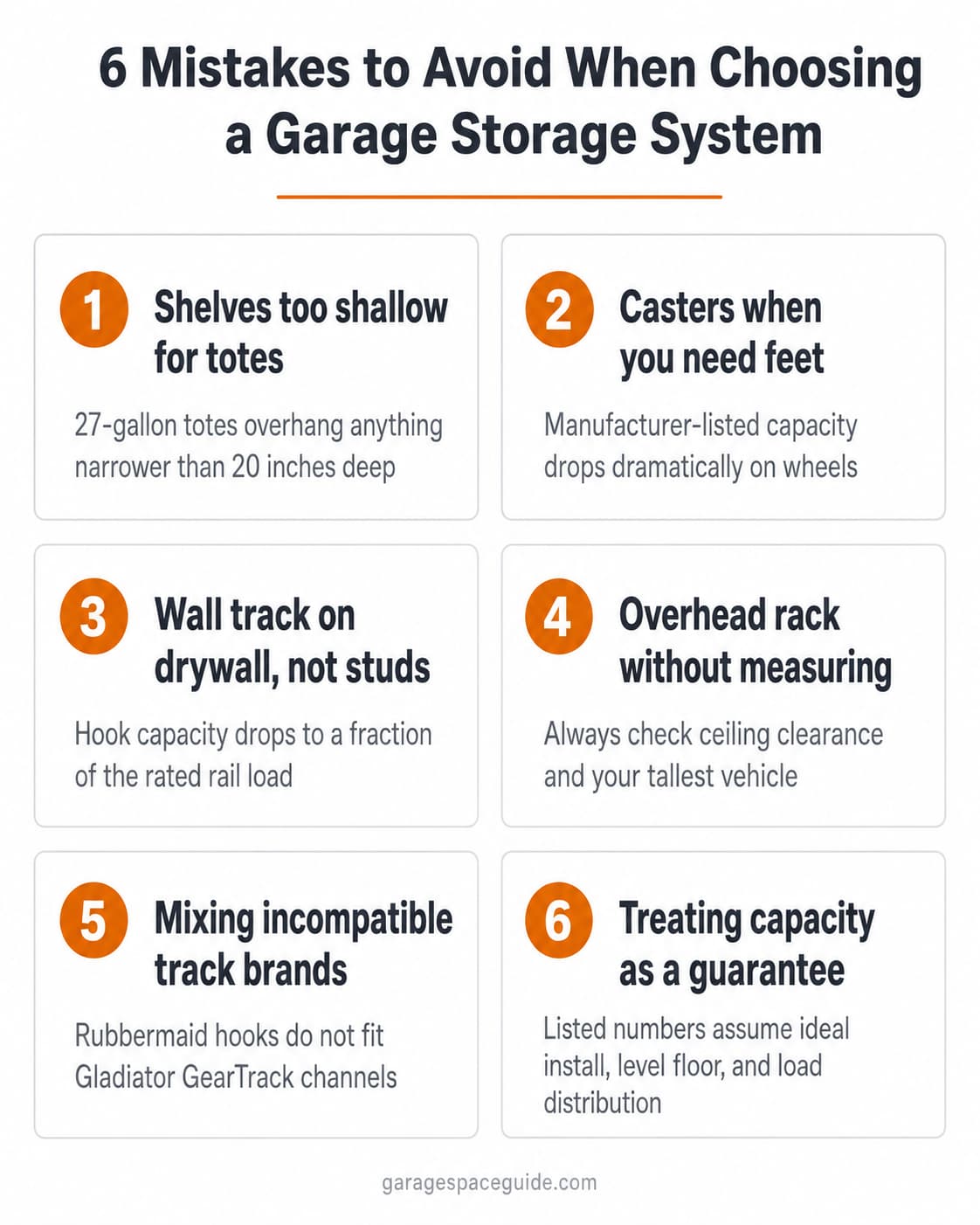
Six recurring buyer mistakes worth flagging:
- Buying the cheapest 18-inch-deep shelf and being surprised when 27-gallon totes hang off the front. Measure your totes first; choose 24-inch depth or deeper.
- Choosing casters when you need leveling feet. Casters trade capacity for mobility — fine in some shop environments, costly in a residential garage.
- Mounting a wall track without locating studs. A 1,750-lb-rated rail on drywall alone is closer to 50 lb per hook in practice. Always find studs first.
- Buying an overhead rack before measuring ceiling clearance and the tallest vehicle that parks underneath. A 40-inch ceiling drop kills SUV clearance.
- Mixing incompatible track brands. Rubbermaid hooks don’t fit Gladiator GearTrack channels — and the reverse. Pick one ecosystem.
- Treating “manufacturer-listed capacity” as a guarantee. It’s a maximum under ideal conditions, not a floor.
For a structured walkthrough that ties these mistakes into a full plan, see our full garage organization plan.
Safety and Installation Notes
Three safety-related rules apply across all the categories above:
- Heavy items go on lower shelves. The higher the load, the more leverage on the unit when a person bumps it.
- Free-standing shelving over 60 inches tall should be anchored to the wall. Strongly recommended in earthquake zones, with kids, or for any unit holding more than 200 lb.
- Never substitute drywall anchors for stud screws on a wall-track system rated for stud-mounted use. The rated capacity assumes stud anchoring; switching mounting class invalidates the rating.
Featured Picks
Three picks across the three core categories. They’re recommendations, not the complete catalog — for full lists, follow the linked roundups.
For most readers, start here: Seville Classics UltraDurable 5-Tier Wire Shelving (24″ × 18″)
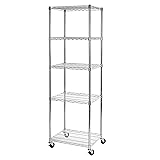
A free-standing wire shelf is the easiest first move. The 24×18 footprint fits one-car and two-car garages, holds 27-gallon totes with depth to spare, and the NSF certification is a meaningful build-quality signal at this tier. Manufacturer-listed total capacity assumes leveling feet — casters lower it. Pin the chrome 24×18 leveling-feet variant (multiple sizes exist in the family). For more options, see our roundup of the best garage shelves for storage bins.
Add this when tools take over the floor: Rubbermaid 15-Piece FastTrack Wall Kit

The 15-piece kit (4 × 48-inch rails + 11 hooks) is the right starter density for a 16-foot wall section. The 1,750-lb-per-rail rating depends on stud-mounting; locking hooks hold up to 50 lb each, non-locking up to 25 lb. The kit’s hook mix (utility, cooler, dual-handle, ladder) covers most residential needs. For a brand-by-brand comparison and larger configurations, see our wall-mounted storage system roundup.
When floor and walls are full, look up: FLEXIMOUNTS Classic 4×8 Overhead Rack

The 4×8 footprint matches a single 8-foot joist run — the simplest installation case. Adjustable drop (22–40 inches) accommodates most 8–9-foot residential ceilings while preserving SUV clearance below. The manufacturer lists 750 lb capacity for this Classic Series variant, assuming ceiling joists ≤24 inches on standard centers. Don’t install in unfinished garages with exposed trusses without a structural review. For brand alternatives, see our overhead garage rack guide or the major garage system comparison.
Step 1 in the build sequence above is floor shelving, and the depth question that follows — 18 inches or 24 — is the one raised earlier in “Footprint vs vertical reach.” Here is what that choice actually buys you in tote count, using published dimensions for totes people buy for garage storage.
How many totes actually fit on a garage shelf
Tote makers publish dimensions and shelving makers publish dimensions, but nobody puts the two together — so people buy shelving, then discover their totes overhang it. This table takes the published external size of totes from the brands people actually buy for garage storage — Sterilite, Rubbermaid Roughneck, and IRIS USA — and works out how many fit per shelf on the two garage shelving depths you can actually buy, 18 in and 24 in.
| Tote | Published dimensions (source order) | Footprint | Height | Fits an 18 in deep shelf? | Per 48 × 18 in shelf | Per 48 × 24 in shelf | Specification source | Source checked |
|---|---|---|---|---|---|---|---|---|
| Rubbermaid Roughneck 3 Gal. Storage Box | 7 in. H x 10.625 in. W x 15.687 in. D | 15.687 in × 10.625 in | 7 in | Yes | 4 | 6 | Rubbermaid Roughneck 3 gal Storage Box, Mfr# RMRT030003 | 2026-09-14 |
| Rubbermaid Roughneck 10 Gal. Storage Box | 8.875 in. H x 15.875 in. W x 23.875 in. D | 23.875 in × 15.875 in | 8.875 in | Yes | 2 | 3 | Rubbermaid Roughneck 10 gal Storage Box, Mfr# RMRT100004 | 2026-09-14 |
| Rubbermaid Roughneck 18 Gal. Storage Box | 16.375 in. H x 15.875 in. W x 23.875 in. D | 23.875 in × 15.875 in | 16.375 in | Yes | 2 | 3 | Rubbermaid Roughneck 18 gal Storage Box, Mfr# RMRT180000 | 2026-09-14 |
| Rubbermaid Roughneck 25 Gal. Storage Box | 23-5/16 in. H x 18-1/2 in. W x 28.875 in. D | 28⅞ in × 18½ in | 23 5/16 in | No — it overhangs | 0 | 1 | Rubbermaid Roughneck 25 gal Storage Box, Mfr# RMRT250002 | 2026-09-14 |
How these numbers were produced: External dimensions are quoted on the date shown per row. Sterilite rows are quoted from Sterilite’s own product pages (L x W x H order). Rubbermaid Roughneck rows are quoted from Ace Hardware’s retailer listing, which prints the manufacturer’s SKU-linked dimensions in H x W x D order on each product page. IRIS USA rows are quoted from IRIS USA’s own product pages (L x W x H order). All figures are the external/overall assembled dimensions with the lid on. The counts are computed, not estimated: totes are placed in a single layer, all in the same orientation, with no overhang and no gap; both orientations (the tote’s long side along the shelf’s 48 in run, or along its depth) are tried and the better one is kept. Shelf width is 48 in in both cases — the two depths are real Husky shelving footprints: 48 in. W x 18 in. D (Husky 86 in. H x 48 in. W x 18 in. D 6-Shelf Steel Shelving Unit, model MR481886W6B, https://www.homedepot.com/p/Husky-86-in-H-x-48-in-W-x-18-in-D-Black-Steel-6-Shelves-Shelving-Unit-MR481886W6B/306062319) and 48 in. W x 24 in. D (Husky 5-Tier Steel Shelving Unit, 48 in. W x 78 in. H x 24 in. D, model 426007, https://www.homedepot.com/p/Husky-5-Tier-Riveted-Steel-Garage-Storage-Shelving-Unit-in-Silver-48-in-W-x-78-in-H-x-24-in-D-426007/303241694); neither product page states a clear opening between posts. 48×18 and 48×24 are unobstructed reference surfaces, not guaranteed usable dimensions of every nominal 48×18 or 48×24 rack — posts and lips can reduce the clear opening (one retailer answer for a Husky 48×24 gives about 45.5 × 21.5 in between posts). Round the result down again if your shelving has corner posts that intrude, and leave room to get a hand in.
- A tote that fits the shelf footprint still needs vertical room: check the tote height against your shelf spacing, and leave clearance to lift it in and out rather than sliding it flush.
- Counts assume a flat, full-depth shelf. Wire shelving with a lip, or posts at the corners, will cost you the last tote in a row.
- Lids overhang the base on most totes; the figures here are the manufacturer’s overall assembled dimensions, which already include the lid.
- Capacity in quarts or gallons tells you nothing about whether it fits — and "27" doesn’t mean the same thing twice. The Sterilite 27 Qt. ClearView Latch Box (17 in x 11-1/8 in) fits an 18 in shelf; the Sterilite 108 Qt. Stacker Box (25-3/4 in x 18-3/8 in) — 27-gallon-equivalent by volume (108 qt = 27 gal), though Sterilite sells it as "108 Qt.," not "27 Gal." — does not.
- Manufacturers and retailers don’t all publish dimensions in the same order. Ace Hardware lists Rubbermaid Roughneck as Height x Width x Depth, where Sterilite and IRIS USA publish Length x Width x Height. This table normalises every row to footprint (the two horizontal dimensions) and height so they compare directly regardless of the order they were published in.
- Rubbermaid Roughneck’s 10 gal and 18 gal totes share the same footprint (23⅞ in x 15⅞ in) — only the height changes, so stepping up in capacity in that range costs no extra shelf space, only vertical clearance.
- A blank cell means the manufacturer does not publish that figure — we do not fill gaps with numbers we could not source.
These are the entries that matter for this guide. The full table, with every row and its source, is in our How many totes actually fit on a garage shelf.
FAQ
Do I need a complete “system” or can I mix brands?
Mostly mix. Free-standing shelving and overhead racks are brand-agnostic. Wall track ecosystems are the exception — Rubbermaid FastTrack and Gladiator GearTrack hooks don’t cross-fit, so pick one and stay with it for that wall.
How do I know if my walls can support a wall-track system?
You need wood studs at standard 16- or 24-inch centers. Use a stud finder and mark the studs along the full mounting length. Irregular spacing or metal studs mean the manufacturer-listed capacity doesn’t apply — use fewer hooks or rated anchors and accept lower limits.
Can I install an overhead rack on an exposed-truss ceiling?
Generally no, without a structural review. Engineered trusses are designed for specific load paths; hanging a rack from random truss members can compromise the truss.
What’s the difference between slatwall and a track rail?
Density and load. Slatwall has horizontal slots every few inches, so hooks go anywhere — best for dense tool layouts. A track rail has fixed mounting points; hooks slide but are bound by where the rail is screwed in. Steel rails generally carry more weight per hook than PVC slatwall.
How tall should my shelving be?
Limited by the garage door’s fully-open clearance. In most residential garages with 8-foot ceilings, that’s around 78–82 inches. 72 inches is a safe default; 84 inches works in 9-foot-ceiling garages.
Do I need to anchor free-standing shelves to the wall?
Strongly recommended for any unit over 60 inches tall, in earthquake-prone areas, with children in the home, or holding more than 200 lb. Most shelving includes an anchor strap — use it.
Sources Reviewed
For this buying guide, we reviewed manufacturer documentation and product pages for Seville Classics, Rubbermaid, FLEXIMOUNTS, Gladiator, and a sample of slatwall and overhead-rack brands available on Amazon. We cross-checked manufacturer-listed capacity figures against the products’ Amazon listings, and synthesized recurring patterns in public buyer feedback (without quoting individual reviews). We do not claim hands-on testing of any product in this guide.