How to Choose Storage Bins for Garage Shelves
Last updated:
Disclosure: This article contains affiliate links. If you buy through these links, we may earn a commission at no extra cost to you. We do not claim hands-on testing unless clearly stated.
Most readers shopping for garage storage bins start with the gallon question and discover three weeks later that their totes overhang their wire shelves by two inches and sag when stacked three high. This guide reverses the order. Before gallons, four decisions determine whether the bins will actually fit your shelves: footprint relative to shelf depth, lid mechanism, manufacturer-listed weight capacity, and stackability on a shelf rather than on the floor. We walk through each, give you a measurement checklist that starts at the shelf, and route you to four starting points across the common archetypes. We do not cover shelving selection or wall-mounted bin systems — see related guides at the end.
Quick Recommendation by Use Case
| Use case | Best product type | Why |
|---|---|---|
| Mainstream tote storage on a wire shelf | Snap-on lid 18-gallon tote | Fits a standard 16–18 inch shelf depth without overhang |
| Workshop tools and dense parts you access daily | Open-front heavy-duty bin | No lid to remove between uses |
| Inventory you scan without opening | Clear-walled tote with snap-fit lid | Visibility tradeoff worth it for read-only scanning |
| Long-term protected storage of valuables | Latching or gasketed tote | Snap-on lids vary in security; latching adds a layer |
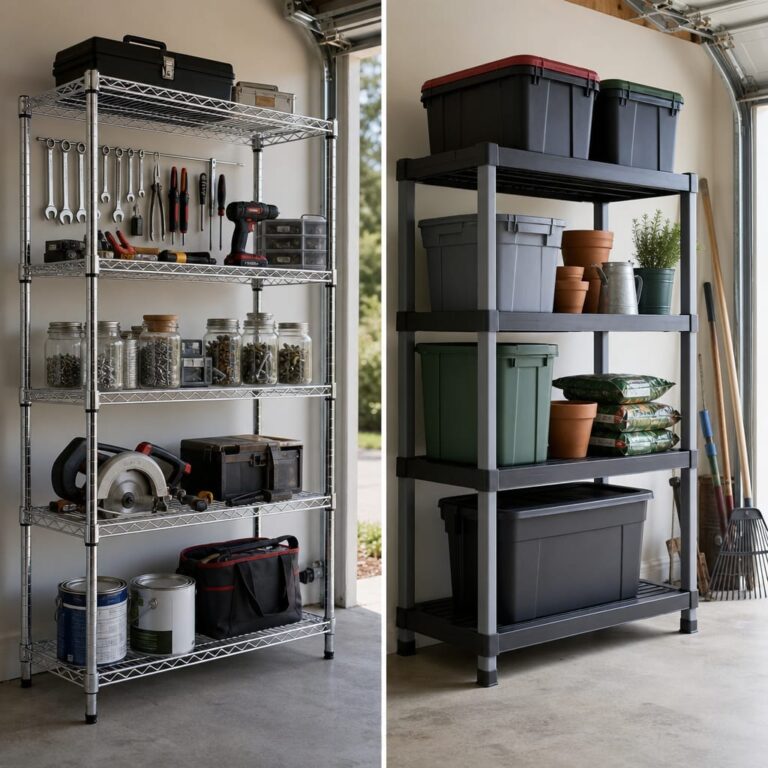
| Screws, fasteners, small hardware | Small-parts open-front bin | Top-row tier on a multi-tier shelf |
If you only read one section, read the measurement checklist further down. The single most common buyer mistake is choosing a bin by its gallon rating and only checking the shelf afterward. For the matching shelf, see our roundup of best garage shelves for storage bins.
Key Factors to Consider
Bin footprint vs shelf depth
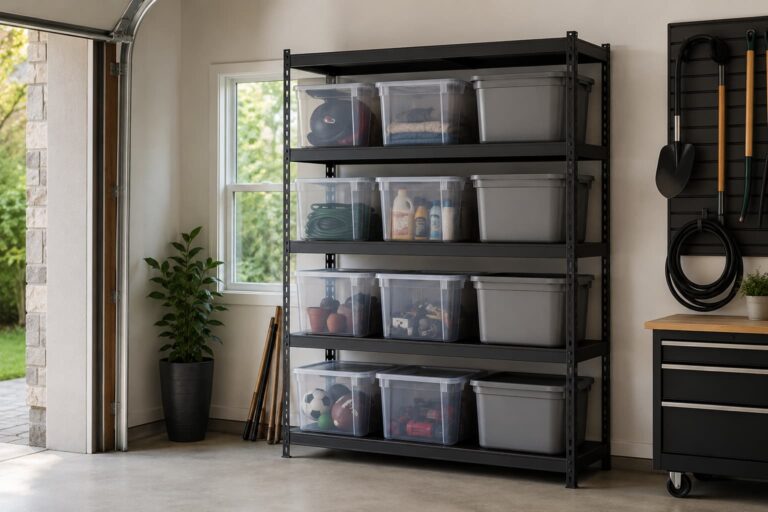
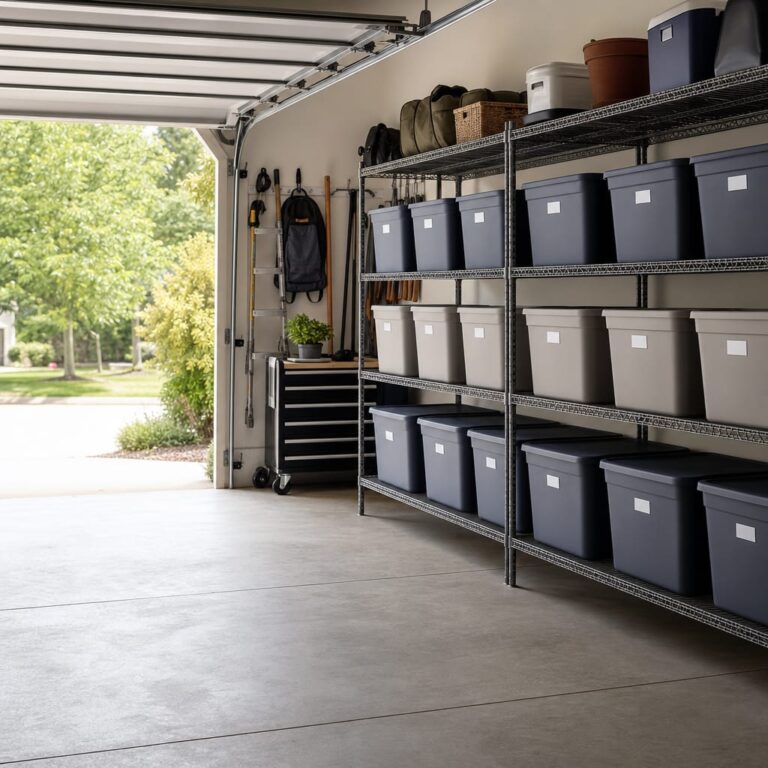
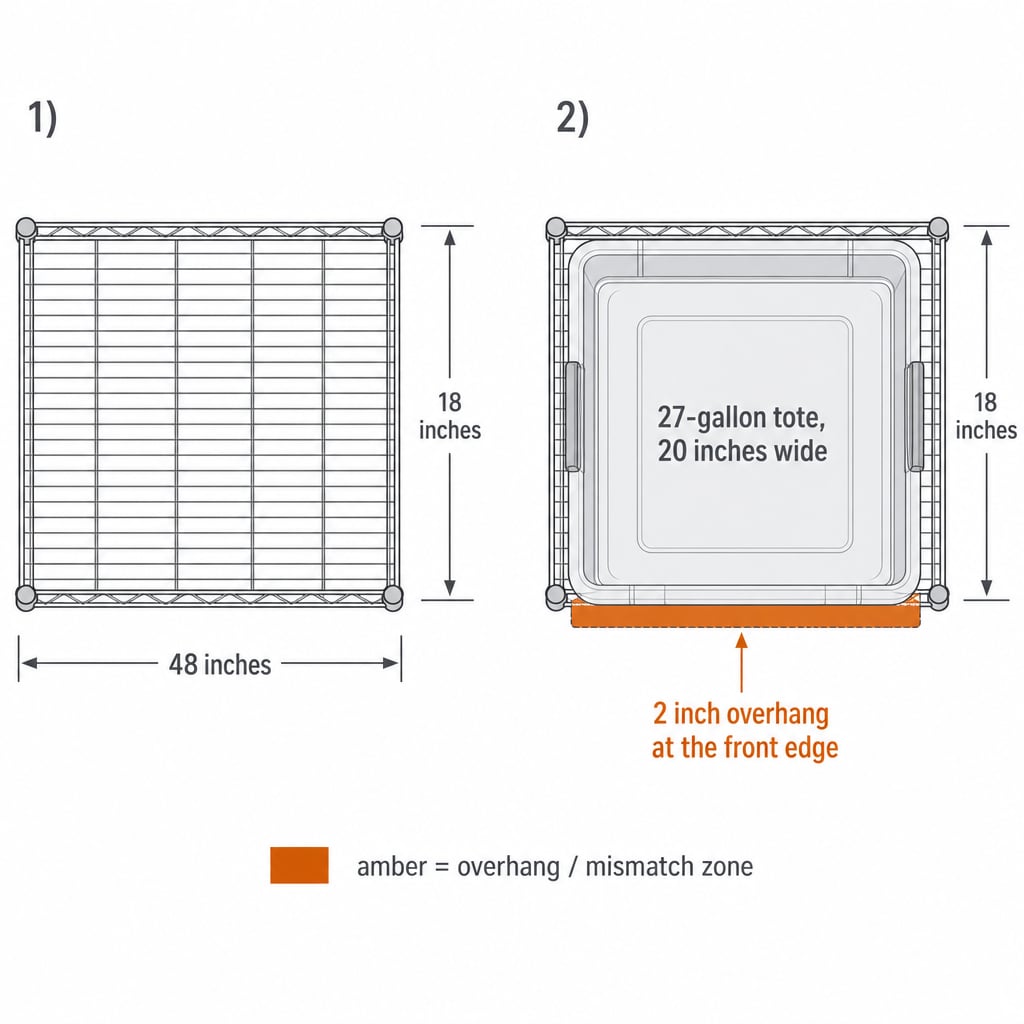
The most useful number when buying garage bins is not gallons. It is the bin’s short-side footprint relative to the front-to-back depth of your shelf. A “27-gallon” tote is roughly 20 inches wide on its short side. A standard wire shelving unit is 18 inches deep. The result is a 2-inch overhang — the bin tips forward when loaded near the lip, and the front lid latch fouls anything on the tier above. For an 18-inch shelf, an 18-gallon tote is the right size. For 27-gallon volume, you need a 20-inch or 24-inch shelf. Measure the shelf first; bin selection follows. See our guide to garage shelves for totes and bins for depth-by-depth tradeoffs.
Lid mechanism
Four lid archetypes cover the decision. Open-front bins have no lid — designed for workshop use where you pull tools or parts in and out frequently. Snap-on lids press onto the bin rim with friction fit; common, fast, acceptable for general storage. Latching lids add a flip-up latch on the long edges; more secure than snap-on, the right pick for storage you reopen rarely. Gasketed lids add a foam or rubber seal around the rim — they protect against humidity and dust but weigh more. Match the lid to access frequency and contents. If you mix lid styles in a single column, stack heights will be uneven and tiers will not seat cleanly. For snap-on tote picks, see our roundup of best storage bins for shelves and racks.
Manufacturer-listed weight capacity
When a product page lists a payload — say, 50 pounds per bin — that is the manufacturer’s number under manufacturer-controlled conditions: payload distributed across the bin floor, no point loads on lid corners, level surface, room temperature. Real-world performance can vary. Stacked bins do not simply add: a 50-pound bin on top of another 50-pound bin transfers force through the lower bin’s lid corners, which are not load-bearing. Treat the listed figure as a single-bin floor-load upper bound, not a stack guarantee.
Stackability — on shelves vs on the floor
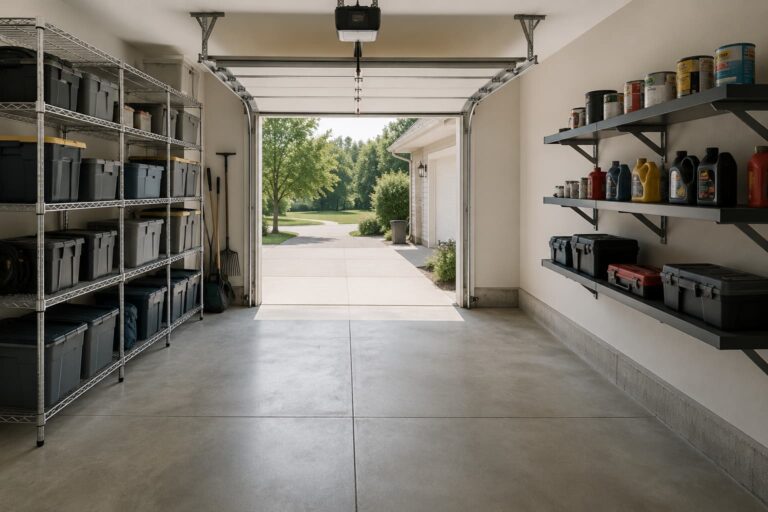
A bin’s load math changes depending on where it sits. On the floor, a 50-pound bin can take another 50-pound bin on top — the limit is structural integrity. On a shelf, the limit is the shelf’s per-tier capacity, not the bin’s stackability. A wire shelf with a manufacturer-listed 250 pounds per tier on leveling feet takes five 50-pound bins. Bins designed for shelves (snap-on, open-front) have flat lids and recessed tops that seat the next bin. Bins designed for floor towers (latching, gasketed) often have raised interlock lids. They are not interchangeable. For floor towers, our roundup of best stackable storage bins covers the interlock designs that hold up.
Clear vs opaque
Clear-walled bins let you scan contents without lifting a lid — a win for inventory you check frequently (sports gear, seasonal decorations, hardware). Two downsides: clear polypropylene ages faster than opaque under direct sun (UV-driven embrittlement after 2-3 summers near a south-facing window), and clear bins show every smear and dust film, making a tidy garage look messy fast. Opaque hides both contents and dust. If you have an unheated garage with strong sun on one wall, opaque is the safer pick for that wall. Detailed clear-bin picks are in our roundup of best clear garage storage bins.
Product Types Explained
Snap-on lid totes (general purpose)
The default archetype. Snap-on totes work as the bulk of a multi-shelf system — inexpensive in 6 or 8-pack, fast to open, sized to standard wire-shelf depths. The 18-gallon size fits a 16-18 inch shelf with no overhang. Best for: general protected storage you reopen a few times a year (seasonal clothes, holiday decorations, kids’ outgrown gear). Limitations: snap-on security varies across brands; not for valuables. What to look for: a tote whose dimensions are listed on the product page, and a pack size that fills your shelf in one order.
For most readers, start here: 18 Gallon Storage Totes with Snap-On Lids (8-Pack)

An 8-pack of 18-gallon snap-on totes covers a full column on a typical 5-tier wire shelving unit. Verify the listed footprint against your shelf depth before buying.
Clear-walled bins (visibility-first)
Clear totes are the right pick when contents need to be scanned without opening. Best for: rotating garage inventory (sports gear, seasonal items, hardware). Limitations: clear plastic shows dust and ages faster under direct sun. What to look for: a snap-fit colored lid (easy to spot from across the garage), channeled walls for crush resistance, and listed dimensions you can verify against your shelf.
For visibility on a deeper shelf: 27 Gallon Clear Storage Tote with Snap-Fit Lid (4-Pack)
No products found.
A 4-pack of 27-gallon clear totes covers the visibility slot. At ~20 inches wide, these need a 20-inch or 24-inch shelf, not a standard 18-inch unit. Measure first.
Open-front workshop bins (heavy-duty)
The workshop archetype — no lid, designed for tools and parts you access multiple times a week. Best for: dense items pulled and replaced frequently (hand tools, fasteners, sports gear). Limitations: dust enters; not for protected long-term storage. What to look for: interlocking stack design, heavy-duty wall thickness, and a footprint matching your shelf depth.
For workshop use: IRIS USA Heavy-Duty Open Front Jumbo Stackable Bins (6-Pack)

A 6-pack of IRIS USA jumbo open-front bins covers the workshop slot. The 30.88 x 15.88 inch footprint sits clean on a deeper shelf. IRIS USA is one of the more stable brands in the plastic-storage category.
Small-parts bins (top-shelf tier)
Small-parts bins are a different size class — they hold screws, fittings, fasteners. Best for: the top tier of a multi-tier shelf where the row is too low for a full-size bin. Limitations: open-front exposes contents to dust. What to look for: manufacturer-listed per-bin load (10 pounds is typical), an anti-slide stop, and clear walls so you can see what is inside without pulling it.
For small parts: Akro-Mils 30210 AkroBins Clear (6-Pack)

A 6-pack of Akro-Mils 30210 covers the small-parts top-tier slot. Manufacturer-listed at 10 pounds per bin, with an anti-slide stop. Akro-Mils is the tenured industrial brand for parts bins.
When to Choose Each Type
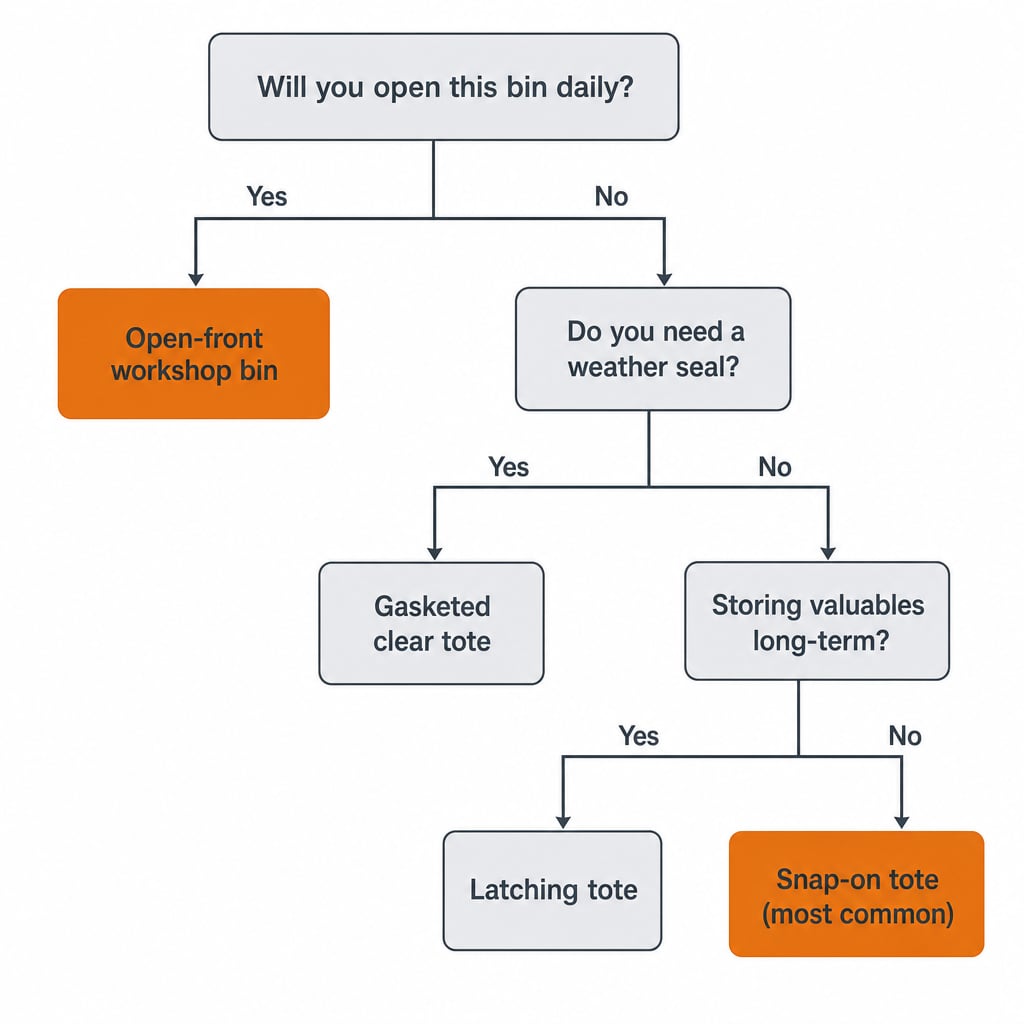
The decision flow is: what are you storing, where will it sit, how often will you open it. Daily access on a workshop shelf points to open-front bins. Long-term protected storage points to snap-on or latching totes. Inventory you scan but rarely open points to clear-walled bins. Small parts at the top row of a multi-tier shelf points to small parts bins. If you anticipate strategy changes — moving bins to a wall-mounted louvered panel a year from now — Quantum Storage’s Ultra Stack and Hang line is the modular benchmark, because the same bin works as a shelf-stacked unit or as a wall-hung unit on a Quantum panel.
How many totes actually fit on a garage shelf
Tote makers publish dimensions and shelving makers publish dimensions, but nobody puts the two together — so people buy shelving, then discover their totes overhang it. This table takes the published external size of the common Sterilite totes and works out how many fit per shelf on the two garage shelving depths you can actually buy, 18 in and 24 in.
| Tote | Published dimensions (L × W × H) | Footprint | Height | Fits an 18 in deep shelf? | Per 48 × 18 in shelf | Per 48 × 24 in shelf | Specification source |
|---|---|---|---|---|---|---|---|
| Sterilite 6 Qt. Storage Box | 13 5/8" x 8" x 4 5/8" | 13⅝ in × 8 in | 4⅝ in | Yes | 6 | 9 | Sterilite 6 Qt. Storage Box |
| Sterilite 27 Qt. ClearView Latch Box | 17" x 11 1/8" x 12 3/4" | 17 in × 11⅛ in | 12¾ in | Yes | 4 | 4 | Sterilite 27 Qt. ClearView Latch Box |
| Sterilite 66 Qt. ClearView Latch Box | 23 5/8" L x 16 3/8" W x 13 1/4" H | 23⅝ in × 16⅜ in | 13¼ in | Yes | 2 | 2 | Sterilite 66 Qt. ClearView Latch Box |
| Sterilite 106 Qt. Latching Box | 33 7/8" x 18 3/4" x 13" | 33⅞ in × 18¾ in | 13 in | No — it overhangs | 0 | 1 | Sterilite 106 Qt. Latching Box |
How these numbers were produced: External dimensions are quoted from Sterilite’s own product pages on the date shown. The counts are computed, not estimated: totes are placed in a single layer, all in the same orientation, with no overhang and no gap; both orientations are tried and the better one is kept. Shelf width is 48 in in both cases — the two depths correspond to real Husky configurations (48 × 18 in and 48 × 24 in). Round the result down again if your shelving has corner posts that intrude, and leave room to get a hand in.
- A tote that fits the shelf footprint still needs vertical room: check the tote height against your shelf spacing, and leave clearance to lift it in and out rather than sliding it flush.
- Counts assume a flat, full-depth shelf. Wire shelving with a lip, or posts at the corners, will cost you the last tote in a row.
- Lids overhang the base on most totes; the figures here are the manufacturer’s overall assembled dimensions, which already include the lid.
- Capacity in quarts tells you nothing about whether it fits — the 106 qt and the 66 qt are within a quarter-inch of each other in height, but 10 in apart in length.
- A blank cell means the manufacturer does not publish that figure — we do not fill gaps with numbers we could not source.
These are the entries that matter for this guide. The full table, with every row and its source, is in our guide to garage shelves for storage bins.
How to Measure Before Buying
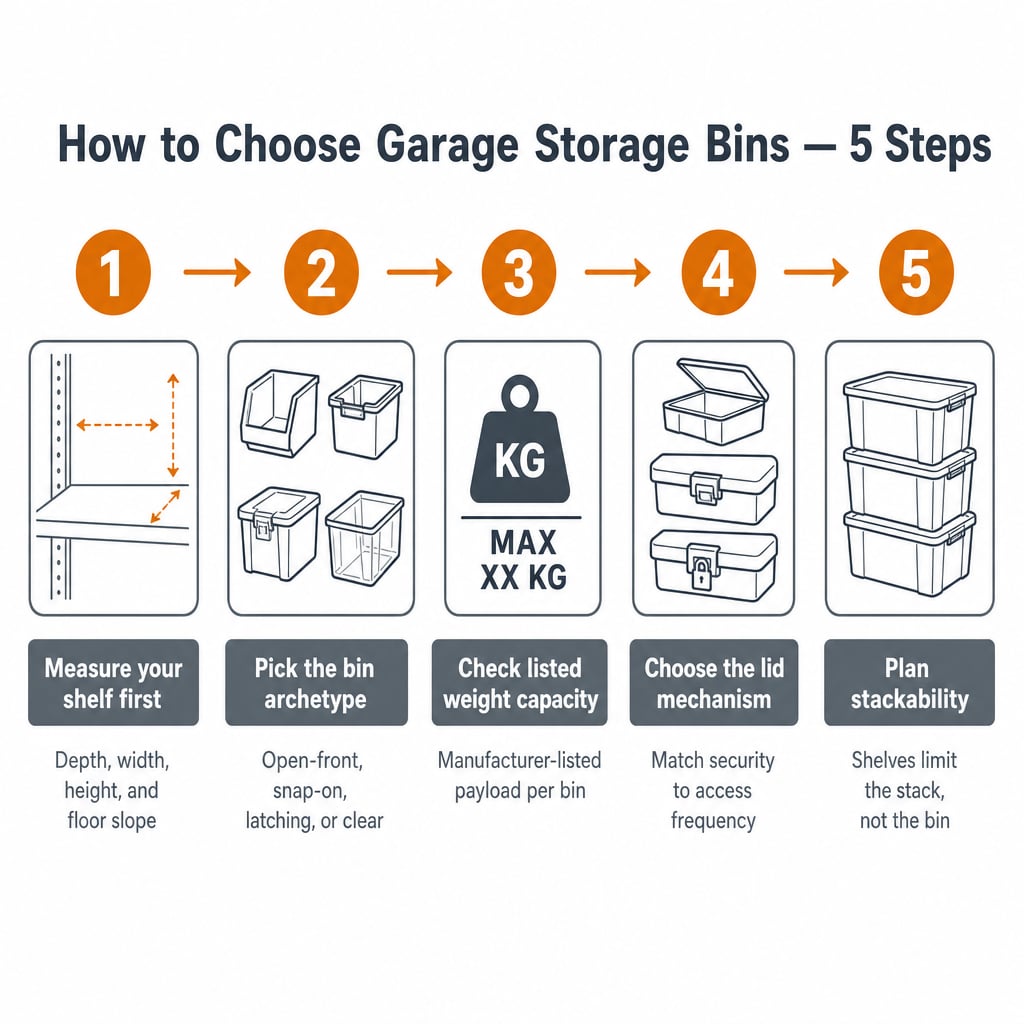
The highest-leverage step is measuring the shelf first. Most online bin advice starts from the bin and assumes the shelf will fit. Reverse this. Before ordering anything:
- Measure shelf depth (front edge to back wall — not the outside frame, the usable shelf surface)
- Measure shelf width (between the upright posts, not outside-to-outside)
- Measure shelf height (between tiers — the bin must fit standing up with its lid clearance plus a finger’s space to grip the lid edge)
- Measure how far the shelf clears the wall (anti-tip distance — bins should sit fully on the shelf, never half on and half off)
- Measure the path from your car door to the shelf (door-swing room, walking room, no bin column blocking the path)
- Note any floor slope (uneven concrete = uneven bin stack — leveling feet on the shelf compensate for this)
The depth-trap is worth saying out loud: a “27-gallon” tote does not fit an 18-inch wire shelf. It overhangs by about two inches. The bin tips forward when loaded near the lip, and the front lid latch fouls anything on the tier above. For 27-gallon volume you need a 20-inch or 24-inch shelf. For a layout primer pairing shelves with bins, see how to organize bins on garage shelves.
Common Mistakes to Avoid
Most buyer mistakes in this category trace back to one of four patterns.
Mistake 1: Buying by gallons without checking footprint. A 27-gallon and an 18-gallon tote can look similar in listing photos but their short-side footprints differ by 4-5 inches. Read the listed dimensions, not just the volume.
Mistake 2: Stacking bins on shelves without checking the shelf’s per-tier capacity. A wire shelf with a manufacturer-listed 250 pounds per tier on leveling feet takes five 50-pound bins; the same shelf on casters may take only one or two. Capacity drops sharply with casters — verify the per-tier number for your configuration.
Mistake 3: Mixing snap-on lid bins with no-lid bins in the same column. Stack heights are uneven and tiers do not seat cleanly. Pick one lid archetype per column.
Mistake 4: Buying clear bins for an unheated garage with strong sun. UV-driven embrittlement makes clear polypropylene brittle after two or three summers near a south-facing window. Use opaque on the sunny wall, clear in shaded interior locations.
Safety Note
Featured Picks Summary
Across the four archetypes, here are the four starting points. The table below is for readers who scanned ahead.
| Archetype | Featured Pick | Use case in one line |
|---|---|---|
| Snap-on tote (general purpose) | 18-Gallon Snap-On Totes (8-Pack) | Mainstream protected storage on a standard wire shelf |
| Clear-walled tote (visibility) | 27-Gallon Clear Snap-Fit Totes (4-Pack) | Inventory you scan, on a deeper 20-inch shelf |
| Open-front workshop bin | IRIS USA Jumbo Open-Front (6-Pack) | Workshop tools and dense parts accessed daily |
| Small-parts bin | Akro-Mils 30210 AkroBins (6-Pack) | Top-shelf tier for screws and fasteners |
For deeper roundups in each archetype, see the related guides at the bottom of the article.
FAQ
How do I know if a tote will fit my garage shelves?
Measure the shelf first. Note front-to-back depth, inside width between upright posts, and vertical clearance between tiers. Pick a bin whose listed footprint fits with at least a half-inch margin on every side. A “27-gallon” tote does not fit an 18-inch wire shelf because its short side is ~20 inches. For matching shelves at each depth, see best garage shelves for storage bins.
Are clear bins worth the visibility tradeoff in a garage?
Yes if you scan inventory frequently and the garage is not under heavy direct sun. No if bins sit near a south-facing window in an unheated garage — clear polypropylene gets brittle after two or three summers. The middle ground: opaque on the sunny wall, clear in shaded interior locations.
What weight capacity should I look for in a garage storage bin?
The manufacturer-listed payload is a single-bin floor-load number under controlled conditions. For typical garage use, look for 40-60 pounds per bin on snap-on totes and 75-100 pounds on heavy-duty open-front workshop bins. For floor-stacked towers of 3 or more bins, the limit is the lower bin’s lid structure, not the listed capacity. See how to stack garage storage bins safely.
Snap-on lid vs latching lid — which is better?
Snap-on is faster to open and close, fine for storage you reopen a few times a year. Latching is more secure — the right pick for valuables or infrequent-access long-term storage. If you mix them in one column, stack heights will be uneven. Pick one archetype per column.
Can I stack bins directly on the floor instead of on shelves?
Yes, with two caveats: pick bins designed for floor-stacked towers (interlocking lids), and limit tower height to four bins for typical 50-pound payloads. Taller towers shift load to the bottom bin’s lid corners. See how to stack garage storage bins safely.
What is the most common mistake buyers make?
Buying by gallon size without checking the footprint. The fix is reading the listed dimensions on the product page and comparing against your shelf depth before clicking buy.
Sources Reviewed
For this buying guide, we reviewed manufacturer documentation, retailer product pages, installation manuals where available, and recurring patterns in public buyer discussions about garage storage bins and the shelving they pair with. Product picks were cross-referenced against their Amazon listings during fact-check. We do not claim hands-on testing.