How to Organize Garage Tools Without a Pegboard
Last updated:
Disclosure: This article contains affiliate links. If you buy through these links, we may earn a commission at no extra cost to you. We do not claim hands-on testing unless clearly stated.
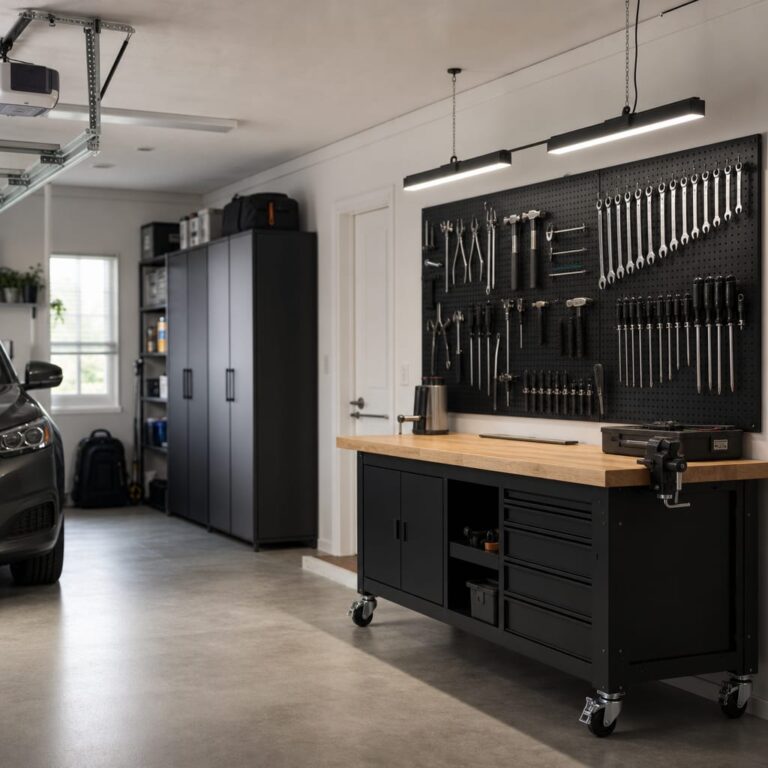
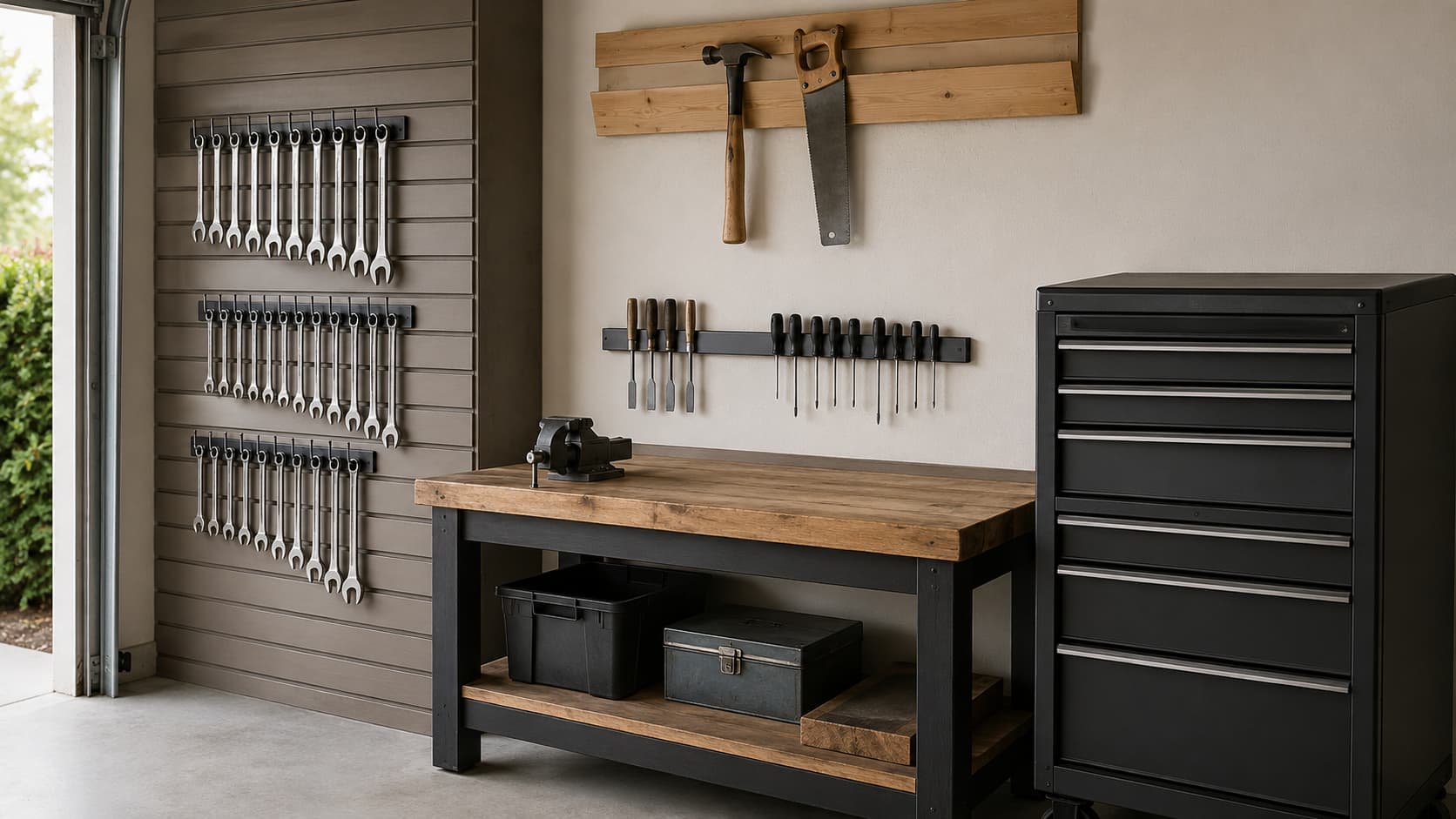
Pegboard is the default recommendation for any garage tool wall — but it’s not the only option, and for many readers it’s not the right option. Renters can’t drill the holes pegboard requires. Some drywall layouts put the studs in the wrong places. Some readers tried pegboard and found the hook-and-unscrew workflow tedious. The good news: there are five legitimate pegboard alternatives, each with a distinct constraint profile. This guide enumerates all five, matches each to the constraint that makes it the right choice, and recommends a starter pick for the two most accessible alternatives.
This guide does not cover pegboard itself — for the pegboard system buying guide, see how to choose a garage tool organization system.
Quick Answer: Five Alternatives at a Glance
| Alternative | What it does best | Who it’s for |
|---|---|---|
| Slatwall (PVC or steel) | Modular hooks that slide horizontally | Anyone who reorganizes often |
| Magnetic tool strips | Ultra-dense metal-tool storage | Bench-side workflow, ferrous tools only |
| Tool drawer or chest | Closed, dust-free, lockable | Cleanliness or security matter |
| French cleat system (DIY) | Custom layout, hand-built look | DIY enthusiast with woodworking comfort |
| Freestanding pegboard panel | Pegboard-equivalent without drilling | Renters who want pegboard workflow |
The Five No-Pegboard Alternatives
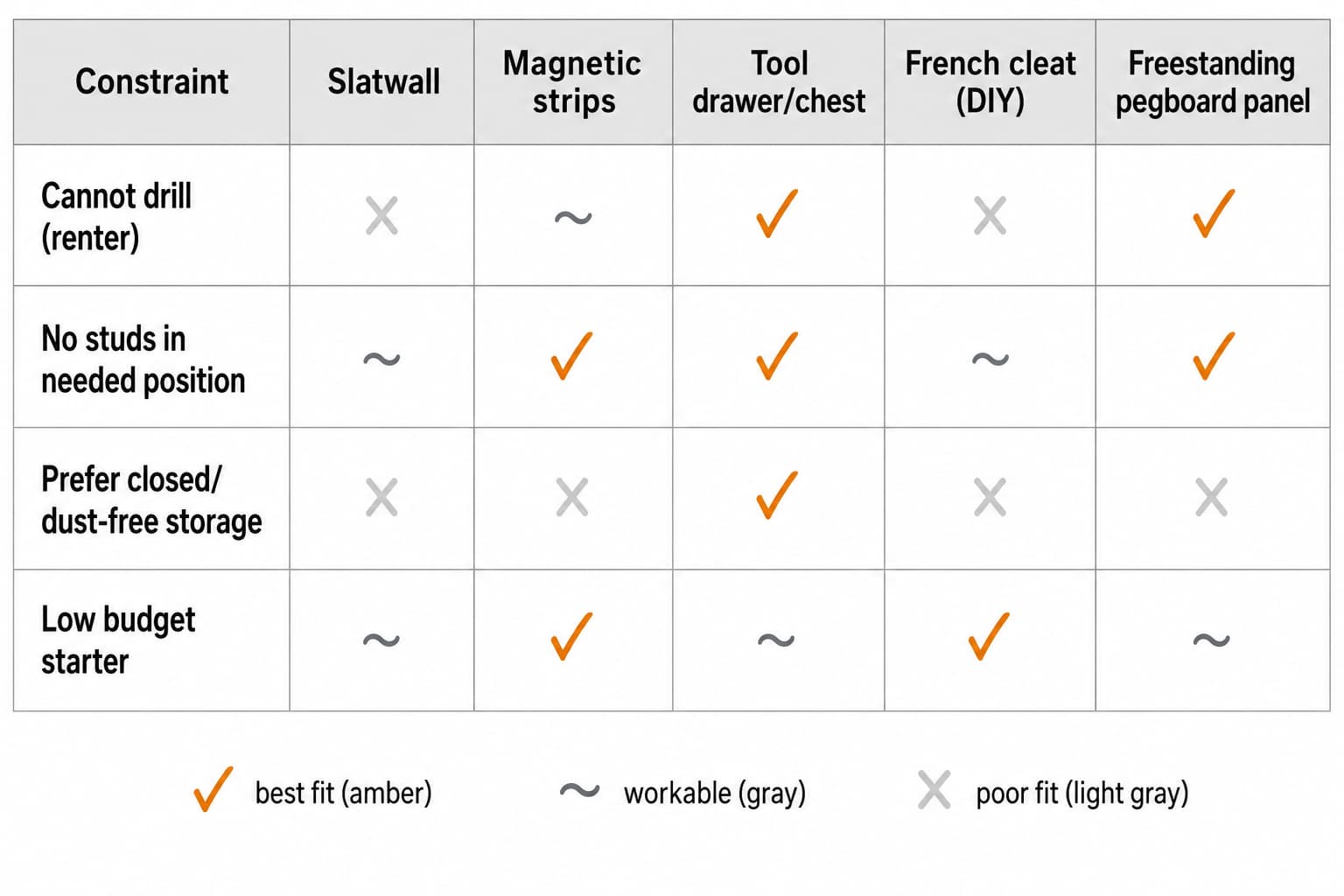
Each alternative has a specific constraint it solves better than pegboard. The decision matrix below maps the alternatives to the constraints that drive the choice.
Alternative 1: Slatwall (PVC or steel)
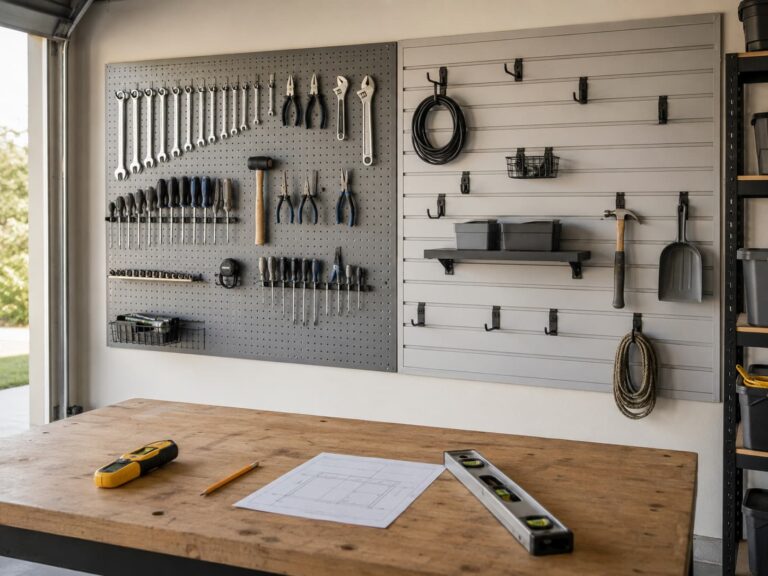
Horizontal slats that accept modular hooks, baskets, and shelves. The hooks slide horizontally without unscrewing — the defining feature vs. pegboard. PVC slatwall is the affordable starter; steel slatwall handles heavier loads. Mounts to studs (preferred), drywall with anchors (lower capacity), or masonry. For installation specifics, see how to install garage slatwall.
Best for: anyone who plans to reorganize over time. The format pays for itself if you reorganize even once a year.
Can’t do: zero-drill installations (slatwall still mounts with screws). For zero-drill, see Alternative 5.
Alternative 2: Magnetic tool strips
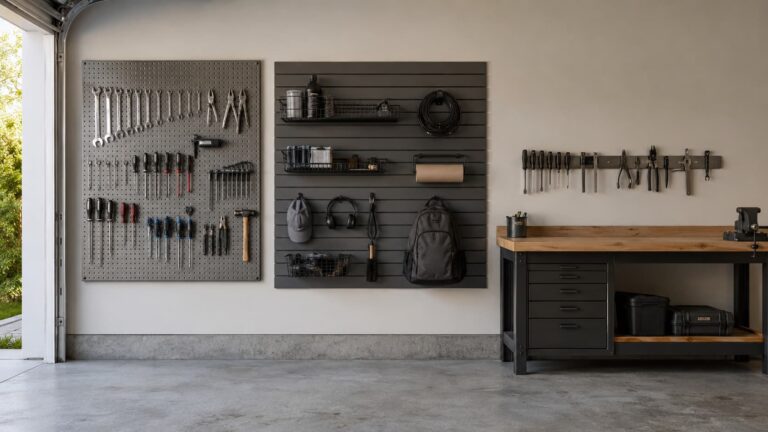
A linear magnetic bar that holds ferrous-metal tools by direct attraction. Mounts to wall, workbench edge, or steel cabinet side. Ultra-dense — a 24-inch strip holds 20-plus small metal hand tools.
Best for: small metal hand tools at the bench (chisels, screwdrivers with metal cores, pliers, small wrenches). Bench-side workflow benefits from reach-and-place over reach-and-hang.
Can’t do: plastic-grip-only tools (the magnet has nothing to grip), aluminum tools, anything beyond per-strip capacity (typically 10-25 lb total).
Alternative 3: Tool drawer or chest
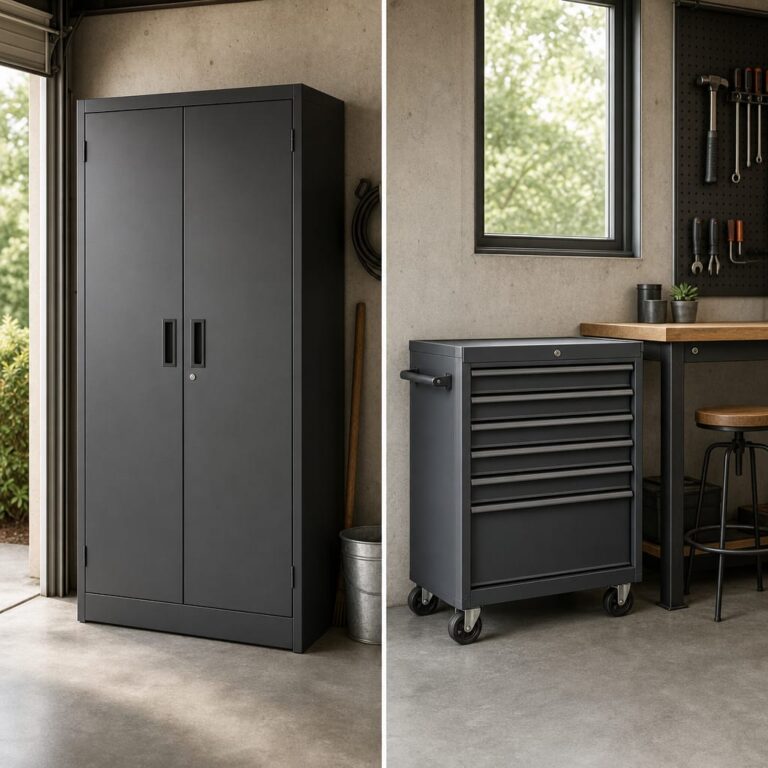
A closed metal cabinet with multiple drawers — full enclosure, dust-free, often lockable. The traditional shop-class format.
Best for: dust-sensitive precision tools, lockable security needs, readers who prefer closed storage over visible tool walls.
Can’t do: the visibility advantage of open formats. Tools out of sight tend to get forgotten. Footprint is significant — drawer cabinets take floor space.
Alternative 4: French cleat system (DIY)
A wall-mounted angled wood ledger (the “cleat”) that accepts custom-built tool holders that hook onto it. DIY-friendly using basic woodworking tools.
Best for: readers who enjoy DIY shop projects and want a fully custom layout. The cleat itself is cheap; each tool holder is hand-built to the specific tool.
Can’t do: instant deployment. You’re building each holder. Also requires comfort with a table saw or miter saw to cut the angles consistently.
Alternative 5: Freestanding pegboard panel
A pegboard panel mounted to a freestanding frame (not the wall). Stands on its own footprint, accepts all standard pegboard hooks. The renter workaround for the no-drill constraint. Sits between the workbench area and a wall, weighted at the base for stability. For the broader renters approach to garage storage, see how to choose garage storage for renters.
Best for: renters who like the pegboard workflow but can’t drill.
Can’t do: match the per-board capacity of wall-mounted pegboard (freestanding frame has lower stability). Footprint is real — a 4-foot freestanding pegboard panel takes about 18 inches of floor depth.
How to Choose Between Them
Two-step decision:
Step 1 — list your constraints. Cannot drill? No studs in the right places? Prefer closed storage? Low budget?
Step 2 — match to alternative.
- Cannot drill → freestanding pegboard panel OR magnetic strips
- No studs → tool drawer/chest (freestanding) OR magnetic strips (small footprint mount)
- Prefer closed → tool drawer/chest is the only closed-format option
- Low budget → French cleat (cheapest) OR magnetic strips (modest cost, high impact)
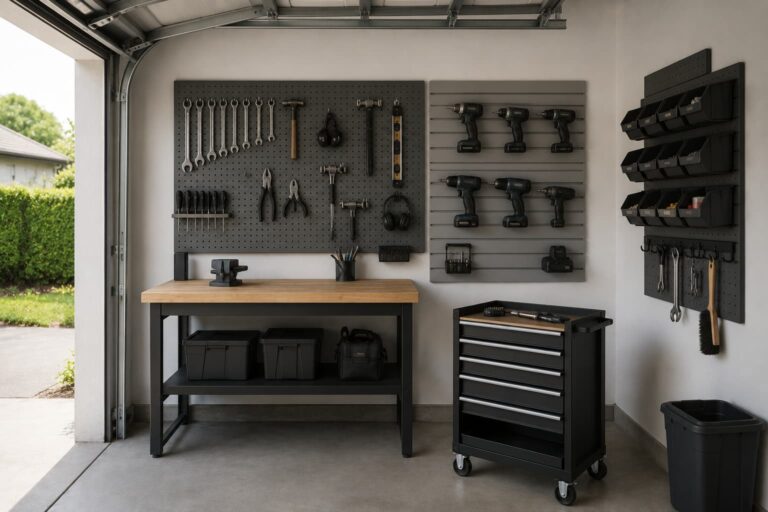
- Multiple alternatives compatible → slatwall + magnetic strip hybrid is the modern default
For broader thinking on how the tool wall fits into your garage layout, see how to set up a tool wall in garage.
Common Mistakes
- Defaulting to pegboard without considering alternatives. Pegboard works for some readers and not for others. Skipping the alternative-comparison step locks you into a format that may not match your constraints.
- Buying slatwall accessories before mounting the panel. Slatwall accessories vary in slot dimensions between PVC and steel brands. Buy the panel first, confirm the slot pattern, THEN buy accessories.
- Using magnetic strips for plastic-grip tools. The magnet grips the metal in the tool, not the plastic. Test each tool with a small magnet before mounting a strip.
- DIY French cleat without level reference. Each section of cleat must be perfectly level OR each holder’s hanging angle drifts cumulatively. A 6-foot run with a 1-degree slope adds visible drift by the end. Use a laser level for the initial install.
- Treating freestanding pegboard panels as wall-equivalent. Freestanding panels have lower stability and lower per-hook capacity than wall-mounted pegboard. Acceptable for light hand tools, NOT for medium power tools.
Featured Picks
For the two most accessible alternatives (slatwall + magnetic strips), starter picks:
For slatwall starter: FRAYSCENT 8’x4′ Slatwall Paneling
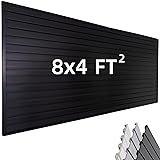
PVC slatwall covering 32 square feet with 15 accessories included to start. Hooks slide horizontally without unscrewing — the modular feature pegboard lacks. PVC keeps cost down; for heavier loads, steel slatwall (different brand) is the upgrade path. Generic-brand listing — verify the SKU at purchase.
For bench-side metal tools: HMmagnets 24-inch Heavy-Duty Magnetic Tool Holder

A 24-inch magnetic strip at the back edge of the workbench creates ultra-dense storage for ferrous hand tools — chisels, screwdrivers, pliers, small wrenches you touch hourly. Manufacturer-listed pull force is high — verify the specific lb capacity on the listing for your tool weight. Only works for ferrous metal tools.
For the dedicated roundup of tool organizers across formats, see best garage tool organizers.
What garage wall systems actually hold, compared fairly
Pegboard is rated per panel, rails per linear foot, slatwall per square foot. Three different units means the published numbers cannot be compared as they stand — so nobody compares them, and a 200 lb figure on one product looks like a 200 lb figure on another. This table quotes each manufacturer’s rating and converts them all to pounds per linear foot of a 4 ft high wall run, with the arithmetic shown.
| System | Type | Rating as published | Same rating, per linear foot of a 4 ft wall | Working | Stud requirement | Specification source |
|---|---|---|---|---|---|---|
| Gladiator GearTrack channel (rail) | rail | 75 lb per linear foot of channel | 150 lb per linear foot | 75 lb per foot of rail × 2 channels | mounts to bare wood studs or drywall over wood studs | Gladiator 4′ GearTrack Channels |
| Gladiator GearWall slatwall panel | slatwall | 50 lb per square foot | 200 lb per linear foot | 50 lb/sq ft × 4 ft high | not published on the product page | Gladiator 4′ GearWall Panels |
| Proslat PROCORE aluminium-core slatwall | slatwall | 200 lb per square foot | 800 lb per linear foot | 200 lb/sq ft × 4 ft high | engineered for 24 in stud centres, compatible down to 16 in | Proslat PROCORE PVC Slatwall |
How these numbers were produced: Each published rating is quoted from the manufacturer’s own page on the date shown. Conversion to pounds per linear foot assumes a 4 ft high run of wall: a per-square-foot rating is multiplied by 4; a per-panel rating is scaled by how many panels stack into 4 ft and divided by the panel width in feet; a per-foot-of-rail rating is multiplied by the number of channels in the run (two, the common install). The working is printed next to each result so you can substitute your own wall height or channel count.
- These are manufacturer maximums for a correctly installed system, not a promise. Every one of them depends on hitting studs, using the specified fasteners, and spreading the load rather than hanging it all off one hook.
- The comparison assumes a 4 ft high run. A rail system does not gain capacity from wall height the way a panel does — it gains it from adding channels, which is why its normalised figure moves when you change the channel count, not the height.
- Stud spacing is a hard constraint. A panel engineered for 24 in centres will also go on 16 in centres, but not the reverse.
- Drywall anchors are not studs: Wall Control publishes 100 lb per panel on anchors against 200 lb into studs, and that ratio is a reasonable warning for any system here.
- A blank cell means the manufacturer does not publish that figure — we do not fill gaps with numbers we could not source.
These are the entries that matter for this guide. The full table, with every row and its source, is in our guide to choosing a garage wall storage system.
FAQ
Is slatwall better than pegboard?
Better for modularity (hooks slide horizontally without unscrewing). Worse for cost per square foot (PVC slatwall runs about 2x pegboard; steel slatwall about 3x). If you reorganize once a year or more, slatwall pays for itself. For set-and-forget installations, pegboard stays ahead economically.
Can I use both slatwall and magnetic strips together?
Yes — this is the modern default for active workshops. Slatwall for the hung tools (hand tools, power tools with hangable holes, baskets for accessories), magnetic strips at the workbench edge for the small ferrous tools you touch constantly. The two formats don’t conflict.
Are tool drawers worth the cost vs pegboard?
Tool drawers cost 5-10x what an equivalent pegboard setup costs, but offer closed storage, lockable security, and dust protection. Worth it for: precision tools (calipers, micrometers), expensive items you want secured, and dust-sensitive equipment. Not worth it for: bulk hand tools that work fine on pegboard.
How hard is a French cleat system to DIY?
Moderate. The cleats themselves are simple 45-degree rip cuts on a table saw or miter saw — accessible to anyone with basic shop comfort. Each tool holder requires custom construction. Plan on 30-60 minutes per holder for the first few; faster after you settle into the workflow. The advantage is full customization; the cost is build time.
Can a freestanding pegboard be load-bearing for power tools?
Marginal. Freestanding pegboard frames are typically rated for lighter loads than wall-mounted equivalents — the frame is the load-bearing element and is less rigid than studs. For light hand tools, freestanding pegboard works. For medium power tools (sanders, smaller drills), it’s at the edge of capacity. For heavy power tools, choose a different format.
Sources Reviewed
For this guide, we reviewed manufacturer documentation for slatwall systems, magnetic tool holders, tool chests, and French cleat installation references, plus recurring patterns in public discussions about pegboard alternatives.