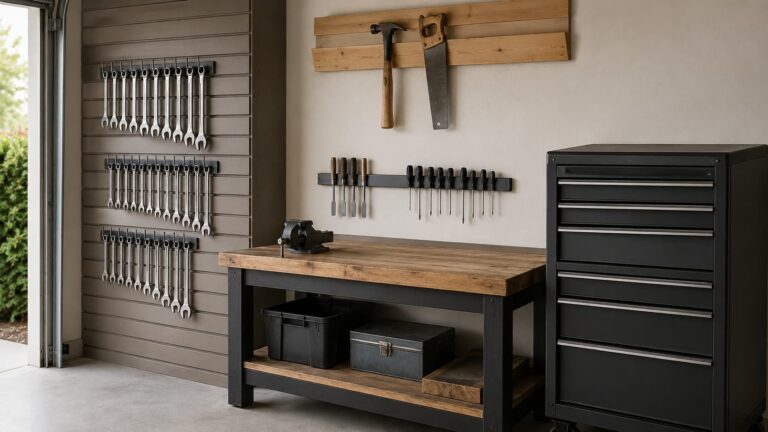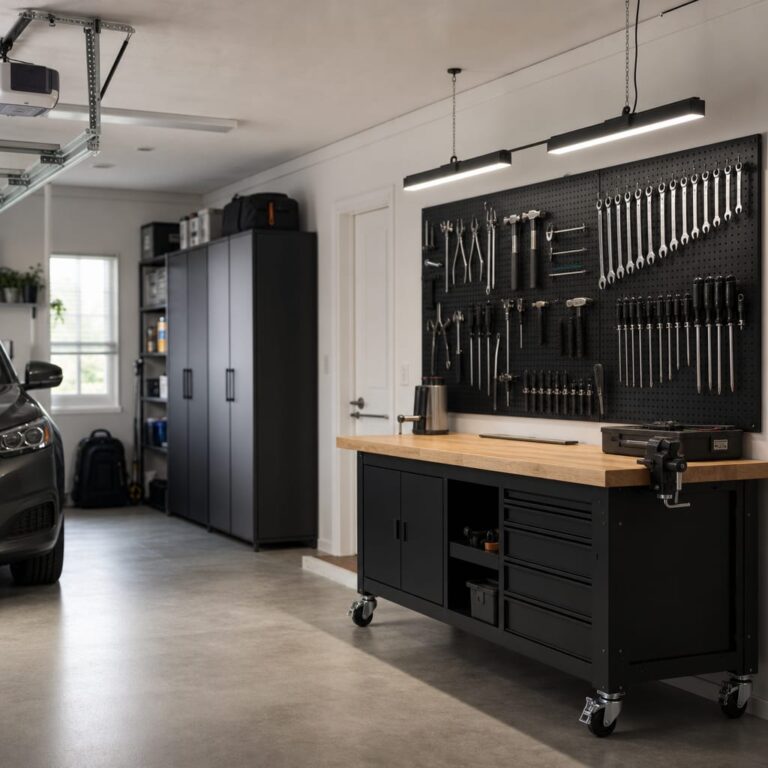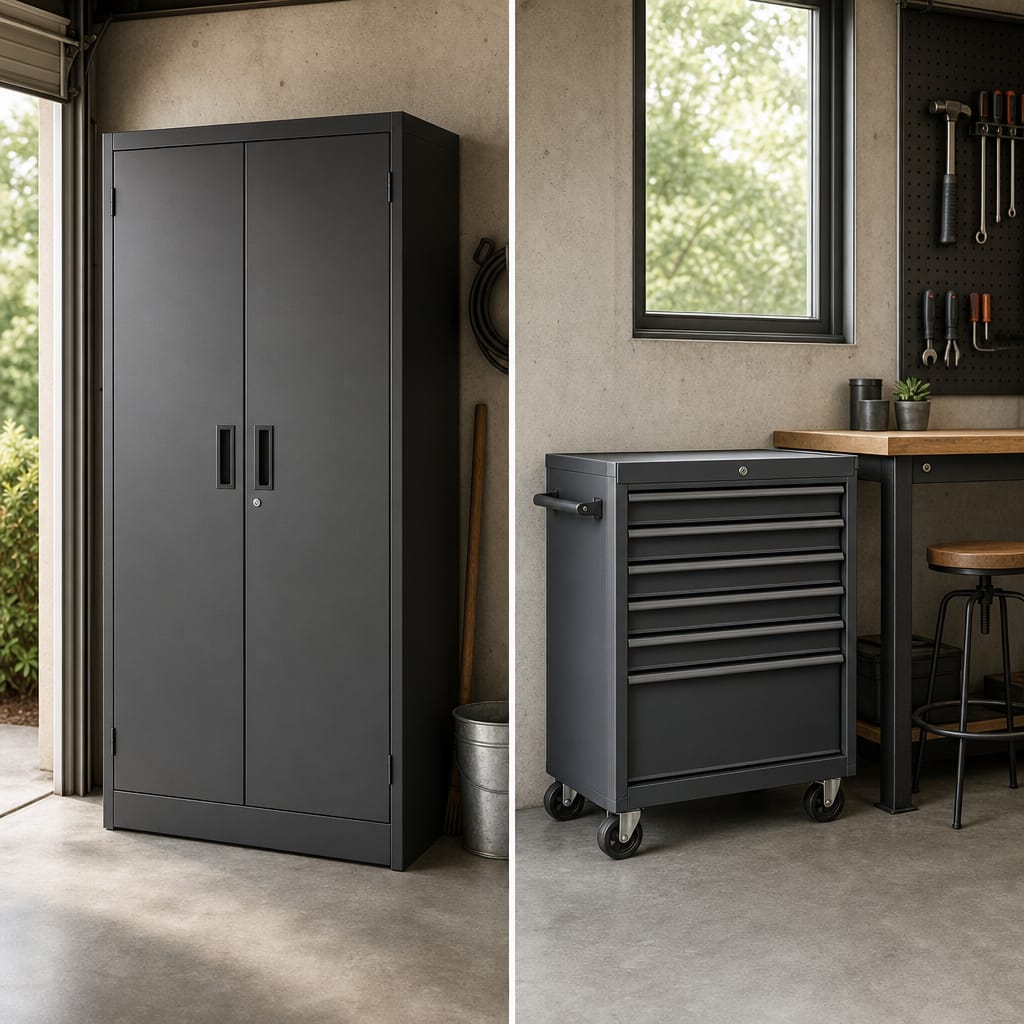
Garage Storage Cabinets vs Tool Chests
Last updated:
Disclosure: This article contains affiliate links. If you buy through these links, we may earn a commission at no extra cost to you. We do not claim hands-on testing unless clearly stated.
Two cabinets and two tool chests are reviewed on this page because most garages eventually have to answer one question: for the tools and totes you already own — by weight, by count, by how much floor they’d take up — is a cabinet or a tool chest the better home? They solve different problems, and buying the wrong one first wastes both the floor space and the money. This guide answers with sourced numbers instead of a shrug: how many cubic feet of storage you get per square foot of floor from each of the four products below, what each is rated to carry, and a five-question checklist that routes you to one or the other. Pegboard, slatwall, and specialty mounts for bikes or sports gear answer a different question and have their own guides.
Quick Answer
For bulky items — off-season totes, paint, sports gear, anything you want behind a lockable door — a garage cabinet wins on cubic feet of storage per square foot of floor, by a wide margin (see the table below). For dense, drawer-level organization of hand tools, sockets, fasteners, and workbench gear, a tool chest wins on access speed, even though it stores less per square foot. Many garages eventually own both. If you can only buy one, the table and the checklist below tell you which. Not sure either is the right category? Our comparison of garage shelving vs. cabinets covers the open-shelving alternative to both.
Best Choice by Situation
| Situation | Better choice | Why |
|---|---|---|
| Bulky items — totes, paint, holiday gear, lawn supplies | Garage cabinet | Shelf depth fits items a drawer can’t |
| Daily-access hand tools, sockets, drivers, fasteners | Tool chest | Drawer-level organization makes “grab one tool” fast |
| Lock items away from kids or shared space | Garage cabinet | One lock covers an entire vertical column |
| Workshop next to vehicle bays, you move with your work | Tool chest | Casters bring storage to the project |
| Mostly handheld tools and small parts, no bulky items | Tool chest | Cabinet space goes empty without bulk to fill it |
How much do you actually get per square foot of floor?
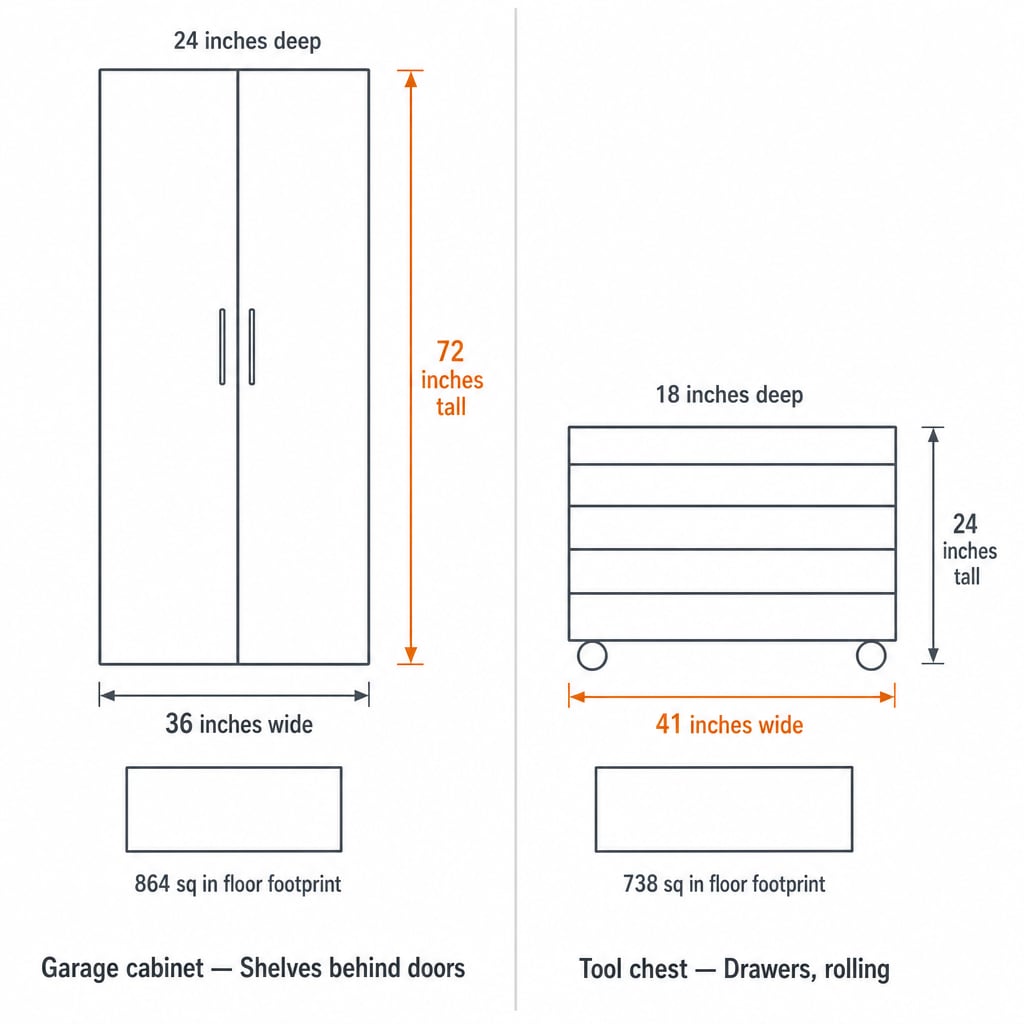
A cabinet spec sheet lists a height. A tool chest spec sheet lists a drawer count. Neither answers the question a reader with a fixed amount of garage floor actually has: for the square footage I give up, how much rated storage do I get back, and how much weight can it carry? This table normalises the four products named on this page — two cabinets, two tool chests — onto the same three numbers: exterior footprint (sq ft), manufacturer-listed rated load, and exterior storage volume (cu ft), then derives cubic feet of volume per square foot of floor given up. That derived figure is arithmetically just the product’s height in feet — footprint cancels out of the division — but re-expressing height that way is the point: it turns ‘this one is taller’ into ‘this is what taller actually buys you on your floor plan,’ and it exposes the real trade a chest makes for drawer-level organization.
| Product reviewed on this page | Format | Exterior dimensions (W × D × H, in) | Floor footprint (sq ft) | Manufacturer-listed rated load | Exterior storage volume (cu ft) | Cu ft of volume per sq ft of floor | Specification source | Source checked |
|---|---|---|---|---|---|---|---|---|
| Gladiator GAJG48KDYG Ready-to-Assemble Steel Freestanding Garage Cabinet | Cabinet | 48 × 18 × 72 | 6.0 | 75 lb per shelf (1 fixed + 2 adjustable); 450 lb total per cabinet | 36.0 | 6.0 | Gladiator GAJG48KDYG — manufacturer product page (Ready-to-Assemble Extra Large GearBox) | 2026-09-23 |
| Seville Classics UltraHD Mega Storage Cabinet, 36" W x 24" D, Granite Gray | Cabinet | 36 × 24 × 72 | 6.0 | 150 lb per adjustable shelf; 350 lb bottom shelf; 800 lb total | 36.0 | 6.0 | Seville Classics UltraHD Mega Storage Cabinet (36W x 24D, Granite Gray) — manufacturer product page | 2026-09-23 |
| CRAFTSMAN CMST82777RB 41-Inch 6-Drawer Ball-Bearing Rolling Tool Chest | Tool chest | 41 × — × — (depth/height not confirmed for this SKU — see caveat) | 100 lb per ball-bearing drawer (6 drawers); no published single-unit total | CRAFTSMAN S2000 Series 6-drawer chest (same drawer-capacity family as CMST82777RB) — manufacturer product page | 2026-09-23 | |||
| Milwaukee PACKOUT 48-22-8426 22" Rolling Tool Box | Tool chest (modular, no drawers) | 22.1 × 18.9 × 25.6 | 2.90 | 250 lb weight capacity (single compartment — no drawers, no per-drawer rating) | 6.19 | 2.13 | Milwaukee PACKOUT Rolling Tool Box 48-22-8426 — manufacturer product page (capacity) and Northern Tool listing (dimensions) | 2026-09-23 |
How these numbers were produced: Footprint (sq ft) = published exterior width (in) × published exterior depth (in) ÷ 144. Exterior storage volume (cu ft) = width × depth × published exterior height (in) ÷ 1728. Cubic feet per square foot of floor = exterior storage volume ÷ footprint, which for a rectangular footprint reduces algebraically to (height in inches ÷ 12) — the width and depth terms cancel. This is disclosed, not hidden, because it matters for reading the table correctly: the figure measures exterior height re-expressed as a floor-efficiency number, not interior usable capacity. Manufacturers do not publish interior (post-wall-thickness) volume for any of the four products, so exterior volume is used throughout as the closest sourceable proxy — see the caveat below on which format this proxy favors.
- A blank cell means we could not confirm that figure from a quotable published source on this pass — we do not fill it with a guess or an estimate from a sibling SKU.
- This table uses exterior dimensions because interior (usable) volume is not published for any of the four products. Exterior volume overstates a tool chest’s real storage more than it overstates a cabinet’s: a cabinet’s shelves run close to its full interior height, while a chest’s exterior height also pays for the frame, drawer slides, gaps between drawers, and (on rolling models) the casters underneath — none of which store anything. Read the cabinet-vs-chest gap in this table as a floor, not a ceiling, on how much more space-efficient the cabinets are.
- Manufacturer-listed rated load assumes correct assembly, level flooring, and proper weight distribution — the same disclaimer that applies to every capacity figure on this site. It is not a guarantee of real-world performance.
- CRAFTSMAN CMST82777RB (the 41-inch, 6-drawer ‘workbench’ bundle reviewed on this page) sits in a product family with several visually similar SKUs at different depths and heights — a 24.5 in H x 16 in D open top chest (CMST98269RB) and a 34 in H rolling cabinet base are both sold under closely related model numbers, and neither manufacturer nor major retailer listings we could reach stated a depth or height figure tied specifically to CMST82777RB itself. Rather than assume it matches a sibling SKU, footprint, exterior volume, and the derived per-square-foot figure are left blank for this row. Its 100 lb-per-drawer rating is confirmed for the S2000 6-drawer family this SKU belongs to.
- Milwaukee PACKOUT 48-22-8426’s width is published as 18.9 in on some retailer listings and 18.6 in on others (both citing the same manufacturer dimension catalog); this table uses 18.9 in. The difference moves the footprint and volume figures by about 1%, not enough to change which format wins the per-square-foot comparison.
- This table answers footprint and load only. It does not capture access pattern (open shelf vs. pull-out drawer), mobility, or lockability — see the side-by-side comparison and the decision checklist on this page for those.
Download the data (CSV) · last updated 2026-09-15 · version 1.0 · CC BY 4.0, attribution to Garage Space Guide.
Cabinets and Tool Chests, Defined
A garage cabinet is a freestanding full-height enclosure with shelves and doors — typically 60–72 inches tall, 24–48 inches wide, 18–24 inches deep. Two residential subtypes dominate: ready-to-assemble welded steel (Gladiator GAJG/GALG, Seville Classics UltraHD — ships flat, assembled at home) and pre-assembled welded steel (Gladiator Premier, Husky — arrives intact, mostly Home-Depot-sold). Flat-pack particleboard cabinets sit in a different decision tree entirely. For a full walkthrough of these subtypes and what to prioritize by garage type, see our guide on how to choose garage cabinets.
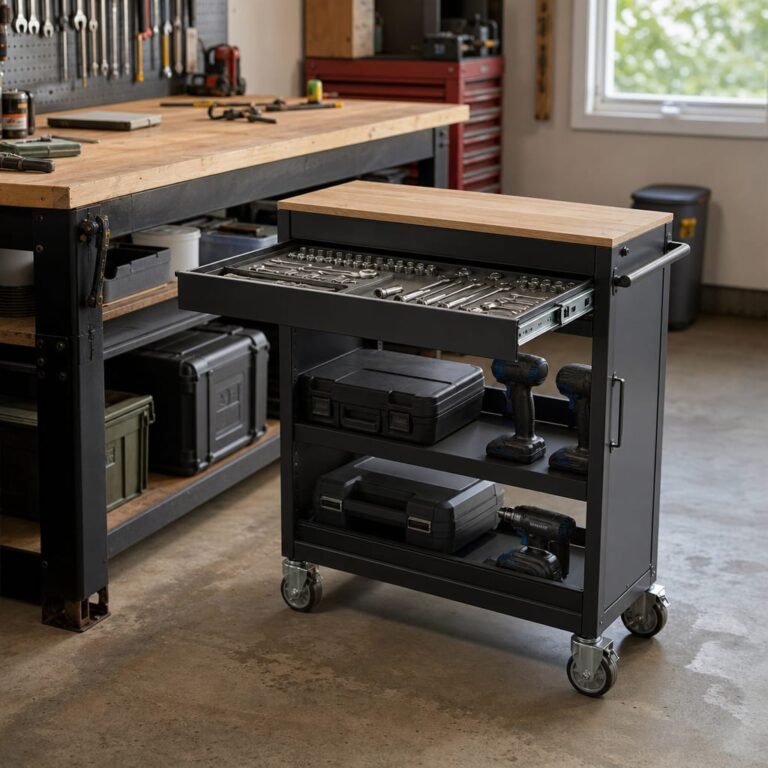
A tool chest is a drawer-based steel (or impact-polymer) box, typically 26–56 inches wide for residential use, with ball-bearing or friction-slide drawers. Residential formats include the top chest (sits on a bench), rolling cabinet (drawers + casters), chest-on-cabinet combo (top stacked on rolling base), and modular system (Milwaukee PACKOUT, DeWalt ToughSystem) — a stack of boxes rather than one fixed unit. Inside, drawers categorize tools by function rather than size. If a tool chest is one option among several you’re weighing, our guide to choosing a garage tool organization system covers the full decision, not just chests.
Buyer warnings that don’t show up on a spec sheet
- A cabinet’s “lockable” door defends against casual access, not theft — most residential cabinet locks can be defeated quickly.
- Ready-to-assemble cabinets ship in multiple flat cartons and need 1–4 hours of garage-floor assembly space; interior width typically runs 1–2 inches under exterior, which matters when fitting a 27-gallon tote (~20 inches wide) inside a 24-inch cabinet.
- A tool chest’s drawer height (commonly 2.5–6 inches at the residential tier) is the binding constraint on what fits — a 3-inch drawer holds sockets, not a circular saw.
- Modular systems like PACKOUT advertise the base-box price; the full stack you actually need adds up faster than the marketing implies.
- On combos, casters under 5 inches struggle on garage floor seams — verify diameter on the product page.
Side-by-Side: What the Numbers Don’t Capture
Footprint, rated load, and volume are in the table above. Four other differences don’t reduce to a number but matter just as much when you’re standing in the garage deciding:
| Dimension | Garage cabinet | Tool chest |
|---|---|---|
| Access pattern | Open door, see shelf, reach in | Pull one drawer, see all its contents |
| Mobility | Static once loaded | Rolling on casters (or modular — breaks apart) |
| Lockability | One lock per door / column | Per-drawer or gang-lock |
| Typical residential lifespan | 10–20 years | 5–15 years (drawer slides wear) |
The two paradigms differ on every one of these axes except “made of steel.”
How to Decide for Your Garage
Five variables decide this. Work through them in order.
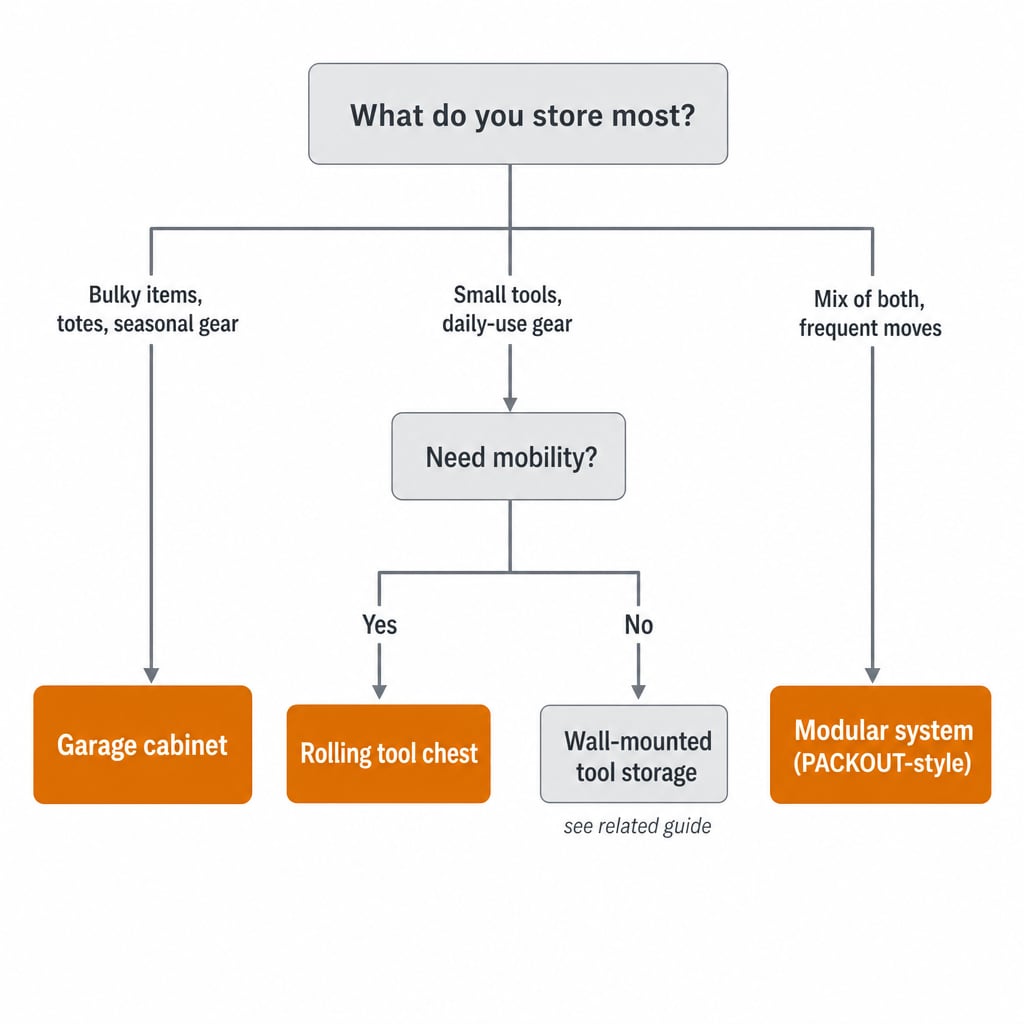
- What do you store more of? Bulk by volume → cabinet. Small tools by count → tool chest.
- How often do you grab the contents? Daily → tool chest. Seasonal → cabinet.
- Do you move storage between locations? Yes → tool chest with casters or modular system. No → cabinet.
- Lockable or open? One lock per column → cabinet. Per-drawer or gang lock → tool chest.
- Floor vs vertical space? Limited floor, generous height → cabinet. Limited height or budget per cubic foot → tool chest.
If three answers point the same way, that’s your starting purchase. Revisit the other side in 6–12 months.
Recommended Products for Each Side
One branded full-height pick and one value pick per side. Looking for wall-mounted or pegboard alternatives instead of a floor-standing chest? See our roundup of garage tool organizers.
For garage cabinets — Branded, full-height ready-to-assemble: Gladiator GAJG48KDYG Steel Freestanding Garage Cabinet (48″ W × 72″ H × 18″ D)

The full-height welded-steel pattern from the most-recognized garage-systems brand. 48 × 72 × 18 inches, lockable double doors, adjustable shelves, GearWall- and GearTrack-compatible. Ships ready-to-assemble in flat cartons. Manufacturer-listed 75 lb per shelf, 450 lb per cabinet — 6.0 cu ft of storage per square foot of floor, the volume-efficiency benchmark among the cabinets reviewed here. Buyer warning: Assembly takes 1–4 hours on the garage floor; confirm the listing shows the 48-inch Silver Tread model since multiple GAJG sub-variants exist.
For garage cabinets — Value, welded steel: Seville Classics UltraHD Lockable Storage Cabinet (36″ W × 24″ D × 72″ H, Granite)

The welded-steel value pattern. Three height-adjustable shelves, 36 × 24 × 72 inches — wide and deep enough to swallow 27-gallon totes inside. Leveling feet for floor imperfections. Manufacturer lists 150 lb per adjustable shelf, 350 lb bottom shelf, 800 lb total — the same 6.0 cu ft per square foot as the Gladiator, from a different footprint (deeper, narrower). Buyer warning: Confirm the listing shows the 36 × 24 × 72 granite model and verify capacity on the manufacturer’s product page.
For tool chests — Traditional rolling: CRAFTSMAN 41-Inch 6-Drawer Ball-Bearing Rolling Tool Chest (CMST82777RB)

The most-recognized “American workshop” tool-chest brand. 41 inches is the residential standard for a workshop next to a vehicle bay; six drawers cover the typical categories. Craftsman’s own product page confirms 100 lb per ball-bearing drawer with soft-close latching. This is the one product on this page without a computed cu-ft-per-square-foot figure — its product family includes several similarly-sized SKUs at different depths and heights, and nothing we found ties an exact depth or height to this specific model, so we left it blank rather than borrow a sibling’s number. Buyer warning: Confirm SKU CMST82777RB and the listing image showing 6 drawers with rolling casters.
For tool chests — Modular rolling: Milwaukee PACKOUT 22″ Rolling Tool Box (48-22-8426)

The modular paradigm. Stacks with other PACKOUT modules into a custom chest-equivalent on 9-inch all-terrain wheels and breaks down into separate boxes when you move between projects. Manufacturer-listed 250 lb weight capacity, IP65 weather seal. At 2.13 cu ft of storage per square foot of floor, it trades volume for portability — about a third of what either cabinet returns per square foot of floor it occupies. Buyer warning: The 48-22-8426 is the rolling base only — drawer modules, top chests, and trays are separate. Plan the full stack before assuming the base covers your needs.
Common Mistakes
Mistake: Buying a cabinet expecting drawer-style organization. Cabinets store; drawers organize. A tray of sockets on a cabinet shelf defeats the access pattern. If you reach for small tools daily, you want drawers.
Mistake: Buying a tool chest expecting tote-sized bulk storage. Drawer height (typically 2.5–6 inches residential tier) is the binding constraint. A 27-gallon tote won’t fit in any standard chest drawer.
Mistake: Buying a combo without checking caster size. A loaded combo on 2-inch casters will not cross garage floor seams without grinding. Confirm caster diameter ≥ 5 inches before paying for a combo whose main selling point is mobility.
How to Measure Before Buying
Use this checklist for either type, before you order:
- Floor footprint, width × depth, plus 3 inches clearance per side for door swing or wheeling
- Vertical clearance at the intended location — most cabinets are 72 inches; verify ceiling and overhead obstructions
- Entry path width from driveway to final spot — critical for rolling chests over 40 inches wide and for pre-assembled cabinets
- Interior dimension of the largest item you’ll store (a 27-gallon tote? a circular saw case?) — confirm the cabinet interior or the chest’s largest drawer fits it
- Total weight estimate — compare against manufacturer-listed total capacity; if you’re within 50% of the cap, size up
- Distance from your workbench (tool chest only) — beyond 6 feet you’ll use it less than you think; aim for ≤ 4 feet if daily access matters
If floor space is the binding constraint from the start, see our picks for garage cabinets built for small garages — they prioritize footprint over raw capacity.
FAQ
I want both — which do I buy first?
Whichever solves the more annoying daily problem. Trip over totes every weekend → cabinet first. Waste 10 minutes finding a screwdriver three times a week → tool chest first.
Why does a cabinet hold so much more per square foot than a tool chest?
Because the per-square-foot figure is really just height in feet, and a cabinet devotes nearly all of its height to shelving while a chest gives up a meaningful share of its height to drawer frames, slides, and — on rolling models — the casters underneath. Two products can occupy the same footprint and store very different amounts once you account for what their height is actually spent on.
Does Milwaukee PACKOUT count as a tool chest?
Functionally yes — it organizes small tools in one compartment and rolls between locations. It’s a stack of reconfigurable boxes rather than one fixed unit with drawers, which is why it’s the one product in the table above with no drawers and no per-drawer rating. Want a fixed workshop installation with drawer-level organization → a traditional rolling chest is closer.
Sources Reviewed
For this comparison we reviewed manufacturer pages for all four exemplars — Gladiator (gladiatorgarageworks.com), Seville Classics (sevilleclassics.com), Craftsman (craftsman.com), and Milwaukee Tool (milwaukeetool.com) — plus a corroborating retailer listing for the Milwaukee PACKOUT’s exterior dimensions (Northern Tool), the Amazon listings for the four exemplars, and recurring patterns in public customer feedback. We do not claim hands-on testing. Full source URLs, quotes, and check dates for every figure in the footprint/load/volume table are linked from the table above.