How to Organize a Garage on a Budget
Last updated:
Disclosure: This article contains affiliate links. If you buy through these links, we may earn a commission at no extra cost to you. We do not claim hands-on testing unless clearly stated.
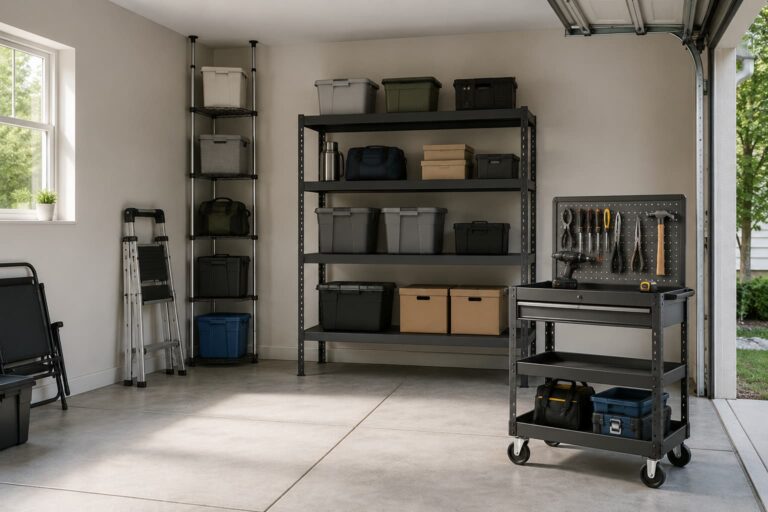
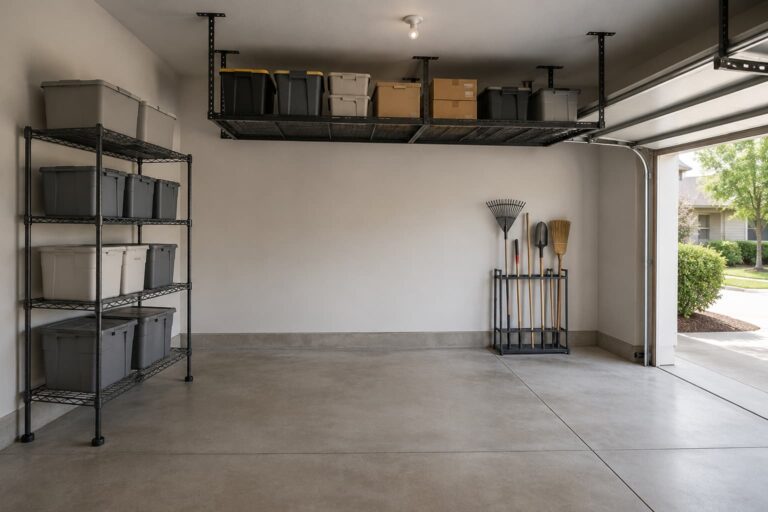
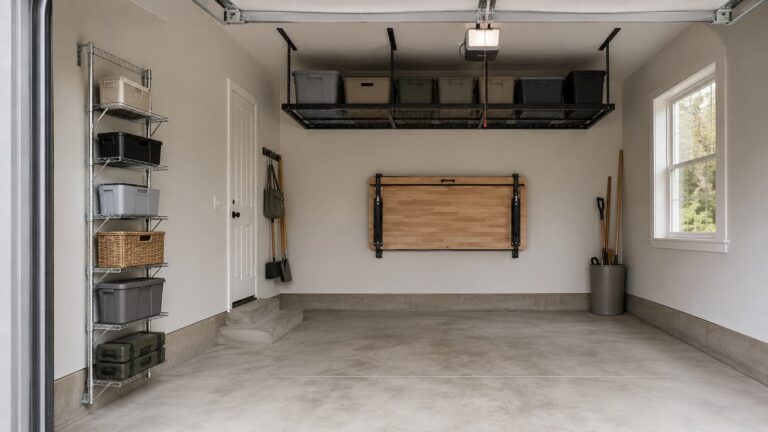
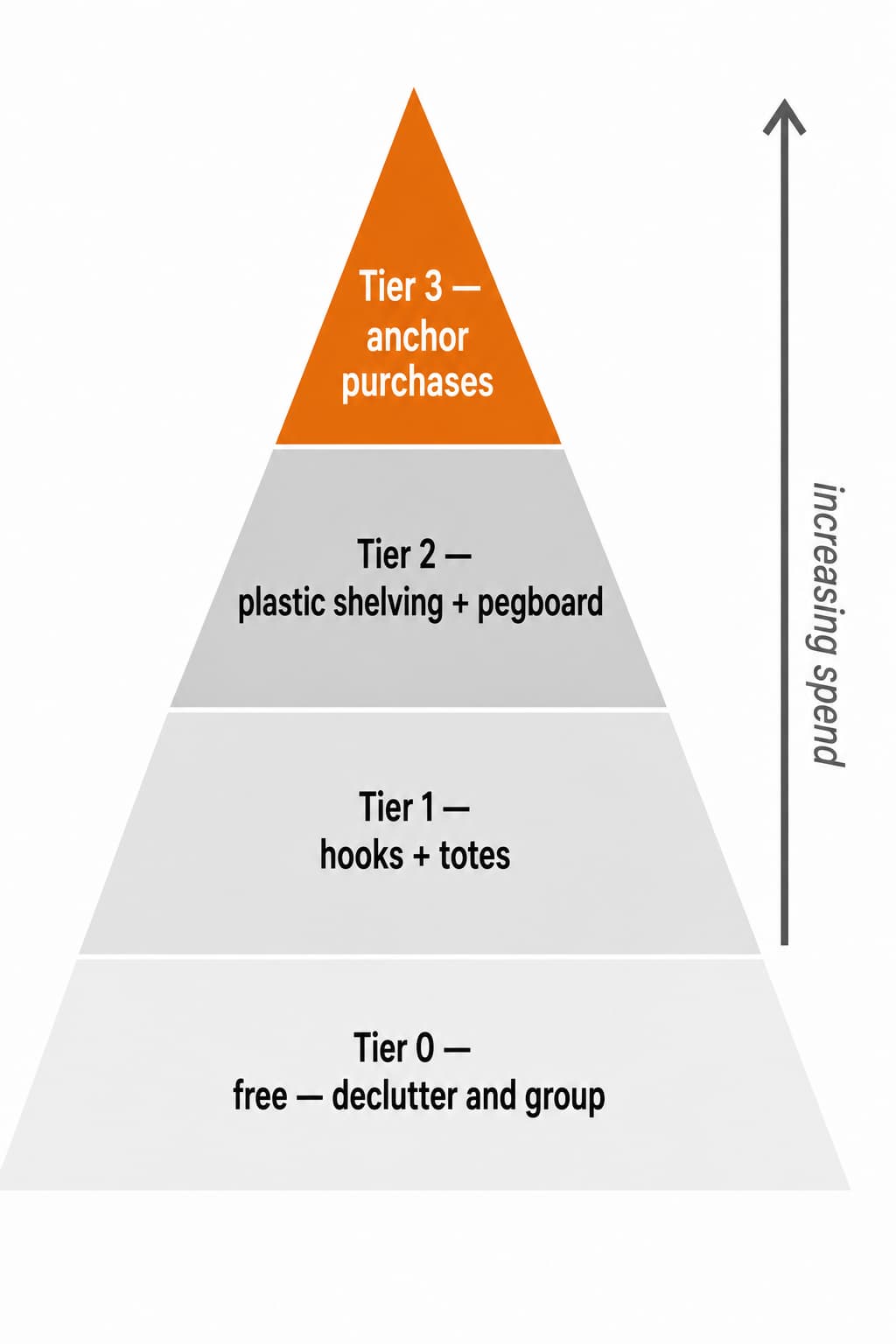
The cheapest garage organization is the one you didn’t have to buy. Free decluttering, basic sorting, and a single tape-measure session save more money than any “budget storage” purchase you can make. Most budget-organization regret happens when readers skip those free steps and start buying organizers around inventory that should have been donated, sold, or trashed in the first place. This guide walks through a sequenced spend plan — Tier 0 (free) through Tier 3 (anchor purchases) — and shows where each tier earns its keep. We don’t pick specific products at every tier; for those, we route you to the category roundups along the way.
Quick Recommendation by Budget Tier
| Tier | What to do | Outcome |
|---|---|---|
| Tier 0 (free) | Declutter and group inventory by frequency | A garage with less stuff in it |
| Tier 1 (lowest spend) | Universal hooks + a few storage totes | Categorized inventory off the floor |
| Tier 2 (small spend) | One plastic shelving unit + a pegboard sheet | Vertical storage; tools and small parts hanging |
| Tier 3 (anchor purchases) | One wire shelving unit + one wall-mount shelf pair | Real storage capacity at chest height |
| Tier 4 (beyond) | Slatwall, overhead racks, custom cabinets | Out of scope for this budget guide |
Step 0 — Free First (Declutter and Group)
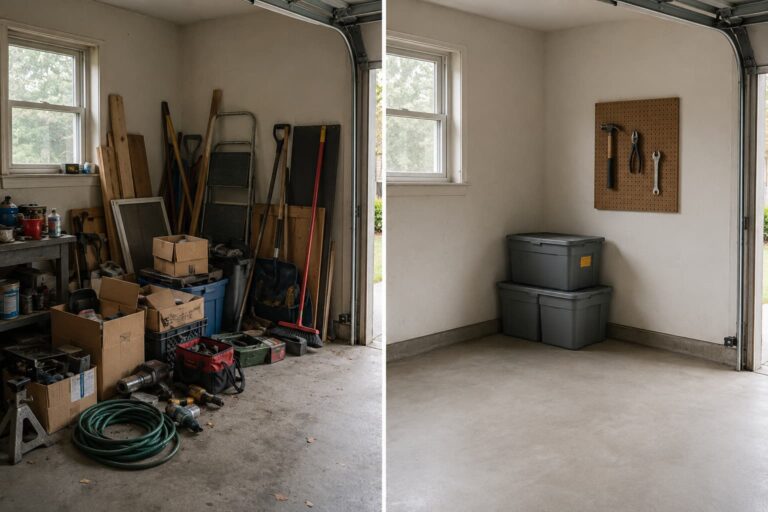
Most budget-organization regret starts here: buying organizers before sorting the inventory. The cheapest tactic in this entire guide is two or three weekends of decluttering before any spend.
Pull everything out — yes, everything — onto the driveway. Group what you find by how often you use it: monthly or more (keeps in garage), every few months (keeps but stores remotely), twice a year or less (donate, sell, or trash). The bottom third of the pile is almost always genuinely not needed; the math improves dramatically once you accept that.
Once the pile is sorted, measure: wall length, ceiling height, wall-to-car clearance per side. One tape measure, one notebook page. These four numbers determine everything you can buy.
For a deeper free-first walkthrough, see how to start organizing a cluttered garage and how to organize a small garage step by step.
Step 1 — Tier 1 (Lowest Spend)
The cheapest meaningful purchase tier. Two categories of item compound in impact:
- Universal pegboard hooks, sold in packs of 50 to 100 at any hardware store. Hangs hand tools, extension cords, garden tools. The hooks themselves are cheap; the impact-per-dollar at this tier is extreme. For specific picks see our garage hooks roundup.
- A few storage totes (18-gallon, plastic). Group inventory by category — paint, sports gear, holiday — so the bottom of the pile actually gets revisited. For tote roundup see our storage bins guide.
This tier alone organizes a low-clutter garage if Step 0 was done honestly. Many readers stop here and never need more.
Step 2 — Tier 2 (Small Spend)
A modest step up. One or two purchases have outsized impact:
- One plastic shelving unit (4 or 5 tier). Cheapest freestanding storage that holds the totes from Tier 1 vertically instead of leaving them stacked on the floor. Manufacturer-listed capacities are typically 100 to 150 lb per shelf — sufficient for tote-and-supplies storage, exceeded easily by paint or tool bulk. For picks see our plastic shelving roundup.
- A pegboard sheet (4 × 4 or 4 × 8) with mounting screws. If you have wall space, pegboard is the leveling tool that gets tools off the floor and into eye-level reach. Mount to studs only — drywall anchors void the manufacturer-listed rating immediately.
Step 3 — Tier 3 (Anchor Purchases)
This is where budget stops being purely cheap and becomes “spend efficiently on anchor purchases.” Two products at this tier multiply organization impact more than several times their cost in Tier 1 hooks ever could.
Anchor 1 — A wire shelving unit with wheels
Wire shelving is the budget-friendly tier above plastic — higher manufacturer-listed capacity, ventilation that matters in humid garages, and (when paired with locking casters) mobility. The compact 14-inch-depth form factor fits one-car garages where 18-inch and deeper utility shelves overhang the parking zone. Casters let renters reposition without unloading the unit.
Anchor 2 — A wall-mounted shelf pair
A 2-pack of heavy-duty wall shelves frees up floor space and creates a clean chest-height storage band. Mounts into wall studs; no specialty hardware required beyond the included screws and a stud finder. The wall-shelf pattern is what unlocks “boxed-inventory at chest height” instead of “boxes on the floor.”
Sequencing — What to Do First If You Have Only a Small Budget
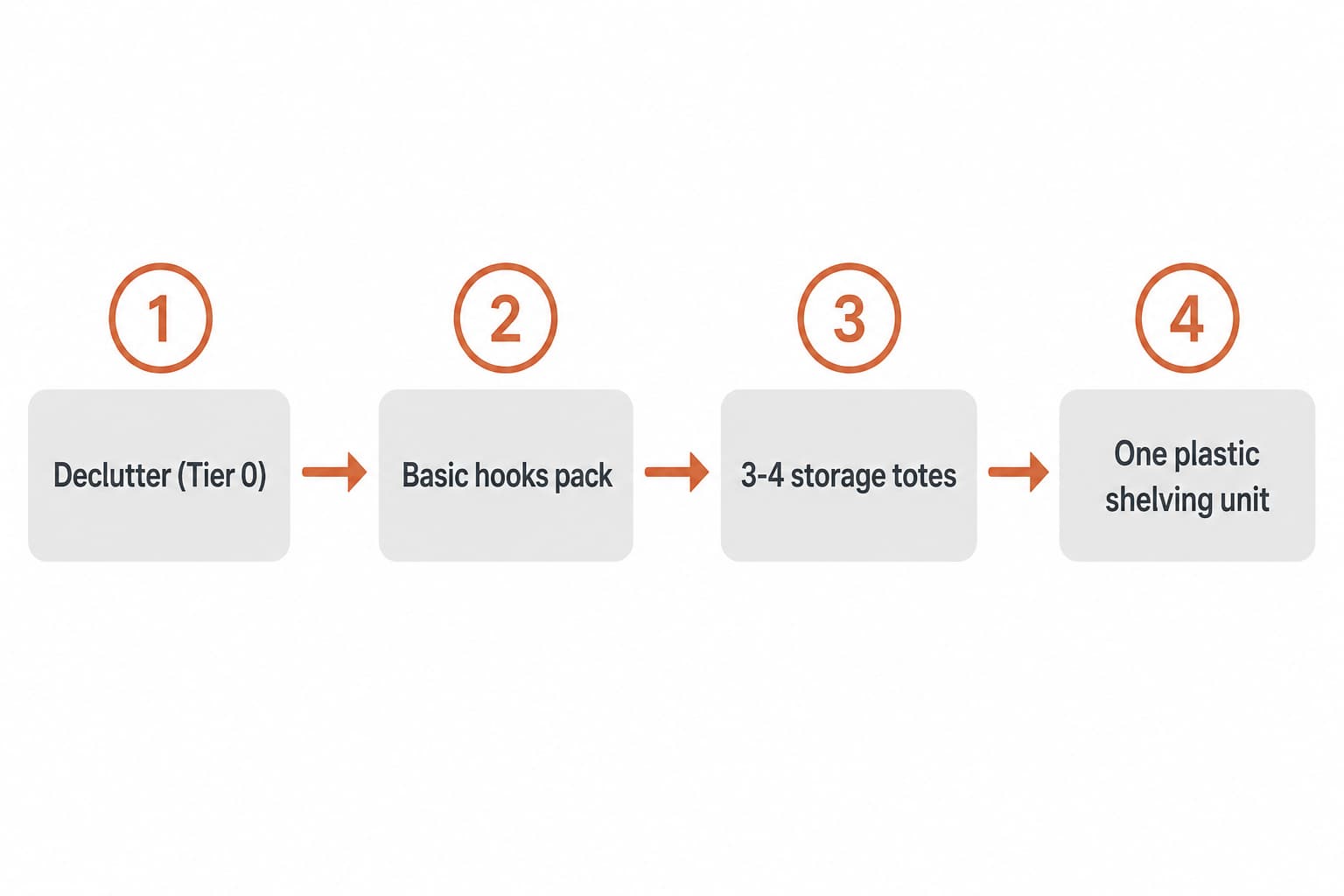
If the entire organization budget is roughly the size of a takeout meal or two, the priority order is:
- Tier 0 — free decluttering. Non-negotiable. Do this even if no purchase is planned afterward.
- A basic hooks pack
- Three or four storage totes
- One plastic shelving unit
Skip wire shelving and wall-mount entirely at the small-budget level. Re-evaluate after three to six months — most readers find Tier 1 plus Tier 2 sufficient if the declutter was honest. The Tier 3 anchor purchases earn their place when the storage profile clearly outgrows plastic and floor-only layouts.
For renters specifically, see our garage storage for renters guide — drilling restrictions change the priority order significantly. Renters typically skip Tier 2 pegboard and Tier 3 wall-mount entirely, and lean harder on wire shelving with wheels at Tier 3.
Mistakes to Avoid
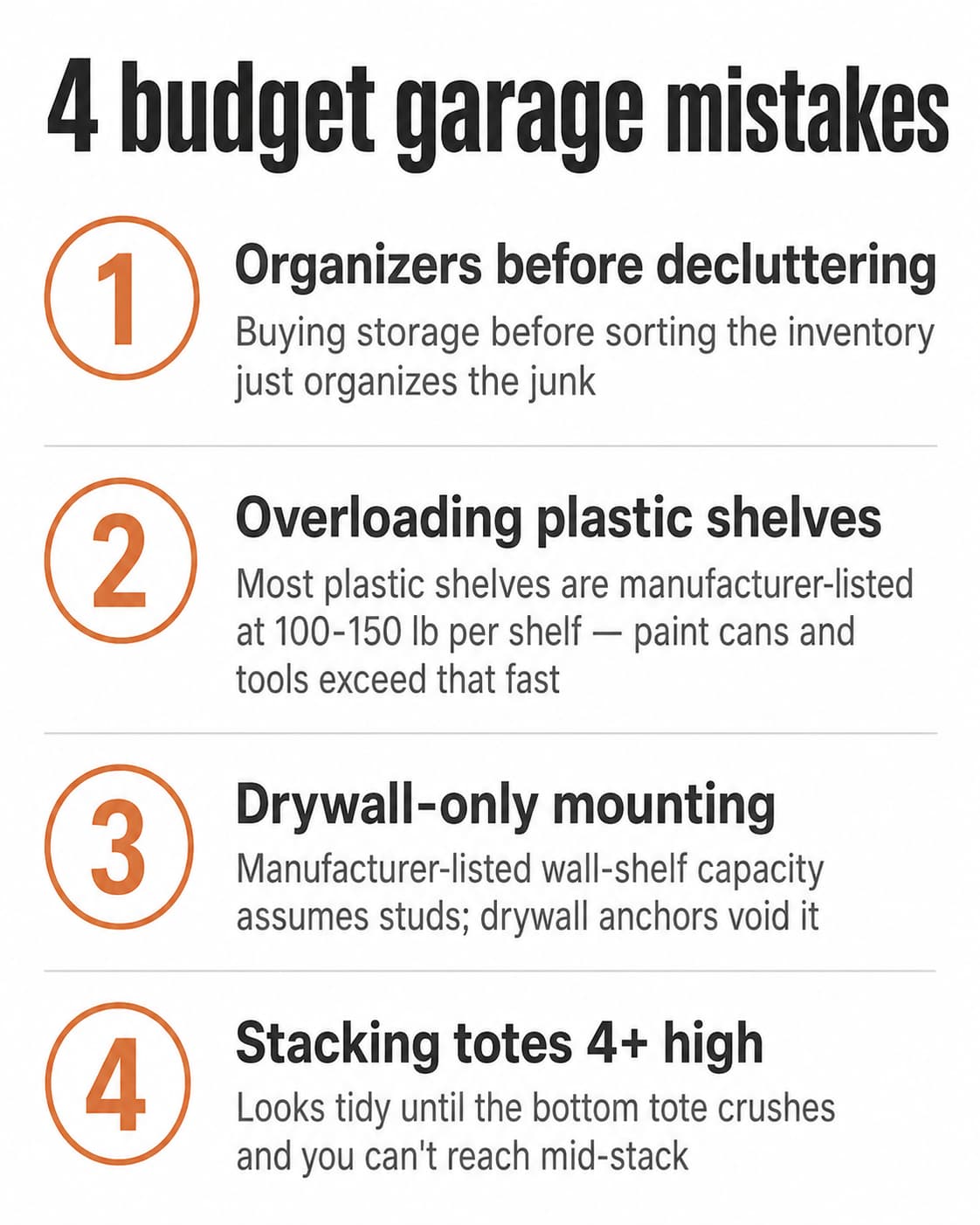
Mistake 1: Buying organizers before decluttering. The most expensive mistake in this entire category. You end up organizing junk — and worse, you end up needing more organizers than the cleaned-out inventory would have required.
Mistake 2: Overloading the cheapest plastic shelving. Plastic shelves typically come with a manufacturer-listed cap around 100 to 150 lb per shelf. A few paint cans or one tool case can put you over. For heavier inventory, step up to wire shelving (Tier 3) before plastic fails under load.
Mistake 3: Drywall-only wall mounting. Manufacturer-listed wall-shelf capacity assumes mounting into studs. Drywall anchors — even the heavy-duty ones — void the rating entirely. Use a stud finder, or stay freestanding.
Mistake 4: Stacking totes four or more high. Looks tidy in the moment. Then you can’t reach the mid-stack tote, the bottom one starts to crush, and the stack tips. Use a plastic shelving unit (Tier 2) instead — same footprint, much better access.
Measurement Checklist
Before any spend above the lowest tier:
- Wall length available
- Wall-to-car clearance per side
- Ceiling height
- Stud spacing (16 or 24 inches on-center)
- Largest tote dimension with the lid on
- Floor slope toward the door
Featured Picks (Tier 3 Anchor Purchases)
Two anchor picks at the Tier 3 level — explicitly NOT the budget tier itself. For Tier 1 hooks see the garage hooks roundup; for Tier 2 plastic shelving see the plastic shelving roundup.
Budget freestanding step-up — Seville Classics 5-Tier Wire Shelving with Wheels

Compact 14″D × 30″W footprint fits one-car garages. Five tiers at manufacturer-listed 300 lb per shelf give 1,500 lb total on leveling feet (165 lb total on wheels — surface this in your planning). Locking casters let renters reposition without unloading. This is the step up from plastic that handles real storage weight.
Budget wall-mount step-up — FLEXIMOUNTS WR26 2’×6′ Wall Shelf (2-Pack)

Two heavy-gauge cold-rolled steel wall shelves, 24 inches deep by 72 inches wide each — roughly 12 linear feet of chest-height storage out of a single 2-pack. Mounts into wall studs or solid concrete. Most one-car and two-car garages can build their entire wall storage on this single purchase.
How many totes actually fit on a garage shelf
Tote makers publish dimensions and shelving makers publish dimensions, but nobody puts the two together — so people buy shelving, then discover their totes overhang it. This table takes the published external size of totes from the brands people actually buy for garage storage — Sterilite, Rubbermaid Roughneck, and IRIS USA — and works out how many fit per shelf on the two garage shelving depths you can actually buy, 18 in and 24 in.
| Tote | Published dimensions (source order) | Footprint | Height | Fits an 18 in deep shelf? | Per 48 × 18 in shelf | Per 48 × 24 in shelf | Specification source | Source checked |
|---|---|---|---|---|---|---|---|---|
| Sterilite 6 Qt. Storage Box | 13 5/8" x 8" x 4 5/8" | 13⅝ in × 8 in | 4⅝ in | Yes | 6 | 9 | Sterilite 6 Qt. Storage Box | 2026-09-14 |
| Sterilite 16 Qt. Storage Box | 17 1/8" x 11 7/8" x 6 3/4" | 17⅛ in × 11⅞ in | 6¾ in | Yes | 4 | 4 | Sterilite 16 Qt. Storage Box | 2026-09-14 |
| Sterilite 27 Qt. ClearView Latch Box | 17" x 11 1/8" x 12 3/4" | 17 in × 11⅛ in | 12¾ in | Yes | 4 | 4 | Sterilite 27 Qt. ClearView Latch Box | 2026-09-14 |
| Sterilite 60 Qt. Wheeled Underbed Latch Box | 35 1/2" x 18 7/8" x 7" | 35½ in × 18⅞ in | 7 in | No — it overhangs | 0 | 1 | Sterilite 60 Qt. Wheeled Underbed Latch Box | 2026-09-14 |
How these numbers were produced: External dimensions are quoted on the date shown per row. Sterilite rows are quoted from Sterilite’s own product pages (L x W x H order). Rubbermaid Roughneck rows are quoted from Ace Hardware’s retailer listing, which prints the manufacturer’s SKU-linked dimensions in H x W x D order on each product page. IRIS USA rows are quoted from IRIS USA’s own product pages (L x W x H order). All figures are the external/overall assembled dimensions with the lid on. The counts are computed, not estimated: totes are placed in a single layer, all in the same orientation, with no overhang and no gap; both orientations (the tote’s long side along the shelf’s 48 in run, or along its depth) are tried and the better one is kept. Shelf width is 48 in in both cases — the two depths are real Husky shelving footprints: 48 in. W x 18 in. D (Husky 86 in. H x 48 in. W x 18 in. D 6-Shelf Steel Shelving Unit, model MR481886W6B, https://www.homedepot.com/p/Husky-86-in-H-x-48-in-W-x-18-in-D-Black-Steel-6-Shelves-Shelving-Unit-MR481886W6B/306062319) and 48 in. W x 24 in. D (Husky 5-Tier Steel Shelving Unit, 48 in. W x 78 in. H x 24 in. D, model 426007, https://www.homedepot.com/p/Husky-5-Tier-Riveted-Steel-Garage-Storage-Shelving-Unit-in-Silver-48-in-W-x-78-in-H-x-24-in-D-426007/303241694); neither product page states a clear opening between posts. 48×18 and 48×24 are unobstructed reference surfaces, not guaranteed usable dimensions of every nominal 48×18 or 48×24 rack — posts and lips can reduce the clear opening (one retailer answer for a Husky 48×24 gives about 45.5 × 21.5 in between posts). Round the result down again if your shelving has corner posts that intrude, and leave room to get a hand in.
- A tote that fits the shelf footprint still needs vertical room: check the tote height against your shelf spacing, and leave clearance to lift it in and out rather than sliding it flush.
- Counts assume a flat, full-depth shelf. Wire shelving with a lip, or posts at the corners, will cost you the last tote in a row.
- Lids overhang the base on most totes; the figures here are the manufacturer’s overall assembled dimensions, which already include the lid.
- Capacity in quarts or gallons tells you nothing about whether it fits — and "27" doesn’t mean the same thing twice. The Sterilite 27 Qt. ClearView Latch Box (17 in x 11-1/8 in) fits an 18 in shelf; the Sterilite 108 Qt. Stacker Box (25-3/4 in x 18-3/8 in) — 27-gallon-equivalent by volume (108 qt = 27 gal), though Sterilite sells it as "108 Qt.," not "27 Gal." — does not.
- Manufacturers and retailers don’t all publish dimensions in the same order. Ace Hardware lists Rubbermaid Roughneck as Height x Width x Depth, where Sterilite and IRIS USA publish Length x Width x Height. This table normalises every row to footprint (the two horizontal dimensions) and height so they compare directly regardless of the order they were published in.
- Rubbermaid Roughneck’s 10 gal and 18 gal totes share the same footprint (23⅞ in x 15⅞ in) — only the height changes, so stepping up in capacity in that range costs no extra shelf space, only vertical clearance.
- A blank cell means the manufacturer does not publish that figure — we do not fill gaps with numbers we could not source.
These are the entries that matter for this guide. The full table, with every row and its source, is in our How many totes actually fit on a garage shelf.
FAQ
What’s the cheapest way to organize a garage?
Decluttering. Genuinely. The bottom third of a typical garage pile is items the owner won’t notice gone, and removing them eliminates storage needs entirely. Free, before any spend.
Are plastic shelves strong enough for tools?
Hand tools and light power tools, yes. Bulk material (gallon paint, salt, soil, batteries) typically exceeds the 100 to 150 lb per shelf manufacturer-listed cap on the cheapest plastic units. For bulk, step up to wire or solid metal.
Can I organize a garage in one weekend on a budget?
Tier 0 and Tier 1, yes — that’s a realistic weekend project. A full setup including Tier 2 and Tier 3 is unlikely in one weekend because measurement, ordering, and assembly typically take days of elapsed time, even if active work is only a few hours. See how to organize a garage in one weekend for a realistic single-weekend plan.
What should I buy first if I only have a small budget?
A pack of universal hooks, three or four storage totes, and (if budget allows) one plastic shelving unit. That sequence delivers more order-per-dollar than any anchor purchase.
Wire versus plastic shelving on a budget?
Plastic is cheaper outright. Wire is more durable, has higher manufacturer-listed capacity, and tolerates humidity better. The plastic-to-wire step-up is a real upgrade that’s worth the spend once the inventory exceeds plastic’s limits. See the plastic shelving roundup for the cheapest tier.
How do I budget for a full garage organization project?
Tiers 0 through 3 cumulatively cover most one-car and two-car garages. Beyond Tier 3 — slatwall, overhead racks, custom cabinets — moves out of “budget” territory and into “investment” territory. For most readers, completing through Tier 3 is the right place to stop and re-evaluate.
Should I rent a storage unit instead?
Almost never cost-effective for residential garage clutter. The monthly storage-unit cost compounds; the better answer is decluttering. The exception is a temporary use case (renovating, moving) — for those, a short-term unit is reasonable. For the everyday-garage case, decluttering wins on cost and on outcome.
Sources Reviewed
For this budget guide, we reviewed manufacturer product information from Seville Classics, FLEXIMOUNTS, Sterilite, Husky, and major pegboard/hooks suppliers; retailer product pages on Amazon and Home Depot; and recurring patterns in budget-organization discussions on home-improvement forums. We do not claim hands-on testing.
Related Guides
- How to Start Organizing a Cluttered Garage — the free-first deep dive
- How to Organize a Small Garage Step by Step — small-garage focus
- How to Organize a Garage in One Weekend — single-weekend plan
- How to Plan Garage Organization Zones — zoning the space
- Best Plastic Shelving Units for Garage Storage — Tier 2 picks
- Best Garage Hooks — Tier 1 hooks
- Best Garage Storage Bins for Shelves — Tier 1 totes
- Best Garage Storage for Renters — drilling-restricted guide