Best Ceiling Storage Racks for Garage Organization (2026)
Last updated:
Disclosure: This article contains affiliate links. If you buy through these links, we may earn a commission at no extra cost to you. We do not claim hands-on testing unless clearly stated.
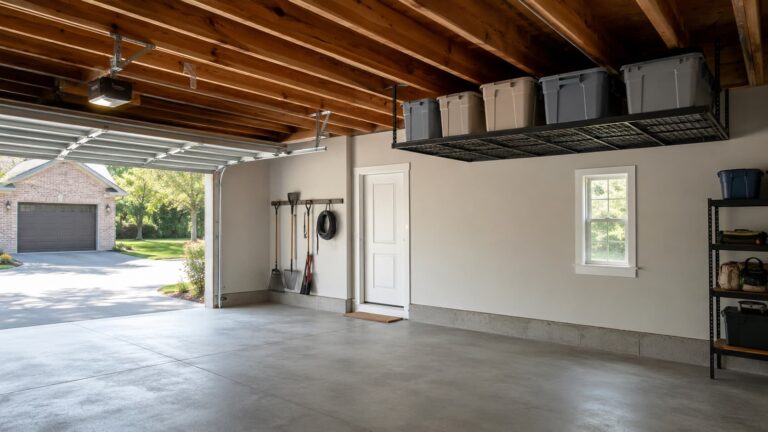
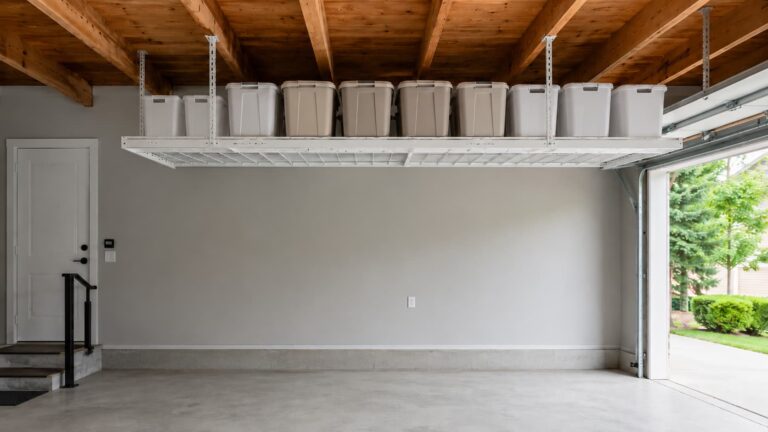
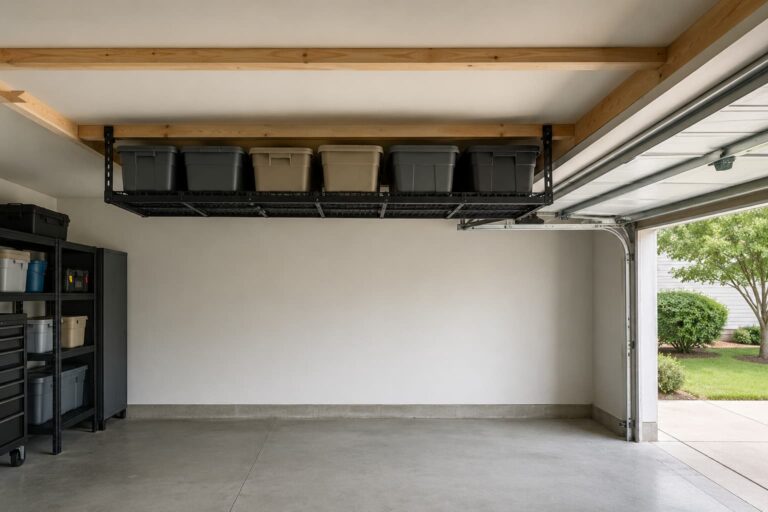
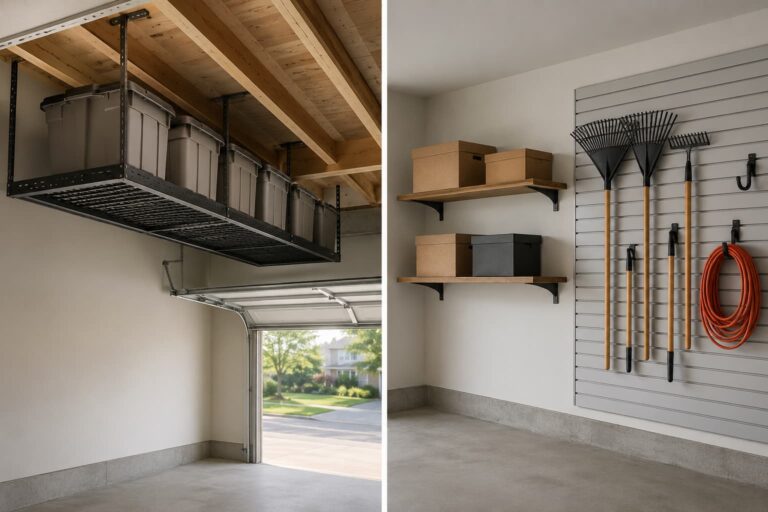
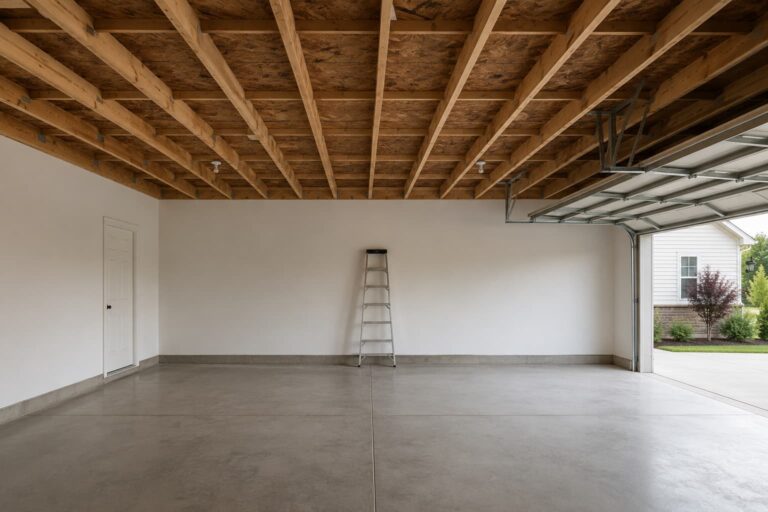
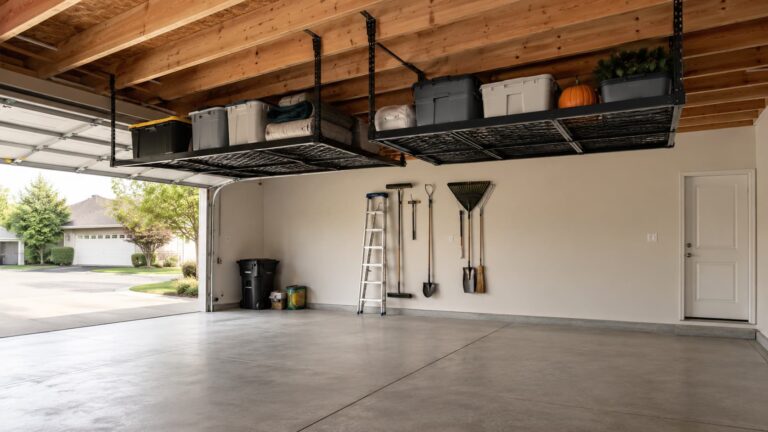
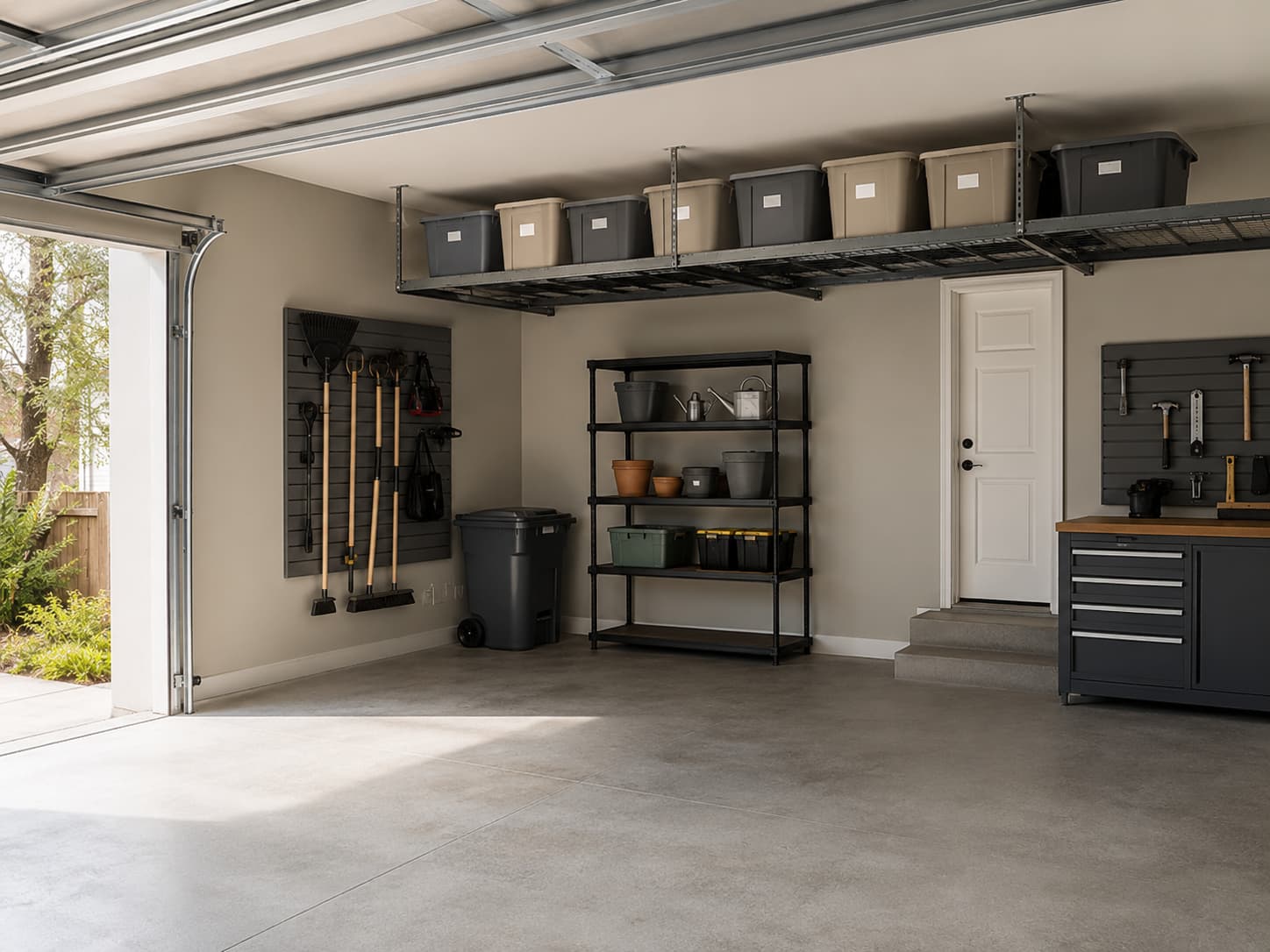
The garage floor is full. The walls are full. The next move is up — and a ceiling rack is the install that gets the most square footage back per dollar. It’s also the install most likely to go wrong, because the variable that actually decides whether your rack stays in place isn’t the rack itself. It’s the joist behind the drywall. This guide covers six ceiling storage racks that map to six common situations: a fixed welded-frame deck for buyers who want one install and forget it, an adjustable rack for owners still figuring out their clearance, a heavier-duty option for dense loads, a low-profile pick for short ceilings, a tote-specific rail system for the bins-only crowd, and a smaller modular unit for buyers spreading storage across multiple ceiling zones. Match your situation to the slot before you match the slot to the brand.
Quick Picks
| Pick | Product | Best for | Drop range | Watch out for | |
|---|---|---|---|---|---|
| Best fixed ceiling rack | SafeRacks 4×8 (24″-45″) | One-time install, owners who know their ceiling height | 24″-45″ | Drop too tall for 8′ ceilings; ships as a 2-pack | View on Amazon |
| Best adjustable | FLEXIMOUNTS 4×8 with Hooks | Owners still tuning clearance + want hooks below | 22″-40″ | Joist spacing must be ≤24″ or exactly 48″ | View on Amazon |
| Best heavy-duty | SunsGrove 4×8 | Dense loads, buyers near the listed capacity ceiling | 22″-40″ | Capacity assumes joist condition holds | View on Amazon |
| Best for low ceilings | HyLoft 80842-10 | 7-8′ ceilings, compact load | 17″-26″ | Smaller deck (33″x34″ max) | View on Amazon |
| Best for bins | Indusker T-Rail | Bins-only storage, max ceiling efficiency | Joist-mounted (no deck drop) | Tote-lip width must match | View on Amazon |
| Best modular | Gladiator GearLoft 2×4 | Many small ceiling zones rather than one big deck | 23″-37″ | Cost per square foot higher than a 4×8 | View on Amazon |
How We Selected These Racks
We do not claim hands-on testing unless clearly stated. For this guide, we reviewed manufacturer specifications, retailer product pages, brand documentation, Amazon product listings, and recurring patterns in public buyer discussions on garage forums and review platforms.
Because ceiling-rack failures are not gradual — a rack that slips a lag bolt fails all at once, with whatever weight is on top of it — we prioritized products with clear manufacturer-stated capacity, documented joist-spacing compatibility, and a brand with presence beyond a single Amazon listing. Brand-only-on-Amazon products with vague capacity language were filtered out, even when their headline numbers looked competitive.
Selection criteria, in priority order:
- Manufacturer-listed capacity is published clearly, not buried in a bullet list or expressed as a marketing range.
- Joist-spacing compatibility is documented (16″ / 24″ / 48″), not assumed.
- Brand has a presence beyond Amazon: own retail site, brand registry, or established product family.
- Drop range is stated, so the buyer can match the rack to their ceiling height before ordering.
- Single-unit configuration is available, or the multi-unit listing is clearly labeled as such.
Read This First — Ceiling Rack Safety Inputs
Before any rack pick matters, three inputs decide whether the install is sound: joist condition, garage door clearance, and weight distribution. The rack manufacturer can spec the rack; they can’t spec your ceiling. For the full overhead-storage safety framework, we cover load distribution, lag-bolt torque, and post-install monitoring in a separate guide.
Joists are the load. Manufacturer-listed capacity assumes the joist can take it. Older homes (pre-1980) often have undersized framing or framing that has flexed over decades. Water-damaged or termite-affected framing is not acceptable for ceiling-rack mounting regardless of what the rack is rated for. 2×4 joists are not equivalent to 2×6 joists in either deflection or pull-out resistance — and finished-drywall garages hide which one you have. If you don’t know your joist condition, the answer is to find out before you load anything overhead, not to trust the rack number.
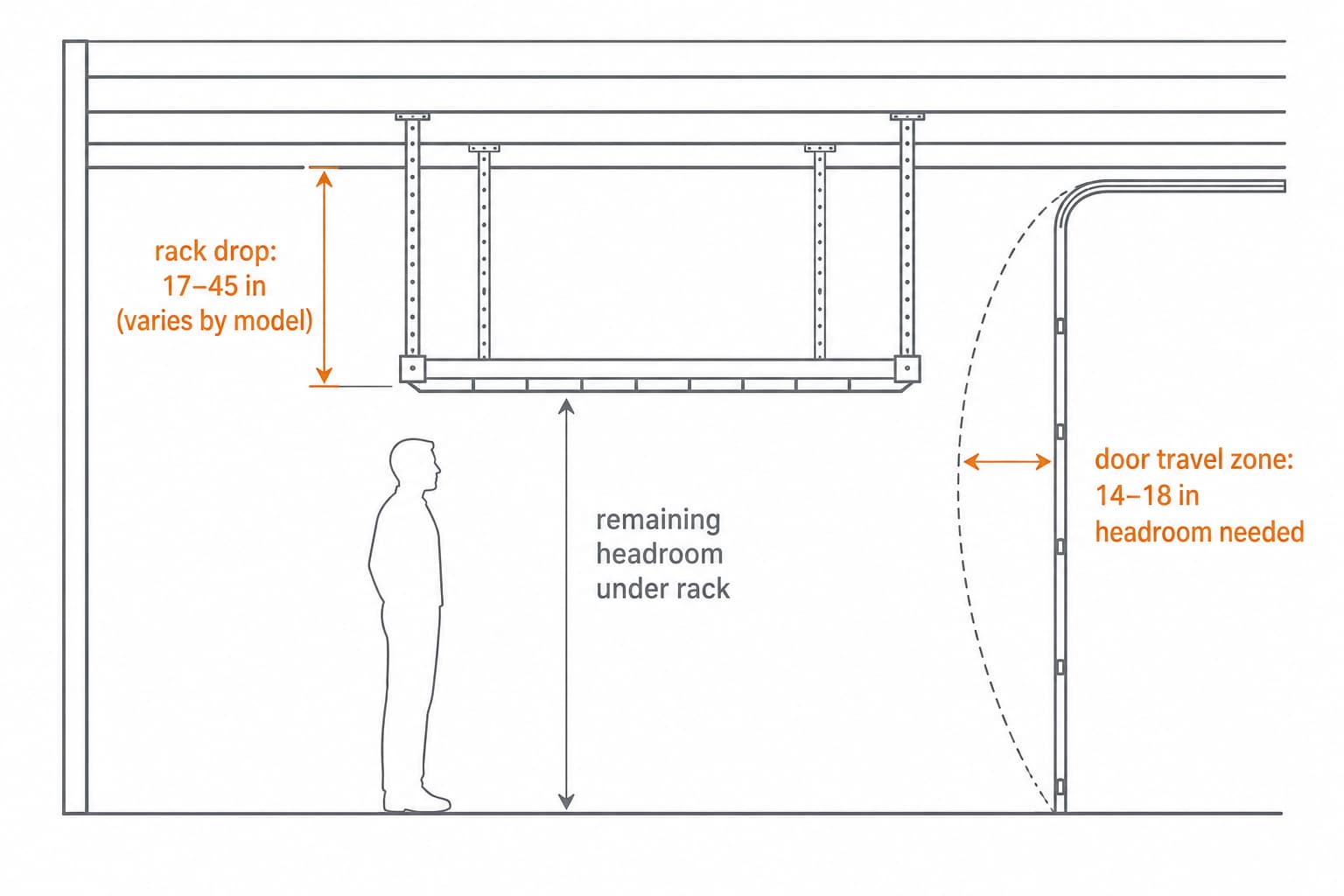
Garage door clearance. A sectional garage door with a torsion-spring assembly typically needs 14″-18″ of headroom in its travel zone — the path the door panels swing through as they roll up. A ceiling rack hung in that zone won’t just brush the door; it will catch a panel and force the spring to absorb the impact. Measure the door travel zone before the rack drop, not after. For joist-finding and lag-bolt sizing, the install guide walks through measurement and tooling.
Weight distribution. Listed capacity is the even-distribution number. A rack with a 600 lb manufacturer-listed capacity does not mean you can put 600 lb in one corner.
What to Look for Before Buying
Five factors decide whether a rack fits your garage. Drop range and joist spacing are the two that strand more buyers than any other.
Drop range
Drop range is the distance the rack hangs from the ceiling. It’s the single number that decides whether the rack works in your garage. A 24″-45″ rack in an 8′ ceiling garage either dangles into headspace or blocks the door. A 17″-26″ low-profile rack in a 10′ ceiling garage works but wastes vertical space you could have used. Match the rack range to your ceiling height with a 6″-12″ buffer for door clearance.
Joist-spacing compatibility
Most racks fit 16″ or 24″ on-center joists, which is what modern construction defaults to. Older homes (pre-1960) and additions can have non-standard spacing, including 19.2″ centers, 30″ centers, and 48″ beam-only ceilings. The FLEXIMOUNTS 4×8 explicitly fits joist spacing ≤24″ or exactly 48″; the SafeRacks fits 16″/24″ only. A small minority of products (the HyLoft 80842-10 in this guide) adjust their width 24″-34″, which lets non-standard joist spacing fit when fixed-width racks won’t. Measure your joist spacing with a stud finder before you order.
Capacity vs. real-world load
A rack with a 600 lb manufacturer-listed capacity is rated for 600 lb evenly distributed across the deck. Concentrated load — say, a single 200 lb safe pushed to one corner — exceeds that rating in practice. Read manufacturer numbers as ceiling-on-flat-load, not as a guaranteed lift number for any item you put up there.
Width vs. depth
4×8 sounds bigger than 3×6, but the limiting factor in most garages is depth, not width. A 48″-deep rack hung over a sectional door’s travel zone is unusable; a 36″-deep rack might fit. Lay out the deck zone with painter’s tape on your floor before you commit to a footprint.
Material and finish
Powder-coat finishes hold up better than paint in unheated garages. 14-gauge cold-rolled steel has better deflection resistance than 16-gauge. Rust protection matters in coastal climates and in garages that share a wall with a laundry room (humidity migration is real).
What a good product page should specify
A trustworthy ceiling-rack listing publishes drop range, manufacturer-listed capacity, joist-spacing compatibility, deck dimensions, and material gauge — all on the listing, not buried in a Q&A and not implied by photographs. Pages that omit any of these are either gambling that buyers won’t ask, or selling a product whose answer would discourage purchase. Skip them.
Best Fixed Ceiling Rack: SafeRacks 4×8 Overhead Storage Rack
Best for: Owners with two ceiling zones to fill (or a partner’s garage to share with) who already know their ceiling height and want one install they never touch again.

Short verdict: A long-tenured 4×8 mainstream rack with 600 lb manufacturer-listed capacity per rack, white powder-coat finish, and a brand that owns its retail beyond Amazon — pick this when you’ve measured your ceiling, you have 9′ or more of clearance, and you don’t expect your storage strategy to change.
Listing note: This SKU ships as a 2-pack — one purchase delivers two complete racks for paired install across two ceiling zones, which is the listing’s intended configuration. The 600 lb capacity is per rack (1,200 lb across both deployed racks).
The SafeRacks 4×8 has been a category staple for years. The 24″-45″ drop range puts it at the standard end of the ceiling-rack spectrum — too tall for 8′ ceilings, but right at home in a 9-10′ garage where the rack tucks well above headspace. SafeRacks publishes installation guidance specifically for wood joists and explicitly says not to install on I-beams, steel joists, or concrete ceilings, which is the kind of clarity we look for from a manufacturer.
Why it stands out
What separates the SafeRacks pick from the dozen near-identical 4×8 racks on Amazon is brand tenure and accessory ecosystem. SafeRacks has been in the ceiling-rack category long enough that the install-issue patterns are well-documented, replacement hardware is available, and the company offers professional installation in 40+ US cities for buyers who don’t want to drill into joists themselves. The product itself is industrial-strength steel with a powder-coat white finish that looks deliberately neutral, which matters more than buyers think — a black hammertone rack draws the eye to the ceiling; a white rack disappears.
It can work well for:
- Owners with 9-10′ garage ceilings who want maximum deck size
- Buyers planning a paired install across two ceiling zones
- Garages that already have a white ceiling and benefit from a matched finish
- Storing labeled bins, holiday decorations, and seasonal sports gear
Key specs to check
- Manufacturer-listed capacity: 600 lb per rack, evenly distributed
- Drop range: 24″-45″ (does not adjust below 24″)
- Deck size: 96″W × 48″D
- Joist-spacing compatibility: 16″ / 24″ centers (wood joists)
- Configuration: 2-pack (2 complete racks per listing)
- Finish: white powder-coat
Recurring feedback patterns
Recurring feedback patterns suggest install time runs longer than buyers expect on the first rack — typical reports describe a multi-hour first install with a partner, then significantly faster on a second unit, which works in the 2-pack’s favor. Common complaints often involve confusion over the hardware kit’s lag-bolt size when paired with thicker drywall (5/8″ vs 1/2″), and several buyers mention that the included hardware works for standard 1/2″ drywall but requires upgrading to longer lag bolts for finished ceilings with thicker board. Recurring positive feedback often centers on the finish staying clean over years of use and the rack holding loaded bins without visible deflection.
Potential drawbacks
The 24″ minimum drop is the biggest constraint — buyers with 8′ ceilings have no path to make this rack work, and the lack of a shorter-drop variant means the 24″-45″ model is the only fit in the SafeRacks single-rack lineup. The 2-pack format is also a constraint for buyers who want exactly one rack — single-rack SafeRacks SKUs exist on the brand’s own site but not at the same value point.
Buyer warning
This rack is the wrong call if your ceiling is under 9′ or if your garage door’s travel zone overlaps the rack footprint. Buyers with 7-8′ ceilings should look at the HyLoft pick further down. Buyers with door-clearance issues should measure the door’s travel arc with the door fully open before committing — a sectional door catching the rack is the failure mode that costs the most to fix. If you only need one rack, factor the 2-pack format into your decision.
Best Adjustable: FLEXIMOUNTS 4×8 Overhead Storage Rack with Hooks
Best for: Owners who haven’t yet committed to a final clearance, or who want the option to adjust the drop later — and who could use four hooks for hanging items below the rack.
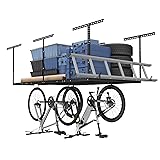
Short verdict: The FLEXIMOUNTS 4×8 with Hooks adjusts from 22″-40″ of drop, includes four hooks for hanging gear underneath, and is built from 14-gauge cold-rolled steel that’s been double-load tested at 1,200 lb on a 600 lb manufacturer-listed rack. Pick this if you want flexibility plus the convenience of hooks.
The “with hooks” variant is the FLEXIMOUNTS pick we’d take over the standard 4×8. The hooks add hanging space for ladders, hoses, folding chairs, or extension cords directly below the rack, in the dead zone most racks waste. The 22″ minimum drop is a useful 2″ lower than the SafeRacks’ 24″ minimum — not enough to make this a low-ceiling rack, but enough to give borderline 9′ garages a working install.
Why it stands out
The integrated grid deck design is structurally different from racks that bolt a wire deck to a separate frame — it removes the hardware seam where most cheap-rack failures originate. FLEXIMOUNTS publishes that the rack survives double-load testing (1,200 lb on a 600 lb rated rack), which is the right safety-margin posture for a load-bearing product. The hooks are powder-coated to match the deck and bolt directly into the deck grid, which means they aren’t loose accessories that disappear in a year.
It can work well for:
- Buyers who want one rack to do double duty (deck above, hooks below)
- Garages with a workbench area where ladders and seasonal tools need to come down often
- Owners who want to experiment with ceiling clearance before committing to a final drop
- Standard 16″ or 24″ joist-spaced ceilings
Key specs to check
- Manufacturer-listed capacity: 600 lb (double-load tested at 1,200 lb)
- Drop range: 22″-40″
- Deck size: 96″L × 48″W × 40″ tall when at full drop
- Joist-spacing compatibility: ≤24″ or exactly 48″ (other spacings will not fit)
- Material: 14-gauge cold-rolled steel, integrated grid deck
- Includes: 4 ceiling hooks
Recurring feedback patterns
Recurring positive feedback often centers on the install instructions being clearer than competitors — buyers describe a template-and-template-bolt approach that catches the joist position on the first try. Common complaints typically involve owners with non-standard joist spacing (older homes with 30″ or 19.2″ centers) discovering after purchase that the rack won’t fit, which the listing technically discloses but the listing photos don’t emphasize. Several buyers mention the hooks being the unexpected favorite feature — useful for hanging items they’d have otherwise wall-mounted with separate hardware.
Potential drawbacks
The joist-spacing constraint (≤24″ or 48″, nothing in between) excludes a meaningful fraction of older homes. The 40″ maximum drop is shorter than the SafeRacks’ 45″ — buyers with 12’+ ceilings who want the rack hung lower will hit the FLEXIMOUNTS ceiling first.
Buyer warning
Verify your joist spacing with a stud finder before ordering. The product page lists the joist-spacing constraint, but it’s the most-missed line in the spec sheet, and FLEXIMOUNTS does not include adapter hardware for non-standard spacing. If your ceiling is 19.2″ or 30″ on center, this rack won’t fit and the return process is not free for an item this size.
Best Heavy-Duty: SunsGrove 4×8 Overhead Garage Storage Rack
Best for: Buyers genuinely loading near the typical 600 lb ceiling — bulk paper goods, stored cabinetry, dense holiday tubs that have crept heavier each year — who want the highest manufacturer-listed capacity in the mainstream 4×8 category.

Short verdict: SunsGrove publishes an 800 lb manufacturer-listed capacity on their 4×8 with hammertone black finish — the highest in the candidate set we reviewed. The 22″-40″ drop range matches the FLEXIMOUNTS, and the heavy-gauge steel adds margin for buyers who want to load above the typical 500-600 lb range without worrying about deck deflection.
The 800 lb listing is genuinely the differentiator — most competitors top out at 500-600 lb, which is enough for typical seasonal storage but not for buyers with dense cargo. SunsGrove uses heavier-gauge steel and a powder-coat finish that, in the listing photographs, has the kind of textured hammertone finish that hides minor scratches well in an unheated garage environment.
Why it stands out
When the load is genuinely heavy — multi-bin holiday storage where each tub passes 50 lb, stored bulk-purchase paper goods, archived business records — the difference between a 500 lb rated rack and an 800 lb rated rack matters not because you’re loading 800 lb (you shouldn’t), but because the safety margin between your actual load and the listed ceiling is what decides whether the rack flexes under repeated load cycles. A rack at 90% of its listed capacity behaves differently from a rack at 60% of its listed capacity, even if the absolute weight is the same.
It can work well for:
- Storing dense items overhead (paper goods, hardware bulk, archived records)
- Buyers in 9-10′ garages who want maximum capacity headroom
- Garages where the rack will see annual peak loads (holiday season) above 500 lb
- Owners who’d rather over-spec than re-buy after a deflection issue
Key specs to check
- Manufacturer-listed capacity: 800 lb evenly distributed
- Drop range: 22″-40″
- Deck size: 96″L × 48″W
- Material: heavy-gauge steel, powder-coat hammertone black finish
- Joist-spacing compatibility: standard wood joists (verify on listing for exact spacing)
Recurring feedback patterns
Recurring feedback patterns suggest the heavier-gauge steel does noticeably reduce deck deflection compared to lighter-gauge competitors when loaded near the upper range. Several buyers mention the install hardware being on the long side (intentionally — to bite further into joists), which is the right design choice for an 800 lb rack but adds installation time. Common complaints often involve the rack being heavier to lift into position than competitors during install, which makes a partner more important than usual.
Potential drawbacks
SunsGrove is a smaller brand than FLEXIMOUNTS or SafeRacks; the install-issue and parts-replacement ecosystem is less developed. The hammertone finish, while attractive, draws more attention to the ceiling visually than a white rack. Buyers in well-lit garages with finished ceilings may prefer a white-finish alternative.
Buyer warning
The 800 lb listed capacity is the rack’s specification — it is not a guarantee of what your joists can hold. A buyer planning to load anywhere near 600 lb on this rack should consult an installer about joist condition before relying on the figure. Manufacturer-listed capacity assumes correct assembly, level joist install, suitable mounting hardware, and proper weight distribution; real-world performance varies.
Best for Low Ceilings: HyLoft 80842-10 Adjustable Ceiling Storage Rack
Best for: Garages with 7-8′ ceilings where every inch of headroom is contested — and storage needs are compact rather than maxed out.

Short verdict: A 33″x34″ deck with a 17″-26″ drop range and a 250 lb manufacturer-listed capacity. The 17″ minimum drop is the shortest in the candidate set — purpose-built for low-ceiling garages where a 24″-45″ deck would either dangle into headspace or block the garage door. Pick this when ceiling height is your binding constraint.
The HyLoft 80842-10 is the rack we’d recommend to anyone with a sub-9′ garage ceiling. The 17″ minimum drop puts the deck close enough to the ceiling that a 7′ garage retains 5’+ of usable headroom underneath — enough for vehicles, enough for people, enough for the rack to stay out of the way of a sectional door’s travel zone. The trade-off is deck size and capacity: 33″x34″ max width with 250 lb evenly distributed is well below the 4×8 mainstream, but matched to the realistic load a low-ceiling garage actually needs to carry.
Why it stands out
HyLoft has a long product family in the ceiling-rack category — 45×45 and 60×45 variants are also available — but the 80842-10 is the only model in the lineup that hangs at 17″ minimum, and it’s hard to find anywhere else in the category at that drop. Width adjusts 24″-34″ to fit non-standard joist setups, which buyers in older homes with non-16″ centers often need. The build is heavy-duty powder-coated steel — same construction language as larger HyLoft racks, just at compact scale.
It can work well for:
- 7′ or 8′ garage ceilings where larger racks won’t fit
- Storing seasonal clothing tubs, sports gear, or holiday items in a compact load
- Apartment-style garages and converted-shed garages with limited height
- Buyers who want a smaller, less visually-dominant rack
Key specs to check
- Manufacturer-listed capacity: 250 lb evenly distributed
- Drop range: 17″-26″ (the shortest minimum in the category)
- Deck size: 24″-34″W × 34″D (width adjustable)
- Material: heavy-duty powder-coated steel, white finish
- Joist-spacing compatibility: adjustable width accommodates non-standard joists
Recurring feedback patterns
Recurring positive feedback often centers on the rack genuinely solving low-ceiling install problems that the 4×8 category cannot — buyers describe a 7′ garage that no other rack fit. Common complaints typically involve the deck size being smaller than the listing photos suggest, which is a buyer-expectation issue more than a product issue (the 33″ max width is clearly stated). Several buyers mention the hardware being upgrade-worthy for thicker drywall, similar to other ceiling racks in this guide.
Potential drawbacks
The 250 lb capacity is genuinely lower than the 4×8 category and limits what can go up there. The 33″x34″ max footprint is too small for many holiday-decoration sets that families accumulate. Buyers with both low ceilings AND heavy storage needs do not have a great option — they need wall storage, not ceiling.
Buyer warning
This is a small-load rack. If your storage need is multiple full-size 27-gallon totes or dense seasonal cargo, the 250 lb listed capacity will be the binding constraint. Plan storage by total weight before ordering. For broader low-ceiling overhead options including hoist-style systems, see our low-ceiling overhead storage options guide.
Best for Bins: Indusker T-Rail Overhead Tote Storage System
Best for: Owners whose ceiling-storage need is “I have a lot of plastic bins and nothing else” — this is the rack that solves that specific problem better than any flat deck.

Short verdict: The Indusker is a different category from a flat-deck rack. Two parallel T-rails mount to ceiling joists; bins slide between them, suspended by their molded lip. There’s no deck — the bins themselves are the deck. Sized for standard 16″ joist spacing, the system supports 600 lb total across 6 bins (manufacturer-listed). Pick this if your overhead storage is bins-only.
The T-rail format eliminates the deck-and-bin double layer that flat racks impose. Where a 4×8 deck adds 2-4″ of structure plus the bin height, the T-rail system uses just the bin height — every inch you reclaim becomes additional headroom. The trade-off is total flexibility: the system stores bins, not a mix of bins and loose items.
Why it stands out
Most ceiling racks try to be a flat-deck universal storage solution. The Indusker accepts that “I just need to store bins” is a real, common use case and builds the product around it instead. Each rail is 17.72″ long, sized to mount on standard 16″ joist centers, and the system scales by adding rail pairs. Rail-pair spacing is adjustable, which gives the system tolerance for varied tote widths — but exotic or off-spec bins should still be measured upfront. The system is well-suited to garages where the dominant overhead item is plastic storage totes — out-of-season items, holiday decorations, archived household goods. For compatible storage bins that work with this kind of T-rail system, our bin guide covers the lip-width specs that matter.
It can work well for:
- Bins-only ceiling storage (no loose items, no boxes, no irregular cargo)
- Garages with high tote turnover by season
- Owners who want maximum ceiling-to-floor headroom under the storage zone
- Standard 16″ joist-spaced ceilings
Key specs to check
- Manufacturer-listed capacity: 600 lb total across 6 bins
- Joist-spacing compatibility: standard 16″ centers
- Rail length: 17.72″ each (system scales by adding rail pairs)
- Compatible bins: standard storage totes with molded lip — buyer must verify lip width
- Material: steel rails with mounting hardware
Recurring feedback patterns
Recurring positive feedback often centers on the install being faster than 4×8 racks because each rail is independent — you mount one pair, then the next pair, instead of leveling a single 8-foot frame. Common complaints typically involve tote-lip incompatibility: the system is designed for standard tote lips, but cheap “27-gallon” bins from different brands have lips of slightly different widths, and a tote that fits at one brand may slide loose with another. Several buyers mention finding a single bin brand they trust and buying multi-packs to standardize.
Potential drawbacks
The bins-only constraint is real. You can’t put a single irregular item up there. You can’t store a mix of cargo. If your overhead-storage profile changes from bins to bins + boxes + outdoor furniture, you outgrow this rack and need a flat deck.
Buyer warning
Verify your tote-lip width before ordering. Take one of your existing storage totes and measure across the molded lip at the long side — most mainstream totes (Sterilite, Rubbermaid, IRIS) have lips in the 0.75″-1.25″ range, but the spread is wider than buyers expect, and an off-spec tote either wedges in too tightly or slips through. Manufacturer guidance lists which bin brands the system was tested with; we recommend matching that list before ordering.
Best Modular: Gladiator GearLoft Storage Rack 2 x 4
Best for: Owners whose garage ceiling has many small zones rather than one big open expanse — and who want to spread storage across multiple positions instead of committing to a single large deck.

Short verdict: A 24″L × 48″W compact ceiling rack with 350 lb manufacturer-listed capacity, 23″-37″ adjustable drop, and 25 cubic feet of storage volume. Built into the broader Gladiator garage system that includes hooks, baskets, and GearTrack accessories. Pick this when one 4×8 rack doesn’t fit your ceiling layout and three or four 2×4 racks in different zones would.
The 2×4 modular size unlocks a layout pattern that 4×8 racks block: you install one above the garage door for items needed seasonally, a second over the workbench for tools and supplies, a third by the side door for outdoor gear, and the storage scales horizontally rather than vertically. Gladiator’s ecosystem of compatible accessories means the rack is the start of a system, not the whole solution.
Why it stands out
Brand strength is the real differentiator here. Gladiator has an established product family of garage storage that includes wall-mounted GearTrack rails, modular cabinets, and hook accessories — all designed to work together visually and functionally. The GearLoft 2×4 fits into that system as the ceiling-storage component. The 23″-37″ drop range is similar to the FLEXIMOUNTS adjustable; the differentiator is footprint and ecosystem, not drop flexibility — so buyers picking Gladiator are doing so for layout-and-system reasons, not because they need a wider drop band. EZ Connect assembly speeds up the per-unit install, which matters when you’re installing multiple units.
It can work well for:
- Multi-zone garages where one big rack doesn’t fit the layout
- Owners planning a longer-term Gladiator-system build (cabinets, GearTrack, hooks)
- Smaller storage needs that don’t justify a 4×8 rack
- Buyers willing to pay a higher cost-per-square-foot for layout flexibility
Key specs to check
- Manufacturer-listed capacity: 350 lb evenly distributed
- Drop range: 23″-37″ adjustable
- Deck size: 24″L × 48″W (2×4 footprint)
- Storage volume: 25 cubic feet at full drop
- Material: heavy-gauge steel, hammered granite finish
- Assembly: EZ Connect technology
- Mounting style: ceiling joists
Recurring feedback patterns
Recurring positive feedback often centers on the rack matching the visual style of other Gladiator products in the buyer’s garage — owners describe a coherent look across their wall storage and ceiling storage. Common complaints typically involve the per-square-foot cost being higher than a single 4×8 rack from a generic brand, which is a real trade-off but matched by the brand-ecosystem benefit. Several buyers mention installing multiple units (typically 2-3) to cover the same total area as a 4×8, which works editorially but adds install time even with EZ Connect.
Potential drawbacks
Cost per square foot is meaningfully higher than a generic 4×8. The 350 lb capacity per unit is lower than the mainstream 600 lb category, so buyers with one big load profile (holiday tubs, bulk paper goods) would be better served by the SafeRacks or FLEXIMOUNTS picks. Capacity per unit is the binding number, not the total system capacity, since each rack is independently anchored.
Buyer warning
Don’t pick this rack for a “one big rack to handle it all” need — it’s specifically designed for buyers who have decided their garage is a multi-zone storage system, not a single overhead expanse. If your storage profile is dominated by one large load (decade of holiday decorations, a bulk-purchase pantry), the cost per square foot of the 2×4 modular path will exceed a 4×8 rack of equivalent total area, and the per-unit 350 lb cap will limit dense storage zones.
Side-by-Side Comparison
Each rack solves a different problem. Use this table to map the rack to your situation rather than to compare them on a single axis.
| Product | Best for | Drop range | Listed capacity | Joist spacing | Deck size | Main drawback |
|---|---|---|---|---|---|---|
| SafeRacks 4×8 (2-pack)* | Fixed install, 9-10′ ceilings | 24″-45″ | 600 lb per rack | 16″/24″ | 96″x48″ | 24″ min drop excludes 8′ ceilings; SKU sells 2 racks |
| FLEXIMOUNTS 4×8 with Hooks | Adjustable + hooks below | 22″-40″ | 600 lb | ≤24″ or 48″ | 96″x48″ | Joist-spacing constraint excludes some older homes |
| SunsGrove 4×8 | Heavy loads up to 800 lb | 22″-40″ | 800 lb | Standard wood joists | 96″x48″ | Smaller brand; less developed parts ecosystem |
| HyLoft 80842-10 | Low ceilings (7-8′) | 17″-26″ | 250 lb | Adjustable width 24″-34″ | 33″x34″ | Smaller deck and lower capacity |
| Indusker T-Rail | Bins-only storage | Joist-mounted | 600 lb across 6 bins | 16″ centers | Variable (rail pairs) | Bins-only — no flexibility for irregular cargo |
| Gladiator GearLoft 2×4 | Multi-zone modular layouts | 23″-37″ | 350 lb per unit | Standard wood joists | 24″x48″ | Higher cost per square foot |
*The SafeRacks listing ships as a 2-pack — capacity figure is per rack.
The closest mainstream alternative not picked here is the MonsterRax 4×8, a US Veteran-owned brand with a 500 lb listed capacity and a 24″-45″ drop. It’s a reasonable second choice if SafeRacks is unavailable at purchase time, though the 100 lb capacity gap and slightly less-developed install ecosystem put it behind in our slot map.
Choose by Use Case
Use this matrix to find the rack that matches your situation rather than picking by brand or capacity.
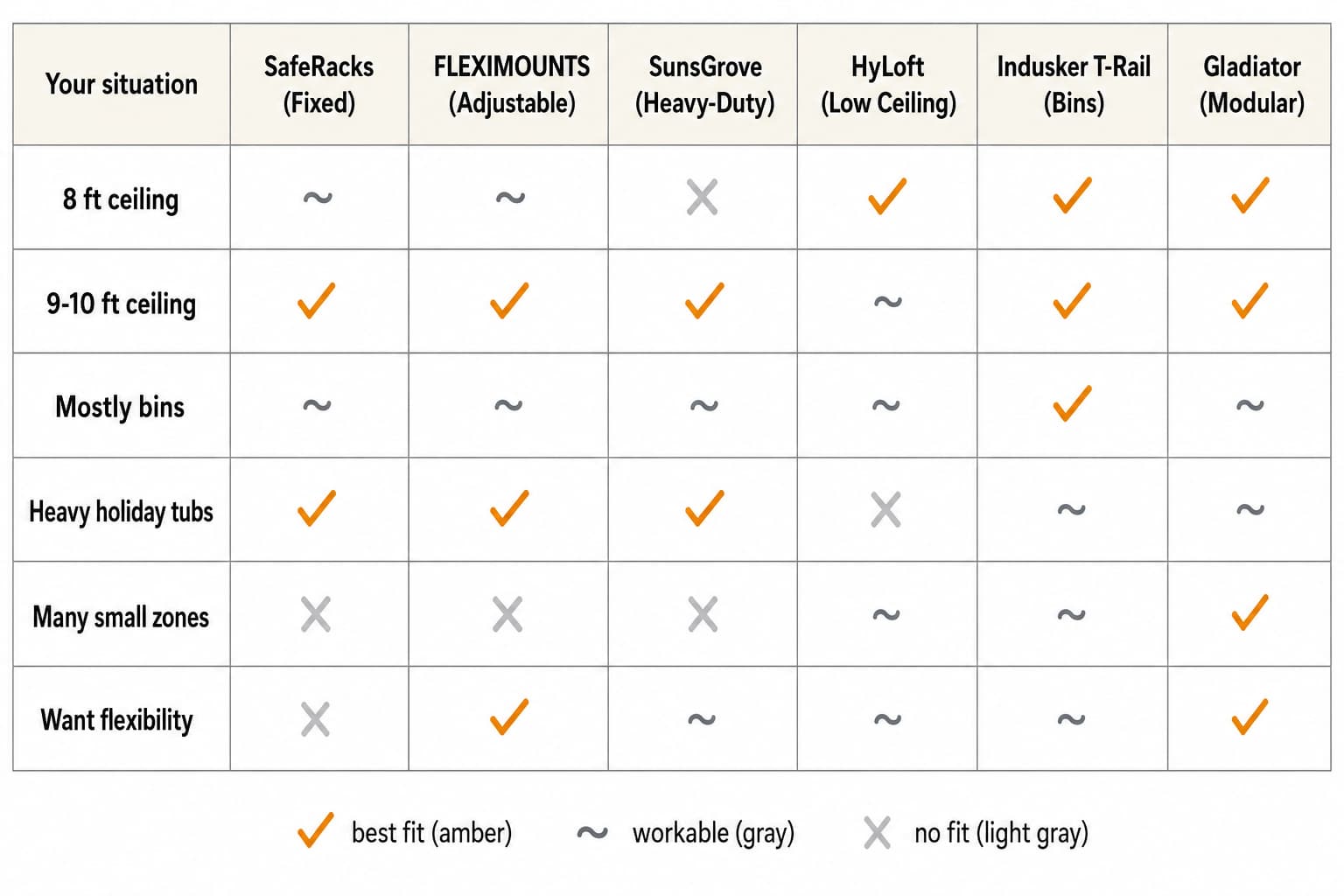
| Your situation | SafeRacks (Fixed) | FLEXIMOUNTS (Adjustable) | SunsGrove (Heavy-Duty) | HyLoft (Low Ceiling) | Indusker T-Rail (Bins) | Gladiator (Modular) |
|---|---|---|---|---|---|---|
| 8′ ceiling | ~ | ~ | ✗ | ✓ | ✓ | ✓ |
| 9-10′ ceiling | ✓ | ✓ | ✓ | ~ | ✓ | ✓ |
| Mostly bins | ~ | ~ | ~ | ~ | ✓ | ~ |
| Heavy holiday tubs (>500 lb) | ✓ | ✓ | ✓ | ✗ | ~ | ~ |
| Many small zones | ✗ | ✗ | ✗ | ~ | ~ | ✓ |
| Want flexibility to adjust later | ✗ | ✓ | ~ | ~ | ~ | ✓ |
The matrix surfaces a non-obvious pattern: there’s no single “best overall” rack. The best rack for a 10′ garage with heavy loads is different from the best rack for a 7′ garage with bins, and a roundup that ranks them on a single axis (capacity, price, brand) misses the structure of the actual buying decision.
How much room an overhead rack leaves under it
Rack makers publish how far the unit hangs below the ceiling. What they never publish is the number you actually need: how much headroom is left underneath once it is up — which is what decides whether your car still fits, or whether the garage door can still swing open. This table restates each rack’s published drop and works out the remaining clearance for the two ceiling heights most American garages have.
| Rack | Published ceiling drop | Clearance under it — 8 ft ceiling | Clearance under it — 9 ft ceiling | Deck size | Stated capacity | Joist requirement | Specification source |
|---|---|---|---|---|---|---|---|
| FLEXIMOUNTS GR48 Classic 4 ft × 8 ft | 22–40 in | 56–74 in | 68–86 in | 96 × 48 in | 600 lb | joist spacing ≤ 24 in; if spacing > 24 in, only 48 in spacing | FLEXIMOUNTS GR48 Classic 4′ × 8′ |
| Gladiator Overhead GearLoft 4 ft × 8 ft | 23–37 in | 59–73 in | 71–85 in | 48 W × 96 D in | 1,000 lb per unit | ceiling mounted, assembly required (spacing not published) | Gladiator Overhead GearLoft 4 × 8 |
| Gladiator Overhead GearLoft 2 ft × 8 ft | 23–37 in | 59–73 in | 71–85 in | 96 W × 24 D in | 500 lb per unit | ceiling mounted, assembly required (spacing not published) | Gladiator Overhead GearLoft 2 × 8 |
How these numbers were produced: Ceiling drop, deck size, capacity and joist requirements are quoted from each manufacturer’s own product page on the date shown. Clearance underneath is arithmetic: ceiling height minus the published drop, at 8 ft (96 in) and 9 ft (108 in). The range runs from the rack’s lowest setting (least clearance) to its highest. The calculation treats the published drop as the distance from ceiling to deck and ignores deck thickness, so treat the result as the optimistic figure and measure before you drill.
- Measure where you will actually mount it. The garage door track, the opener rail and the door in its open position occupy the ceiling near the door — the clearance that matters there is not the clearance mid-garage.
- Clearance is to the underside of the deck. Anything hanging below the deck, and the deck’s own thickness, eats into it.
- Joist spacing is a hard constraint, not a preference: these racks are rated only when fixed into wood joists at the spacing the manufacturer states.
- Capacity figures are the manufacturer’s stated maximum for a correctly installed rack. Real-world performance depends on assembly, the fixings used, joist condition and how the load is distributed.
- A blank cell means the manufacturer does not publish that figure — we do not fill gaps with numbers we could not source.
These are the entries that matter for this guide. The full table, with every row and its source, is in our guide to choosing overhead garage storage.
How to Measure Your Ceiling Before Buying
Before you order any rack, take five minutes and four numbers. Most buyer regret on ceiling racks traces to skipping this step.

1. Ceiling height (floor to ceiling). Use a tape measure at the location where the rack will hang, not at the door. Garage floors are often graded toward the door, which means ceiling height varies across the floor.
2. Door travel headroom (top of fully-open door to ceiling). Open the garage door completely. Measure from the highest point of the open door to the ceiling. This is the maximum drop your rack can hang into. Sectional doors with torsion-spring assemblies typically need 14″-18″ of headroom; if your door already lives in this zone, plan the rack outside the travel arc.
3. Joist spacing (on center). Use a stud finder to locate two adjacent joists. Measure from the center of one joist to the center of the next. Modern construction is typically 16″ or 24″; older homes can be 19.2″, 30″, or even beam-only at 48″.
4. Unobstructed deck zone (width × depth). Walk the garage with a tape and identify the area of ceiling that has no light fixtures, no vent ducts, no garage-door opener motor, and no exposed pipes. Mark the longest unobstructed length and the widest unobstructed depth. This is the maximum rack footprint that fits.
Now cross-check: rack drop ≤ (ceiling height − required headroom under rack − door travel headroom). Rack footprint ≤ unobstructed deck zone. Rack joist-spacing requirement = your measured joist spacing. If any one of those three is a no, the rack doesn’t fit.
Common Complaints and Buyer Warnings
Three patterns surface across nearly every set of public discussions on ceiling-rack installs.
Underestimating drop range. Buyers see the headline drop range (“22″-40″”) and assume the rack will work in their 8′ garage. The 22″ minimum is then the binding constraint — combined with vehicle height, garage door clearance, and walking headroom, a 22″-drop rack in an 8′ garage leaves uncomfortably little space below. Always measure the actual unused headroom in your garage with vehicles parked and the door open before you commit to a drop.
Assuming joist spacing is 16″. Modern construction defaults to 16″ centers, but a meaningful fraction of older homes (pre-1970, additions, garage conversions) use non-16″ spacing. Buyers who skip the stud-finder check often discover at install time that the rack hardware doesn’t reach the next joist, and the return process for a heavy rack is not free. The fix is a five-minute measurement before ordering.
Loading near the listed capacity ceiling without verifying joist condition. A rack rated at 600 lb is rated for 600 lb assuming the joist behind your drywall is sound. In water-damaged garages, in older homes with undersized framing, or in garages where the ceiling is shared with an upstairs floor and the joists serve dual purpose, that assumption breaks. The most important warning we can give: capacity is not the variable that matters most. The variable is whether your joists can take it. If you don’t know your joist condition with high confidence, get a contractor look or stay below 50% of listed capacity.
Who Should Avoid Ceiling Storage Racks?
Ceiling storage isn’t right for everyone. If any of the following describes you, look elsewhere:
- Renters. Drilling into joists is destructive — most leases prohibit it, and even leases that don’t will typically require restoration. See our no-drill storage options for renters guide for free-standing and tension-mounted alternatives.
- Garages with unknown or compromised joist conditions. If you can’t verify the framing (water damage, undocumented additions, finished ceilings hiding original construction), the safe answer is wall storage instead of ceiling.
- Frequently-accessed items. Anything you reach more than twice a month belongs on a wall rack or in a cabinet, not on the ceiling. Climbing a ladder for routine access is not just inconvenient; it’s a fall hazard.
- Items that are heavy AND fragile. A rack failure isn’t gradual. Items that are heavy enough to rip out the install but fragile enough to be a total loss when they fall (electronics, instruments, antiques) are the worst possible candidates for ceiling storage.
FAQ
What’s the lowest ceiling height that still works for an overhead rack?
7′ is the practical floor for a low-profile rack like the HyLoft 80842-10 with a 17″ minimum drop. That leaves about 5’5″ of headroom under the rack, which is workable for foot traffic but tight for vehicle clearance. Below 7′, most racks don’t fit anything taller than a flat tote. For 8′ garages, the HyLoft, Indusker T-Rail, and Gladiator GearLoft all work; the 4×8 mainstream picks generally don’t.
How do I find joists if my garage ceiling is finished drywall?
Use an electronic stud finder rated for ceilings (most are, but verify). Run it perpendicular to the joists’ likely direction — joists usually run perpendicular to the longer dimension of the room, so in a typical 2-car garage, they run from the front (door) to the back. Mark each joist with painter’s tape, then measure the center-to-center spacing. If the stud finder gives inconsistent results, a 1/16″ pilot hole at a planned mounting point will confirm whether you’ve hit a joist.
Can I install a 4×8 rack on 24″ joist spacing?
Yes for most 4×8 racks — including the FLEXIMOUNTS and the SafeRacks. The 4×8 deck spans 4 joists at 24″ centers (4 × 24″ = 96″, which is the 8′ length). Confirm the specific rack’s listing — the FLEXIMOUNTS explicitly states ≤24″ or exactly 48″, which means 19.2″ or 30″ centers will not fit.
Do I really need to follow the manufacturer-listed capacity, or is there safety margin built in?
The manufacturer-listed capacity is the rated number for the rack — most quality manufacturers double-load test (e.g., FLEXIMOUNTS tests at 1,200 lb on a 600 lb rated rack), which gives the rack a safety margin. That margin protects against deflection failure of the rack itself; it does not protect against joist pull-out, which is a separate failure mode. Stay at or below the listed number, and verify your joist condition independently.
What’s the difference between a flat-deck rack and a T-rail tote system?
A flat-deck rack (SafeRacks, FLEXIMOUNTS, SunsGrove, HyLoft, Gladiator) is a horizontal platform suspended from the ceiling — it accepts any cargo. A T-rail tote system (Indusker) is two parallel rails that hold storage totes by their molded lip — totes themselves serve as the storage surface, with no deck below them. The T-rail uses less vertical space (no deck = more headroom) but only fits totes. Pick by what you’re storing.
Can I mount a ceiling rack into a garage with metal joists or trusses?
Most consumer ceiling racks (including all six in this guide) are designed for wood joists only. The lag bolts and mounting hardware are sized for wood. If your garage has metal joists, steel I-beams, or engineered truss ceilings, do not use these racks without consulting a structural professional — the mounting hardware will not work safely, and the truss may not be rated for point-load attachment.
Sources Reviewed
For this guide, we reviewed manufacturer product information from SafeRacks, FLEXIMOUNTS, SunsGrove, HyLoft, Indusker, and Gladiator; retailer specifications on Amazon and the brands’ own retail sites; product listings; public customer feedback patterns on garage forums and review platforms; and ceiling-rack-specific discussions on home improvement communities. We focused on product details that matter for ceiling-mounted storage decisions: drop range, joist-spacing compatibility, manufacturer-listed capacity, deck size, material gauge, and finish.
Related Guides
- Best Overhead Garage Storage Racks — broader overhead rack roundup that includes lift-based options
- Best Overhead Garage Storage for Low Ceilings — dedicated guide for sub-9′ ceilings
- How to Choose Overhead Garage Storage Safely — buying-guide companion piece
- How to Install Overhead Garage Storage (Step-by-Step) — installation walkthrough with joist-finding and lag-bolt sizing
- How to Safely Use Overhead Garage Storage — safety framework for live ceiling storage
- Common Garage Organization Mistakes to Avoid
- how to organize a garage workbench
- How to Plan Garage Organization Zones
- How to Store Seasonal Items in a Garage
- Overhead Storage vs Wall Storage for Garage Organization
- How to Choose a Garage Storage System